Essential Restaurant Vocabulary
Before reading the story, review these important German words related to dining out to help you understand the text better.
| German Word | English Translation |
|---|---|
| reservieren | to reserve / to book |
| die Speisekarte | menu |
| der Hauptgang | main course |
| das Besteck | cutlery / silverware |
| die Nachspeise | dessert |
| die Rechnung | the bill / check |
| das Trinkgeld | tip |
Story: Ein Abend im Restaurant
Maria und Lukas möchten ihr Wochenende mit einem schönen Abendessen in ihrem Lieblingsrestaurant feiern. Sie haben vorher telefonisch einen Tisch für zwei Personen reserviert und kommen pünktlich um 19 Uhr an. Die freundliche Kellnerin begrüßt sie herzlich und führt sie zu ihrem Tisch am Fenster.
Die beiden schauen sich die Speisekarte an. Lukas bestellt ein vegetarisches Gericht als Hauptgang. Dazu möchte er ein Glas Wasser und einen Espresso. Maria entscheidet sich für das Tagesgericht und einen warmen Tee. „Sehr gerne,“ sagt die Kellnerin und notiert die Bestellung.
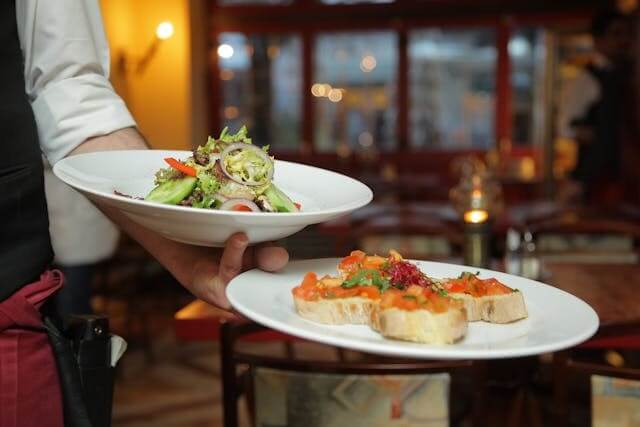
Nach einer kurzen Wartezeit bringt die Kellnerin das Besteck: Gabeln, Messer und Löffel. Lukas und Maria genießen ihr leckeres Essen und unterhalten sich über die vergangene Woche.
Nach dem Hauptgericht haben sie noch Lust auf eine süße Nachspeise und bestellen zwei Stück Apfelkuchen. Zum Schluss bittet Lukas um die Rechnung. Er bezahlt und lässt noch etwas Trinkgeld auf dem Tisch liegen. „Vielen Dank für die gute Bedienung!“, sagt er. Maria und Lukas sind sehr zufrieden und verlassen glücklich das Restaurant.
Reading Comprehension Quiz
Test your understanding of the story by answering the questions below. Click on the drop-down menu to reveal the correct answer.
1. Was haben Maria und Lukas vor dem Restaurantbesuch gemacht?
Correct Answer: Sie haben einen Tisch reserviert. (They reserved a table.)
2. Was bestellt Lukas als Hauptgang?
Correct Answer: Ein vegetarisches Gericht. (A vegetarian dish.)
3. Was bringt die Kellnerin vor dem Essen an den Tisch?
Correct Answer: Das Besteck (Gabeln, Messer und Löffel). (The cutlery.)
4. Was essen Maria und Lukas als Nachspeise?
Correct Answer: Apfelkuchen. (Apple cake.)
5. Was lässt Lukas am Ende auf dem Tisch liegen?
Correct Answer: Das Trinkgeld. (The tip.)
🚀 Continue Learning / Boost Your German
- Master German Nouns & Genders: German Premium Article Trainer
- Expand your vocabulary: German Vocabulary Blog Articles
- Test your knowledge: Grammar Quizzes
Frequently Asked Questions
How do you ask for the check in a German restaurant?
As seen at the end of the story, you need to ask for “die Rechnung” (the bill). You can politely say to the waiter: “Die Rechnung, bitte!” (The bill, please!) or “Ich möchte bitte zahlen” (I would like to pay, please). To learn more useful phrases for dining out, check out our complete German café and restaurant vocabulary guide.
What is the difference between “die Speisekarte” and “das Tagesgericht”?
In the text, Lukas looks at “die Speisekarte” (the standard menu with all available dishes), while Maria orders “das Tagesgericht” (the dish of the day / daily special). “Das Tagesgericht” is often a seasonal or discounted meal that is only available on that specific day.
Is it customary to leave “Trinkgeld” (a tip) in Germany?
Yes! In Germany, a service charge is included in the price, but it is standard to round up the bill or add a tip of about 5-10% for good service. In the story, Lukas leaves “das Trinkgeld” on the table. If you want to practice more situations like this, you can test your knowledge with our free restaurant vocabulary quiz.