
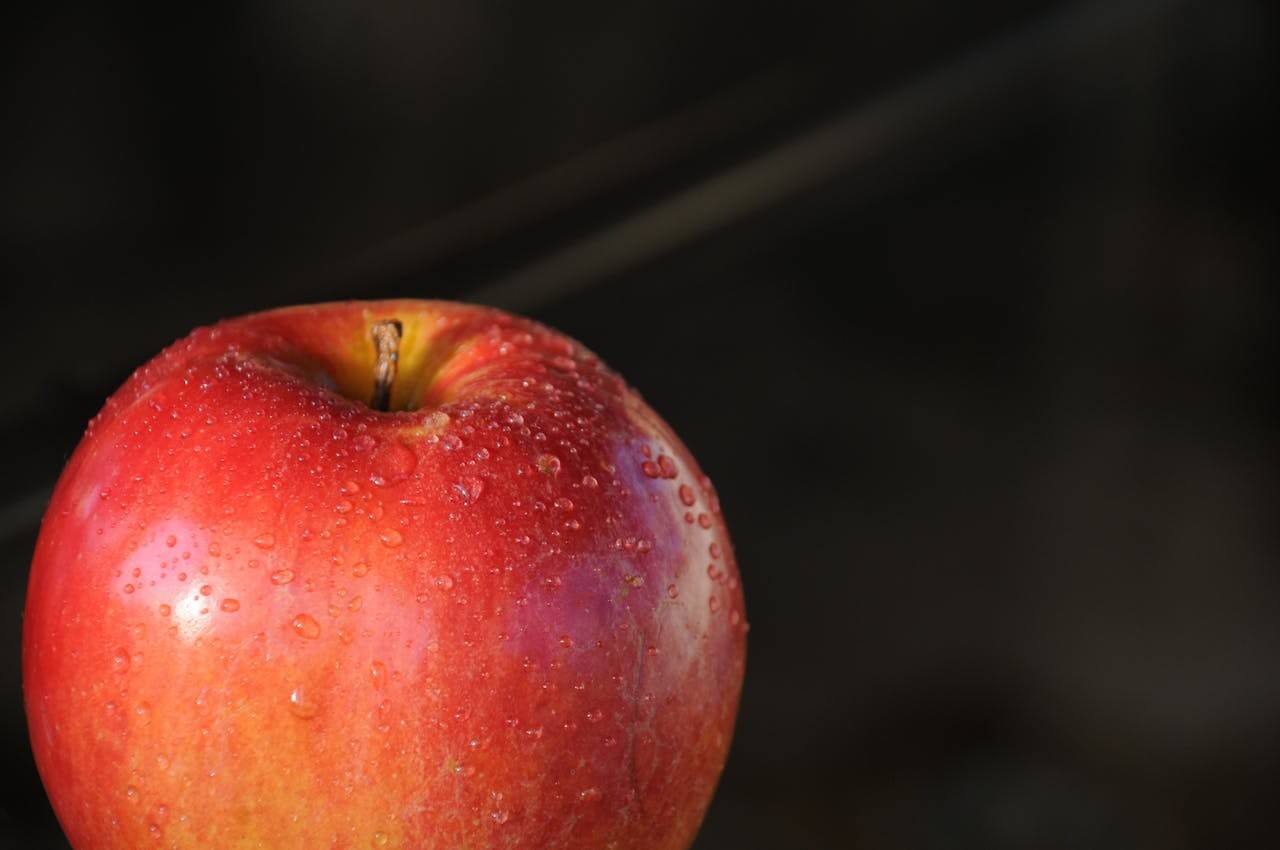
Apfel is masculine in German — the correct article is der. The plural is die Äpfel. In English, Apfel means apple.Der Apfel is a fundamental word in the German food and drinks vocabulary, typically learned right at the A1 level. You will use it constantly when talking about fruits, grocery shopping, or cooking. Below you'll find the full declension, example sentences, and a quiz.
Gender rule: Nouns ending in -el are very often masculine in German (der Apfel, der Mantel, der Schlüssel). This is a strong and helpful pattern. See all gender patterns in the Article Rules and a full overview at the German Articles.
Apfel — Declension Table
| Case | Singular | Plural |
|---|---|---|
| Nominative | der Apfel | die Äpfel |
| Genitive | des Apfels | der Äpfel |
| Dative | dem Apfel | den Äpfeln |
| Accusative | den Apfel | die Äpfel |
Example Sentences with Apfel
Der rote Apfel schmeckt sehr süß.
(The red apple tastes very sweet.) — Nominative
Ich esse jeden Tag einen Apfel.
(I eat an apple every day.) — Accusative
Neben dem Apfel liegt eine Banane.
(Next to the apple is a banana.) — Dative
Die Schale des Apfels ist sehr gesund.
(The peel of the apple is very healthy.) — Genitive
Die Äpfel fallen im Herbst vom Baum.
(The apples fall from the tree in autumn.) — Nominative Plural
In den Äpfeln stecken viele wichtige Vitamine.
(There are many important vitamins in the apples.) — Dative Plural
Related Words & Compounds
Word family (Wortfamilie): das Äpfelchen (little apple — diminutive)
Common compounds (Komposita): der Apfelbaum (apple tree), der Apfelsaft (apple juice), der Apfelkuchen (apple cake), der Bratapfel (baked apple)
Common Mistake with Apfel
❌ Common mistake: Die Apfeln sind im Korb.
✅ Correct: Die Äpfel sind im Korb.
💡 Why: The plural of Apfel takes an Umlaut (a → ä) but NO extra ending in the nominative and accusative cases: die Äpfel. The form "Apfeln" is a very typical learner mistake because it misses the Umlaut and wrongly adds an "-n". You only add the extra "-n" in the dative plural: mit den Äpfeln.
Quick Quiz: Test Your Knowledge
Can you get all three right? Apply what you've learned above.
1. Er kauft ___ auf dem Markt.
- A) der Apfel
- B) den Apfel
- C) dem Apfel
Check Answer
"Kaufen" takes an accusative object (what is he buying?). Masculine accusative = den: den Apfel.
2. Der Geschmack ___ ist leicht säuerlich.
- A) des Apfels
- B) dem Apfel
- C) den Apfel
Check Answer
"Der Geschmack des Apfels" — the genitive shows possession (the taste of what?). Masculine genitive = des + noun adds -s: des Apfels.
3. Ein grün___ Apfel liegt auf dem Tisch.
- A) -er
- B) -en
- C) -e
Check Answer
After the indefinite article ein in the nominative masculine, the adjective ending is -er: ein grüner Apfel.
Want to practice more nouns like this? The Article Trainer has 600+ nouns to drill — including everyday vocabulary. Pick the article, get instant feedback, and stop guessing.
More Food Nouns & Vocabulary
- die Banane — the banana
- die Orange — the orange
- die Erdbeere — the strawberry
- die Traube — the grape
- die Birne — the pear
- die Zitrone — the lemon
For more themed words, explore the Vocabulary overview list, check out the full food and drinks vocabulary, or browse the grammar overview.
Is it der, die, or das? Practice makes perfect.
The Article Trainer gives you 600+ nouns to drill — including everyday vocabulary. Pick the article, get instant feedback, and stop guessing.
Practice German Articles →Frequently Asked Questions
Is Apfel masculine, feminine, or neuter in German?
Apfel is masculine — the correct article is der. This follows a very helpful pattern in German: many nouns ending in -el are masculine (der Apfel, der Mantel, der Vogel). The same gender applies to all compounds: der Bratapfel, der Granatapfel.
What is the plural of Apfel?
The plural is die Äpfel. It requires an Umlaut (a → ä) but does not add an extra ending in the nominative plural. A common mistake is saying "die Apfeln". The only time you add an extra "-n" is in the dative plural: den Äpfeln.
What are common compound words with Apfel?
German uses many compounds to describe apple-related items: der Apfelsaft (apple juice), der Apfelkuchen (apple cake/pie), and der Apfelbaum (apple tree). Since the last component of these words determines the gender, they are all masculine (because Saft, Kuchen, and Baum are masculine).