
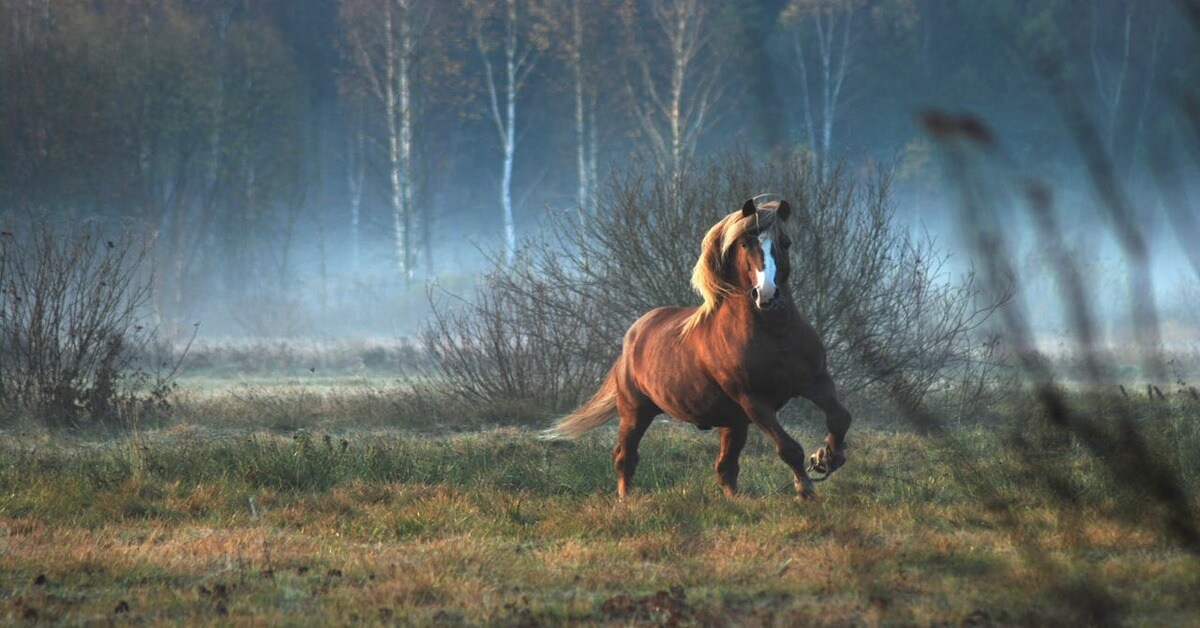
"Pferd" is neuter in German — the correct article is das. The plural is die Pferde (add -e, no Umlaut). In English, Pferd means "horse". The male horse is der Hengst, and the female horse is die Stute.
Gender rule: The gender of animal nouns in German often doesn't follow a simple rule and must be learned individually. Das Pferd is neuter, but die Katze is feminine and der Hund is masculine. See all patterns in the German Article Rules.
Das Pferd is A1 vocabulary and one of the most recognisable animal nouns in German. It's a useful noun for practising neuter article forms, which many learners find tricky at first — because das behaves differently from der and die in several cases. Below you'll find the full declension table, example sentences, a common mistake to avoid, and a short quiz.
Pferd — Declension Table
| Case | Singular | Plural |
|---|---|---|
| Nominative | das Pferd | die Pferde |
| Genitive | des Pferdes | der Pferde |
| Dative | dem Pferd | den Pferden |
| Accusative | das Pferd | die Pferde |
Example Sentences with Pferd
Das Pferd steht ruhig auf der Weide.
(The horse is standing calmly in the pasture.) — Nominative
Der Bauer füttert das Pferd mit Äpfeln und Heu.
(The farmer feeds the horse apples and hay.) — Accusative
Sie gibt dem Pferd jeden Morgen frisches Wasser.
(She gives the horse fresh water every morning.) — Dative
Die Mähne des Pferdes ist lang und glänzend.
(The horse's mane is long and shiny.) — Genitive
Die Pferde laufen schnell über das Feld.
(The horses run quickly across the field.) — Nominative Plural
Der Reiter gibt den Pferden frisches Heu.
(The rider gives the horses fresh hay.) — Dative Plural
Related Words & Compounds
Word family (Wortfamilie): der Hengst (stallion), die Stute (mare), das Fohlen (foal), reiten (to ride a horse), der Reiter / die Reiterin (horse rider)
Common compounds (Komposita): das Reitpferd (riding horse), das Rennpferd (racehorse), der Pferdestall (horse stable), die Pferdemähne (horse's mane), das Pferderennen (horse race), das Pferdefutter (horse feed)
Common Mistake with Pferd
❌ Common mistake: Auf der Weide stehen drei braune Pferden.
✅ Correct: Auf der Weide stehen drei braune Pferde.
💡 Why: The plural of das Pferd is die Pferde — simply add -e. The form "Pferden" only exists in the dative plural (e.g. mit den Pferden). Using "Pferden" as the subject or object in a normal plural sentence is wrong. After numbers like drei, always use the base plural form: drei Pferde, not drei Pferden.
Quick Quiz: Test Your Knowledge
Can you get all three right? Apply what you've learned above.
1. Die Augen ___ Pferd___ sind sehr ausdrucksstark.
- A) des Pferd
- B) dem Pferde
- C) des Pferdes
Check Answer
The genitive expresses possession (whose eyes?). For neuter nouns, the genitive article is des and the noun adds -es: des Pferdes. Short one-syllable nouns typically take -es rather than just -s.
2. Das Kind sitzt auf ___ Pferd und lacht.
- A) das Pferd
- B) dem Pferd
- C) den Pferd
Check Answer
"Auf" can take either accusative (movement) or dative (location). Here it describes a location (sitting on), so it requires the dative. Neuter dative = dem: dem Pferd.
3. Das ist ein sehr stark___ Pferd.
- A) -er
- B) -e
- C) -es
Check Answer
After an indefinite article in the nominative with a neuter noun, the adjective ending is -es: ein starkes Pferd. This is because ein doesn't show the neuter gender, so the adjective must carry that signal. Compare: masculine ein starker Hund (-er), feminine eine starke Katze (-e).
Want to drill more nouns like this? The Article Trainer gives you 600+ nouns to practice — pick the article, get instant feedback, and stop guessing.
More Animal Nouns
- der Hund — the dog
- die Katze — the cat
- die Maus — the mouse
- der Vogel — the bird
- der Wolf — the wolf
- der Elefant — the elephant
- die Kuh — the cow
- das Schaf — the sheep
For more animal words, explore the full animal vocabulary list.
Is it der, die, or das Pferd? Practice makes perfect.
The Article Trainer gives you 600+ nouns to drill — including animal vocabulary and much more. Pick the article, get instant feedback, and stop guessing.
Practice German Articles →Frequently Asked Questions
Is Pferd masculine, feminine, or neuter in German?
Pferd is neuter — the correct article is das. Unlike die Katze (feminine) or der Hund (masculine), the gender of animal nouns in German doesn't always follow a clear rule and has to be memorised individually. If you want to specify the sex of the animal, use der Hengst (stallion) or die Stute (mare). See all gender patterns in the Article Rules.
What is the plural of Pferd?
The plural is die Pferde — add -e to the singular, no Umlaut. This is one of the most common plural patterns in German. In the dative plural, an additional -n is added to the noun: den Pferden.
How do you say "the horse's mane" in German?
You say die Mähne des Pferdes. The genitive is used here to express possession — "of the horse." In everyday spoken German, you might also hear die Mähne vom Pferd, using von + dative as an informal alternative to the genitive.
Why is Pferd neuter when it refers to an animal that can be male or female?
In German, grammatical gender and biological sex are completely separate concepts. Das Pferd is neuter simply because that's the gender assigned to this noun — it has nothing to do with the animal's sex. The same applies to das Schaf (sheep) and das Kaninchen (rabbit). When biological sex matters, German uses separate words: der Hengst (stallion) and die Stute (mare). See the full Articles Chart for an overview of how all three genders work.