
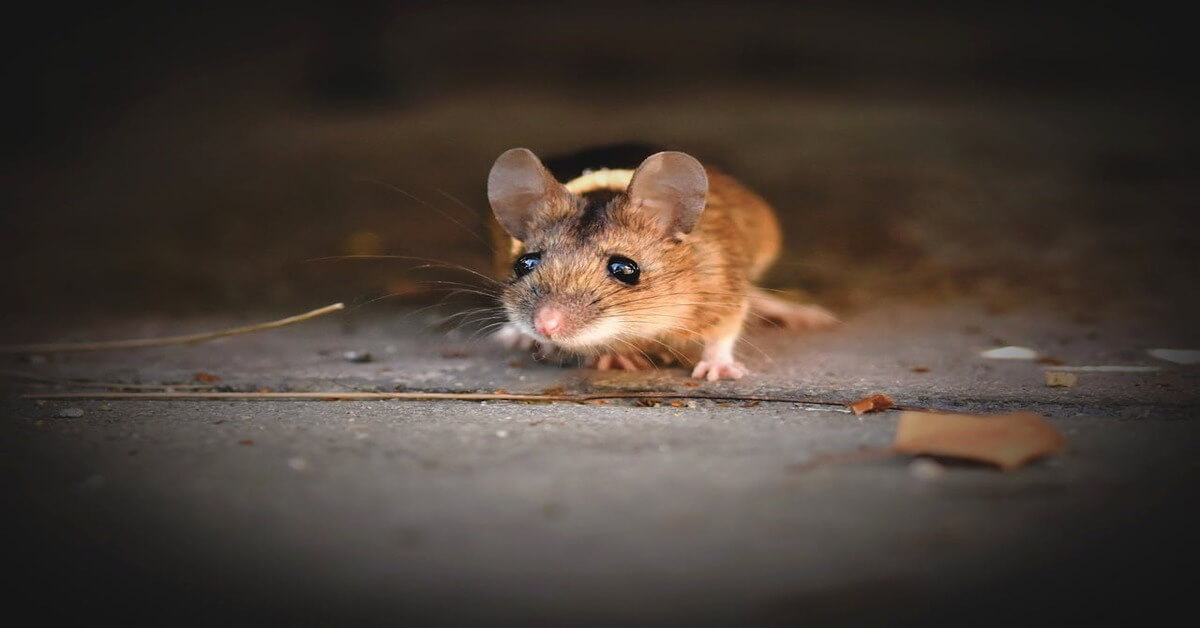
"Maus" is feminine in German — the correct article is die. The plural is die Mäuse — note the Umlaut! In English, Maus means "mouse". In everyday German, Maus is also a common term of endearment (like "sweetie").
Gender rule: Nouns ending in -aus are typically feminine in German — die Maus, die Laus, die Klause. The plural adds an Umlaut: Maus → Mäuse. This is an irregular but common pattern. See all gender patterns in the German Article Rules.
Die Maus is A1 vocabulary and one of the first animal nouns learners encounter. It's also a great example for practising the Umlaut plural — a pattern that trips up many beginners. Because it's feminine, its case endings follow the same pattern as die Katze. Below you'll find the full declension table, example sentences, a common mistake to avoid, and a short quiz.
Maus — Declension Table
| Case | Singular | Plural |
|---|---|---|
| Nominative | die Maus | die Mäuse |
| Genitive | der Maus | der Mäuse |
| Dative | der Maus | den Mäusen |
| Accusative | die Maus | die Mäuse |
Example Sentences with Maus
Die Maus sitzt reglos hinter dem Kühlschrank.
(The mouse is sitting motionless behind the fridge.) — Nominative
Die Katze beobachtet die Maus sehr aufmerksam.
(The cat watches the mouse very attentively.) — Accusative
Das Kind gibt der Maus ein kleines Stück Käse.
(The child gives the mouse a small piece of cheese.) — Dative
Das Fell der Maus ist grau und weich.
(The mouse's fur is grey and soft.) — Genitive
Im Winter suchen die Mäuse Wärme in Häusern.
(In winter the mice look for warmth in houses.) — Nominative Plural
Der Forscher gibt den Mäusen täglich frisches Futter.
(The researcher gives the mice fresh food every day.) — Dative Plural
Related Words & Compounds
Word family (Wortfamilie): das Mäuschen (little mouse / term of endearment), mäuschenstill (dead quiet — literally "mouse-quiet"), piepen (to squeak), nagen (to gnaw)
Common compounds (Komposita): die Computermaus (computer mouse), die Feldmaus (field mouse), die Hausmaus (house mouse), die Mausefalle (mousetrap), das Mauseloch (mouse hole), die Mäuseplage (mouse plague)
Common Mistake with Maus
❌ Common mistake: Im Keller haben wir drei graue Mausen gesehen.
✅ Correct: Im Keller haben wir drei graue Mäuse gesehen.
💡 Why: The plural of die Maus is die Mäuse — the vowel gets an Umlaut (au → äu). The form "Mausen" does not exist as a standard plural. "Mäusen" does exist, but only in the dative plural (e.g. mit den Mäusen). After numbers, always use the base plural: drei Mäuse, not drei Mausen. Compare: das Pferd → die Pferde (no Umlaut), but die Maus → die Mäuse (with Umlaut). Each noun's plural must be learned individually.
Quick Quiz: Test Your Knowledge
Can you get all three right? Apply what you've learned above.
1. Der Schwanz ___ Maus ist fast so lang wie ihr Körper.
- A) die Maus
- B) der Maus
- C) den Maus
Check Answer
The genitive expresses possession (whose tail?). For feminine nouns, the genitive article is der — and the noun itself does not change: der Maus. This is the same pattern as der Katze in the genitive.
2. Die Katze folgt der klein___ Maus durch den ganzen Garten.
- A) -e
- B) -er
- C) -en
Check Answer
"Folgen" is a dative verb — it always requires the dative case. The definite article already shows the gender (der = feminine dative), so the adjective takes the weak ending -en: der kleinen Maus. After a definite article in the dative, all adjectives end in -en regardless of gender.
3. Wie lautet der Plural von Maus?
- A) die Mausen
- B) die Mause
- C) die Mäuse
Check Answer
The plural of die Maus is die Mäuse — the vowel au gets an Umlaut to become äu. Neither "Mausen" nor "Mause" (without Umlaut) exist as German plurals. This Umlaut plural pattern (like die Maus → die Mäuse or der Wald → die Wälder) is one of several plural patterns in German that must be memorised.
Want to drill more nouns like this? The Article Trainer gives you 600+ nouns to practice — pick the article, get instant feedback, and stop guessing.
More Animal Nouns
- der Hund — the dog
- die Katze — the cat
- das Pferd — the horse
- der Vogel — the bird
- der Wolf — the wolf
- der Elefant — the elephant
- die Kuh — the cow
- das Kaninchen — the rabbit
For more animal words, explore the full animal vocabulary list.
Is it der, die, or das Maus? Practice makes perfect.
The Article Trainer gives you 600+ nouns to drill — including animal vocabulary and much more. Pick the article, get instant feedback, and stop guessing.
Practice German Articles →Frequently Asked Questions
Is Maus masculine, feminine, or neuter in German?
Maus is feminine — the correct article is die. This fits a common pattern: nouns ending in -aus are usually feminine in German (die Maus, die Laus, die Klause). Note that in the dative and genitive singular, the article shifts from die to der — this is standard for all feminine nouns. See all gender patterns in the Article Rules.
What is the plural of Maus?
The plural is die Mäuse — the vowel au gets an Umlaut to become äu. This is an irregular but recognisable pattern in German. The form "Mausen" does not exist. In the dative plural, an extra -n is added: den Mäusen.
What does Maus mean apart from "mouse"?
Beyond the animal, die Maus has two other common uses in everyday German. First, it means computer mouse — Klick mit der Maus (click with the mouse). Second, it's used as an informal term of endearment, especially for children or partners — similar to "sweetie" or "little one" in English. The compound die Computermaus is used when clarity is needed.
Why does the plural of Maus have an Umlaut?
The Umlaut plural (au → äu) is one of several plural patterns in German, and it simply has to be learnt for each noun. There's no rule that predicts exactly which nouns take an Umlaut in the plural — it's part of the noun's entry that needs to be memorised. A good strategy is to always learn a noun together with its plural form and article from the start. The German plural guide gives a full overview of all patterns.