
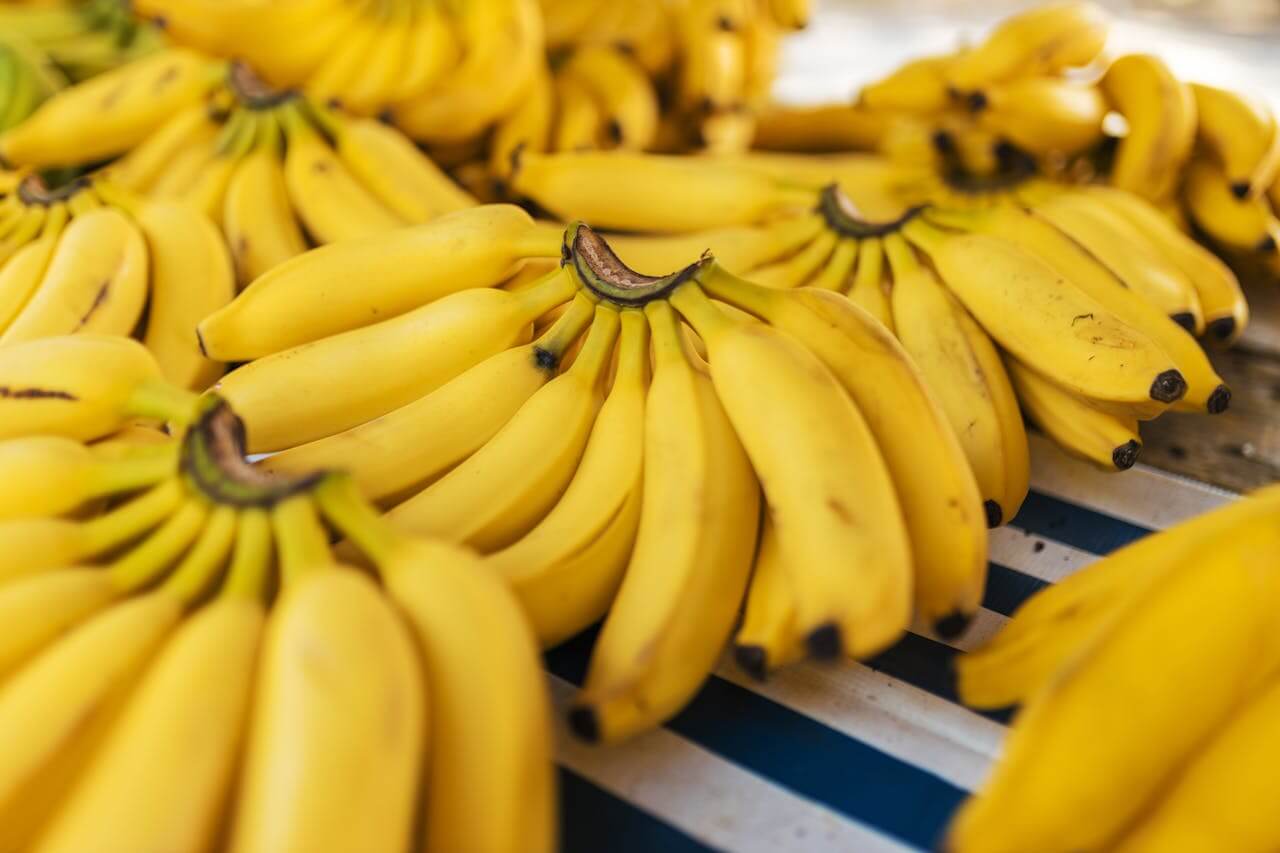
Banane is feminine in German — the correct article is die. The plural is die Bananen. In English, Banane means banana.Die Banane is an essential everyday word in the German food and drinks vocabulary, learned right at the beginning (A1 level). You will use it frequently when talking about breakfast, fruits, or grocery shopping. Below you'll find the full declension, example sentences, and a quiz.
Gender rule: Nouns ending in -e are usually feminine in German (die Banane, die Orange, die Pflaume). This is one of the most reliable gender patterns. See all gender patterns in the Article Rules and a full overview at the German Articles.
Banane — Declension Table
| Case | Singular | Plural |
|---|---|---|
| Nominative | die Banane | die Bananen |
| Genitive | der Banane | der Bananen |
| Dative | der Banane | den Bananen |
| Accusative | die Banane | die Bananen |
Example Sentences with Banane
Die reife Banane ist sehr süß.
(The ripe banana is very sweet.) — Nominative
Das Kind isst die Banane komplett auf.
(The child eats the banana completely.) — Accusative
Das Müsli schmeckt mit der Banane noch viel besser.
(The muesli tastes much better with the banana.) — Dative
Die Farbe der Banane wird langsam braun.
(The color of the banana is slowly turning brown.) — Genitive
Die Bananen im Supermarkt sind oft noch grün.
(The bananas in the supermarket are often still green.) — Nominative Plural
Wir machen einen gesunden Smoothie mit den Bananen.
(We are making a healthy smoothie with the bananas.) — Dative Plural
Related Words & Compounds
Word family (Wortfamilie): Banane is a loanword, so it does not have a traditional German word family.
Common compounds (Komposita): die Bananenschale (banana peel), das Bananenbrot (banana bread), der Bananensaft (banana juice), die Bananenmilch (banana milk)
Common Mistake with Banane
❌ Common mistake: Die Banana ist sehr lecker.
✅ Correct: Die Banane ist sehr lecker.
💡 Why: The German word ends with an -e, not an -a like in English. Writing or saying "Banana" is a very common spelling and pronunciation mistake caused by English interference. Remember to always use the "-e" ending: die Banane.
Quick Quiz: Test Your Knowledge
Can you get all three right? Apply what you've learned above.
1. Dieser Joghurt passt geschmacklich sehr gut zu ___.
- A) die Banane
- B) der Banane
- C) den Banane
Check Answer
The preposition zu always takes the dative case. Feminine dative = der: zu der Banane.
2. ___ liegen in der Obstschale auf dem Tisch.
- A) Die Bananen
- B) Die Banane
- C) Der Bananen
Check Answer
The plural verb "liegen" shows that we need the plural subject in the nominative. Plural nominative = die Bananen.
3. Er schält die reif___ Banane für sein Frühstück.
- A) -e
- B) -en
- C) -er
Check Answer
After the definite article die in the accusative feminine, the adjective ending is -e: die reife Banane.
Want to practice more nouns like this? The Article Trainer has 600+ nouns to drill — including everyday vocabulary. Pick the article, get instant feedback, and stop guessing.
More Food Nouns & Vocabulary
- der Apfel — the apple
- die Orange — the orange
- die Erdbeere — the strawberry
- die Traube — the grape
- die Birne — the pear
- die Zitrone — the lemon
For more themed words, explore the Vocabulary overview list, check out the full food and drinks vocabulary, or browse the grammar overview.
Is it der, die, or das Kollege? Practice makes perfect.
The Article Trainer gives you 600+ nouns to drill — including everyday vocabulary. Pick the article, get instant feedback, and stop guessing.
Practice German Articles →Frequently Asked Questions
Is Banane masculine, feminine, or neuter in German?
Banane is feminine — the correct article is die. This follows a very reliable pattern: the vast majority of German nouns ending in -e are feminine (die Banane, die Birne, die Schokolade). The same gender applies to its compounds where it is the final word, though it's typically the first component (like die Bananenschale).
What is the plural of Banane?
The plural is die Bananen. For almost all feminine nouns ending in -e, you simply add an -n to form the plural. The singular and plural stems are identical, with no Umlaut changes.
Do you say Banana or Banane in German?
You always say and write Banane. "Banana" is English and using it in German is a common mistake. You pronounce the final "-e" in German slightly like the "a" in the English word "about".