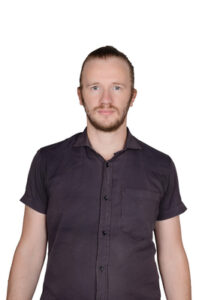

Hemd is neuter in German — the correct article is das. The plural is die Hemden. In English, Hemd means shirt.Das Hemd is one of the most common words in German clothing vocabulary. It's typically learned around A1–A2 level and comes up whenever you talk about everyday outfits, office wear, or getting dressed. Below you'll find the full declension, example sentences, and a quiz.
Gender rule: There is no clear ending-based rule for Hemd — the article must be memorized. Hemd is a short, monosyllabic noun from an old Germanic root, and these can be masculine, feminine, or neuter. See all gender patterns in the Article Rules and a full overview at the German Articles.
Hemd — Declension Table
| Case | Singular | Plural |
|---|---|---|
| Nominative | das Hemd | die Hemden |
| Genitive | des Hemdes / des Hemds | der Hemden |
| Dative | dem Hemd | den Hemden |
| Accusative | das Hemd | die Hemden |
Example Sentences with Hemd
Das blaue Hemd passt gut zum Anzug.
(The blue shirt goes well with the suit.) — Nominative
Er hat das Hemd vor dem Meeting schnell gebügelt.
(He quickly ironed the shirt before the meeting.) — Accusative
Mit dem karierten Hemd macht er einen lässigen Eindruck.
(He makes a casual impression with the plaid shirt.) — Dative
Der Kragen des Hemdes ist etwas zu eng.
(The collar of the shirt is a bit too tight.) — Genitive
Die Hemden hängen frisch gewaschen im Schrank.
(The shirts are hanging freshly washed in the closet.) — Nominative Plural
In den weißen Hemden sahen alle Kellner gleich aus.
(All the waiters looked the same in the white shirts.) — Dative Plural
Related Words & Compounds
Word family (Wortfamilie): das Hemdchen (little shirt — diminutive)
Common compounds (Komposita): das Oberhemd (dress shirt), das Unterhemd (undershirt), das Nachthemd (nightgown), die Hemdbluse (shirt blouse)
Common Mistake with Hemd
❌ Common mistake: Die Hemde sind im Schrank.
✅ Correct: Die Hemden sind im Schrank.
💡 Why: The plural of Hemd is Hemden — with -en, not just "-e." This plural pattern applies to several neuter nouns: das Hemd → die Hemden, das Bett → die Betten, das Auge → die Augen.
Quick Quiz: Test Your Knowledge
Can you get all three right? Apply what you've learned above.
1. Zu ___ Hemd passt eine dunkle Krawatte.
- A) das Hemd
- B) dem Hemd
- C) den Hemd
Check Answer
The preposition zu always takes the dative. Neuter dative = dem: dem Hemd.
2. Er hat ___ Hemd nach der Arbeit gewechselt.
- A) dem Hemd
- B) der Hemd
- C) das Hemd
Check Answer
"Wechseln" takes an accusative object (what did he change?). Neuter accusative = das: das Hemd.
3. Sie hat ihm ein schick___ Hemd geschenkt.
- A) -er
- B) -en
- C) -es
Check Answer
After the indefinite article ein in the accusative neuter, the adjective ending is -es: ein schickes Hemd. The adjective takes over the gender signal that ein doesn't show.
Want to practice more nouns like this? The Article Trainer has 600+ nouns to drill — including everyday vocabulary. Pick the article, get instant feedback, and stop guessing.
More Clothing Nouns
- der Anzug — the suit
- die Badehose — the swim trunks
- der Bikini — the bikini
- die Bluse — the blouse
- die Brille — the glasses
- die Hose — the pants
- das Kleid — the dress
For more clothing words, check out the German clothing vocabulary list. To find a complete collection of all vocabulary topics, visit the Vocabulary Overview, or browse the full grammar overview.
Is it der, die, or das? Practice makes perfect.
The Article Trainer gives you 600+ nouns to drill — including everyday vocabulary. Pick the article, get instant feedback, and stop guessing.
Practice German Articles →Frequently Asked Questions
Is Hemd masculine, feminine, or neuter in German?
Hemd is neuter — the correct article is das. There is no ending-based rule that predicts this — the article must be memorized. A helpful contrast: das Hemd (neuter) vs. die Bluse (feminine) — both mean a similar type of top, but they have different genders.
What is the plural of Hemd?
The plural is die Hemden — with the ending -en. A common mistake is "die Hemde" (without the -n), but this is incorrect. In the dative plural: den Hemden.
How do you say shirt in German?
The German word for shirt is das Hemd. It usually refers to a button-down shirt, especially in formal or office contexts. You'll find it in compounds like das Oberhemd (dress shirt), das Unterhemd (undershirt), and das Nachthemd (nightgown). For a T-shirt, Germans simply say das T-Shirt.
What is the difference between Hemd and Bluse?
Das Hemd is a shirt — usually a button-down shirt traditionally worn by men, often as part of an Anzug (suit). Die Bluse is a blouse — typically a more fitted top worn by Frauen. Note the different genders: das Hemd (neuter) vs. die Bluse (feminine).