
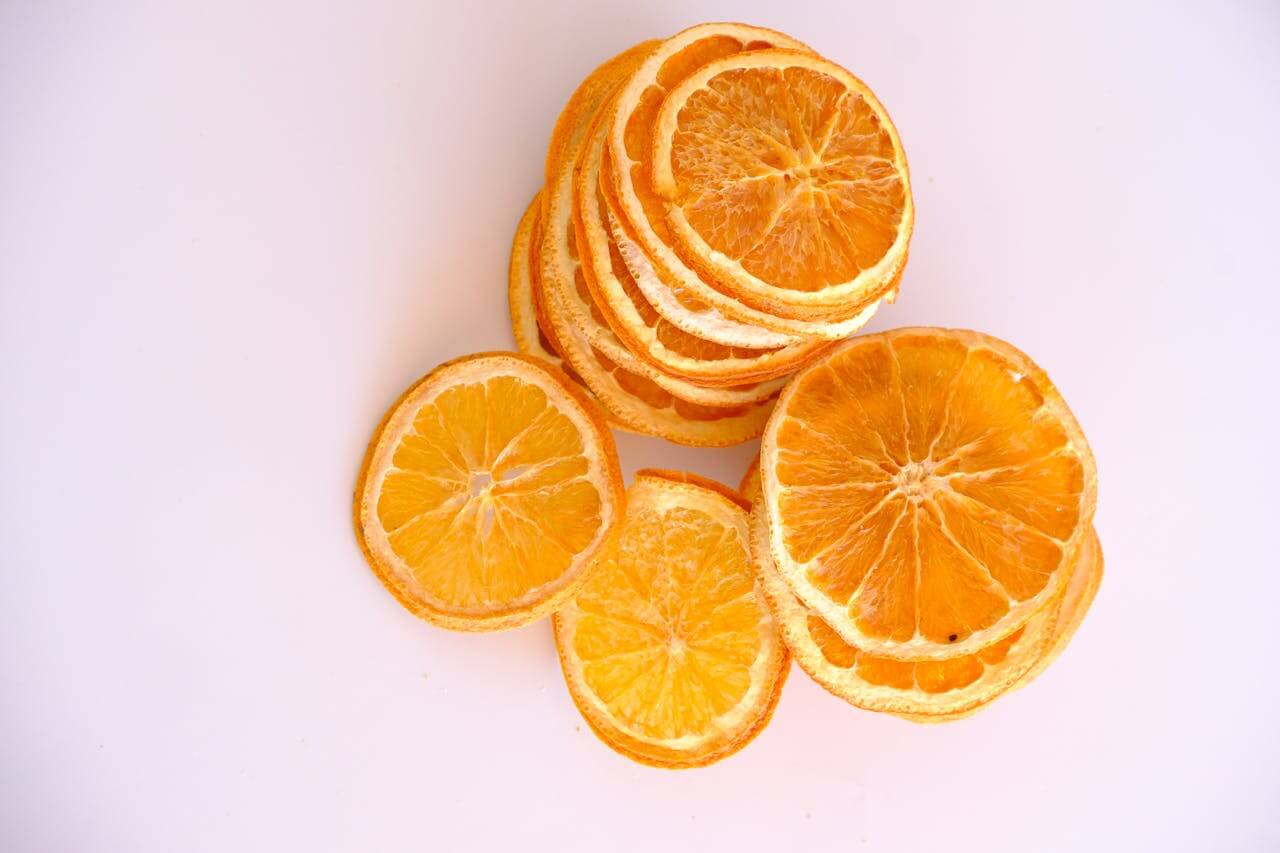
Orange is feminine in German — the correct article is die. The plural is die Orangen. In English, Orange translates to the fruit orange.Die Orange is a fundamental word belonging to the German food and drinks vocabulary. It is typically learned at the A1 level and is used frequently in everyday situations, from ordering drinks to talking about healthy eating. Below you'll find the full declension, example sentences, and a quiz to test your knowledge.
Gender rule: Nouns ending in -e are usually feminine in German (die Orange, die Banane, die Birne). This is one of the most reliable gender patterns. See all gender patterns in the Article Rules and a full overview at the German Articles.
Orange — Declension Table
| Case | Singular | Plural |
|---|---|---|
| Nominative | die Orange | die Orangen |
| Genitive | der Orange | der Orangen |
| Dative | der Orange | den Orangen |
| Accusative | die Orange | die Orangen |
Example Sentences with Orange
Die Orange ist sehr saftig und süß.
(The orange is very juicy and sweet.) — Nominative
Er schält die Orange mit einem kleinen Messer.
(He peels the orange with a small knife.) — Accusative
Der Tee schmeckt mit der Orange viel besser.
(The tea tastes much better with the orange.) — Dative
Der Geruch der Orange erinnert mich an Weihnachten.
(The smell of the orange reminds me of Christmas.) — Genitive
Die Orangen aus Spanien sind oft besonders gut.
(The oranges from Spain are often particularly good.) — Nominative Plural
Aus den Orangen macht sie einen frischen Saft.
(She makes a fresh juice out of the oranges.) — Dative Plural
Related Words & Compounds
Word family (Wortfamilie): As a loanword from Old French (originally Arabic/Persian), Orange doesn't have a broad traditional Germanic word family. The related adjective is orange (the color orange).
Common compounds (Komposita): der Orangensaft (orange juice), die Orangenschale (orange peel), der Orangenbaum (orange tree), die Orangenmarmelade (orange marmalade)
Common Mistake with Orange
❌ Common mistake: Die Oranges sind im Angebot.
✅ Correct: Die Orangen sind im Angebot.
💡 Why: English speakers often try to form the plural by adding an "-s" (oranges). In German, however, the plural of "Orange" is formed by adding an -n: die Orangen. This rule applies to almost all feminine nouns ending in -e.
Quick Quiz: Test Your Knowledge
Can you get all three right? Apply what you've learned above.
1. Dieser Likör wird aus ___ Orange gemacht.
- A) die Orange
- B) der Orange
- C) den Orange
Check Answer
The preposition aus always requires the dative case. Feminine dative = der: aus der Orange.
2. Hast du ___ heute Morgen schon gegessen?
- A) die Orangen
- B) der Orangen
- C) den Orangen
Check Answer
"Essen" takes an accusative object (what did you eat?). Plural accusative = die Orangen.
3. Ich kaufe die frisch___ Orange auf dem Markt.
- A) -e
- B) -en
- C) -er
Check Answer
After the definite article die in the accusative feminine, the adjective ending is -e: die frische Orange.
Want to practice more nouns like this? The Article Trainer has 600+ nouns to drill — including everyday vocabulary. Pick the article, get instant feedback, and stop guessing.
More Food Nouns & Vocabulary
- der Apfel — the apple
- die Banane — the banana
- die Birne — the pear
- die Traube — the grape
- die Zitrone — the lemon
- die Erdbeere — the strawberry
For more themed vocabulary lists, explore the Vocabulary overview list, practice with the food and drinks vocabulary, or browse the full grammar overview to master your German.
Is it der, die, or das? Practice makes perfect.
The Article Trainer gives you 600+ nouns to drill — including everyday vocabulary. Pick the article, get instant feedback, and stop guessing.
Practice German Articles →Frequently Asked Questions
Is Orange masculine, feminine, or neuter in German?
Orange is feminine — the correct article is die. This follows a very standard pattern: the vast majority of German nouns ending in -e are feminine (die Orange, die Tomate, die Schokolade). This gender also dictates the compounds where it sits at the end, though Orange is usually the first component (as in der Orangensaft).
What is the plural of Orange in German?
The plural is die Orangen. Unlike in English, where you add an "s", German feminine nouns ending in -e simply take an -n at the end to form the plural.
How do you pronounce Orange in German?
Because the word is a loanword from French, its pronunciation is unique in German. The "g" is pronounced soft (like the "s" in the English word "measure" or "pleasure") and the final "e" is vocalized slightly as a schwa, rather than being completely silent as it is in English.