
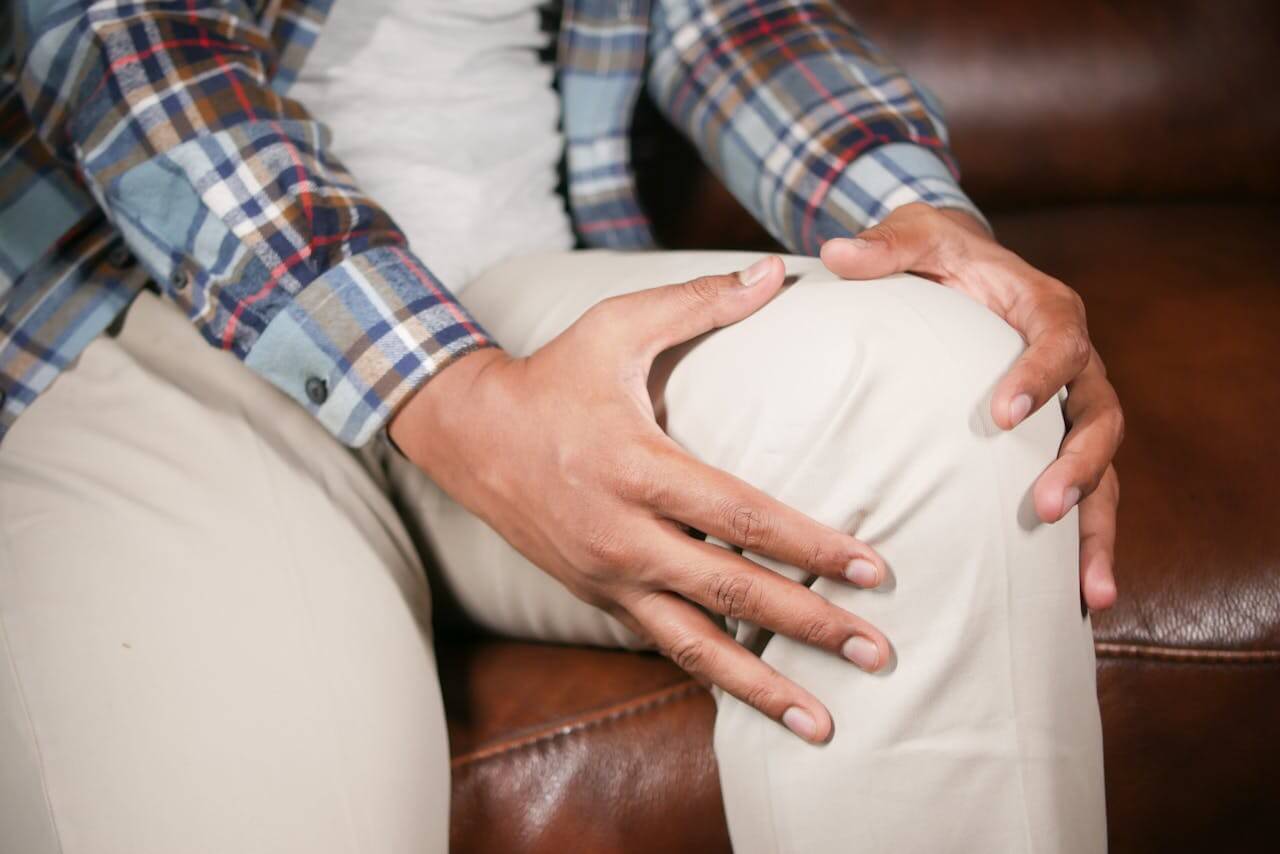
"Knie" is neuter in German — the correct article is das. The plural is die Knie — the form is unchanged. In English, Knie means "knee".
Gender rule: das Knie is neuter. Body part nouns in German have mixed genders — der Finger, die Hand, das Knie — so there is no reliable ending-based rule here. The safest approach is always to learn every noun with its article from the start. See all gender patterns in the Article Rules and a full overview at the german articles.
Das Knie is an A1 vocabulary word that comes up in everyday German — from sports and injuries to everyday movement. It is a particularly useful example because its plural is identical to its singular: both are Knie, with only the article changing. For neuter nouns, the nominative and accusative are always identical too, which makes the declension of das Knie very straightforward in most cases. Understanding how cases work with neuter nouns is an important step at A1 level. For more body part nouns, also see das Bein and der Finger.
Knie — Declension Table
| Case | Singular | Plural |
|---|---|---|
| Nominative | das Knie | die Knie |
| Genitive | des Knies | der Knie |
| Dative | dem Knie | den Knien |
| Accusative | das Knie | die Knie |
Example Sentences with Knie
Sein Knie ist nach dem Sturz stark geschwollen und schmerzt bei jeder Bewegung.
(His knee is badly swollen after the fall and hurts with every movement.) — Nominative
Der Läufer streckt das Knie langsam durch, um die Muskeln zu dehnen.
(The runner slowly straightens his knee to stretch the muscles.) — Accusative
Sie legt ein Kissen unter dem Knie, um den Druck zu verringern.
(She places a cushion under her knee to reduce the pressure.) — Dative
Die Schwellung des Knies ließ nach einigen Tagen deutlich nach.
(The swelling of the knee clearly subsided after a few days.) — Genitive
Ihre Knie zittern nach dem langen Bergabstieg vor Erschöpfung.
(Her knees are trembling with exhaustion after the long descent.) — Nominative Plural
Den Knien tut es gut, nach dem Sport die Beine kurz hochzulegen.
(It is good for the knees to briefly elevate the legs after sport.) — Dative Plural
Related Words & Compounds
Word family (Wortfamilie):
- knien — to kneel (verb, derived from Knie)
Common compounds (Komposita):
- die Kniescheibe — kneecap
- das Kniegelenk — knee joint
- der Knieschützer — knee pad
- der Kniestrumpf — knee-high stocking
Common Mistake with Knie
❌ Common mistake: Beide Knies tun mir weh.
✅ Correct: Beide Knie tun mir weh.
💡 Why: The plural of das Knie is die Knie — the noun does not change at all. The -s plural is rare in German and mostly limited to certain loanwords like das Auto → die Autos. Native German neuter nouns ending in -ie simply keep their form in the plural — only the article changes from das to die.
Quick Quiz: Test Your Knowledge
Can you get all three right? Apply what you've learned above.
1. Sie legt ein Kissen unter ___ Knie, um den Druck zu verringern.
- A) das
- B) des
- C) dem
Check Answer
The preposition unter can take either accusative (movement toward) or dative (location/rest). The cushion is being placed and resting under the knee — a fixed position — so the dative is required: unter dem Knie. For neuter nouns, the dative article is dem. Option A) das is nominative/accusative. Option B) des is genitive.
2. Die Schwellung ___ Knies ließ nach einigen Tagen nach.
- A) dem
- B) der
- C) des
Check Answer
"Die Schwellung ___ Knies" — whose swelling? The knee's. This is a possession relationship expressed with the genitive case. For neuter nouns, the genitive article is des and the noun adds -s: des Knies. Option A) dem is dative. Option B) der is the genitive article for feminine nouns.
3. Er hat sich ein geschwollen___ Knie geholt.
- A) -e
- B) -er
- C) -es
Check Answer
After an indefinite article in the accusative with a neuter noun, the adjective ending is -es: ein geschwollenes Knie. Because ein looks the same for neuter nominative and accusative, the adjective must carry the gender-case signal — this is the strong ending -es. Option A) -e is used after a definite article in nominative/accusative neuter. Option B) -er is the strong ending for masculine nominative.
Want to drill more nouns like this? The Article Trainer gives you 600+ nouns to practice — pick the article, get instant feedback, and stop guessing.
More Body Part Nouns
- der Arm — the arm
- der Bauch — the belly / stomach
- das Bein — the leg
- der Finger — the finger
- das Gesicht — the face
- der Hals — the neck / throat
- die Hand — the hand
- das Herz — the heart
For the full list with articles and plurals, see the Body Parts Vocabulary page. You can also browse more topic-based word lists in the German Vocabulary Overview and test yourself with the Vocabulary Quizzes.
Is it der, die, or das Knie? Practice makes perfect.
The Article Trainer gives you 600+ nouns to drill — from everyday vocabulary to family, food, and much more. Pick the article, get instant feedback, and stop guessing.
Practice German Articles →Frequently Asked Questions
Is Knie masculine, feminine, or neuter in German?
Knie is neuter — the correct article is das. Body part nouns in German have mixed genders, so there is no reliable rule to predict them. The best habit is always to learn every noun with its article from the start. For a full overview of gender patterns, see the Article Rules.
What is the plural of Knie in German?
The plural is die Knie — the noun itself does not change. This is called the zero plural and means only the article changes: das Knie (singular) → die Knie (plural). Do not add -s. In the dative plural, -n is added: den Knien.
What is the genitive of das Knie?
The genitive singular is des Knies — add -s. For neuter nouns, as for masculine nouns, the genitive singular adds -s or -es. Because Knie already ends in a vowel, the shorter form -s is standard: des Knies. See the Cases Overview for more detail.
What is the difference between Knie and Kniescheibe in German?
Das Knie refers to the knee as a whole — the joint connecting the upper and lower leg. Die Kniescheibe is the kneecap specifically — the small bone at the front of the knee joint. In everyday German, das Knie is the word you need in most contexts; die Kniescheibe is used when referring specifically to the patella, for example in medical or sports injury contexts.