
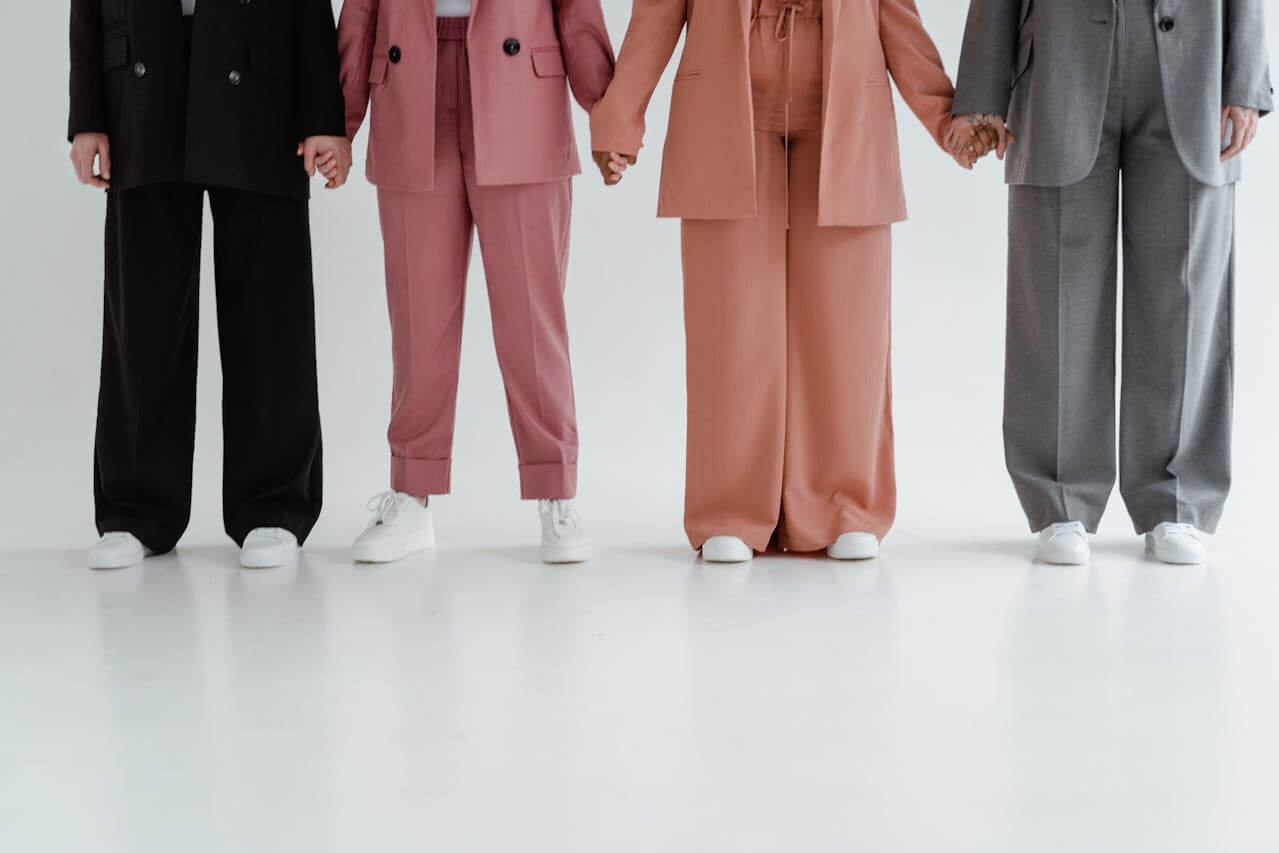
Hose is feminine in German — the correct article is die. The plural is die Hosen. In English, Hose means pants (American English) or trousers (British English).Die Hose is one of the first clothing words most learners encounter — typically at A1–A2 level. One important difference to English: in German, Hose is singular. While English says "pants" or "trousers" (always plural), German says die Hose (singular) for one pair. Below you'll find the full declension, example sentences, and a quiz.
Gender rule: Nouns ending in -e are usually feminine in German (die Hose, die Bluse, die Brille). This is one of the most reliable gender patterns. See all gender patterns in the Article Rules and a full overview at the German Articles.
Hose — Declension Table
| Case | Singular | Plural |
|---|---|---|
| Nominative | die Hose | die Hosen |
| Genitive | der Hose | der Hosen |
| Dative | der Hose | den Hosen |
| Accusative | die Hose | die Hosen |
Example Sentences with Hose
Die neue Hose sitzt perfekt.
(The new pants fit perfectly.) — Nominative
Er hat die Hose in der Umkleidekabine anprobiert.
(He tried on the pants in the changing room.) — Accusative
Mit der dunklen Hose sieht das Outfit elegant aus.
(The outfit looks elegant with the dark pants.) — Dative
Die Taschen der Hose sind sehr tief.
(The pockets of the pants are very deep.) — Genitive
Die Hosen sind alle in der Wäsche.
(All the pants are in the laundry.) — Nominative Plural
In den kurzen Hosen fühlen sich die Kinder im Sommer wohl.
(The children feel comfortable in shorts during summer.) — Dative Plural
Related Words & Compounds
Word family (Wortfamilie): das Höschen (panties/little pants — diminutive)
Common compounds (Komposita): die Badehose (swim trunks), die Jogginghose (jogging pants/sweatpants), die Lederhose (leather pants), die Jeanshose (jeans), der Hosenanzug (pantsuit)
Common Mistake with Hose
❌ Common mistake: Die Hose sind zu lang.
✅ Correct: Die Hose ist zu lang.
💡 Why: In English, "pants" and "trousers" are always plural. In German, die Hose is singular — so the verb must be ist, not "sind." If you're talking about multiple pairs, use the plural: Die Hosen sind zu lang. The same singular/plural difference applies to die Brille (glasses).
Quick Quiz: Test Your Knowledge
Can you get all three right? Apply what you've learned above.
1. Die Größe ___ Hose stimmt nicht.
- A) die Hose
- B) der Hose
- C) dem Hose
Check Answer
"Die Größe der Hose" — the genitive shows possession (the size of what?). Feminine genitive = der: der Hose.
2. Er hat ___ Hose im Geschäft anprobiert.
- A) der Hose
- B) dem Hose
- C) die Hose
Check Answer
"Anprobieren" takes an accusative object (what did he try on?). Feminine accusative = die: die Hose.
3. Sie hat die eng___ Hose gegen eine größere getauscht.
- A) -e
- B) -en
- C) -er
Check Answer
After the definite article die in the accusative feminine, the adjective ending is -e: die enge Hose.
Want to practice more nouns like this? The Article Trainer has 600+ nouns to drill — including everyday vocabulary. Pick the article, get instant feedback, and stop guessing.
More Clothing Nouns
- der Anzug — the suit
- die Badehose — the swim trunks
- der Bikini — the bikini
- die Bluse — the blouse
- die Brille — the glasses
- das Hemd — the shirt
- das Kleid — the dress
For more clothing words, check out the German clothing vocabulary list. To find a complete collection of all vocabulary topics, visit the Vocabulary Overview, or browse the full grammar overview.
Is it der, die, or das? Practice makes perfect.
The Article Trainer gives you 600+ nouns to drill — including everyday vocabulary. Pick the article, get instant feedback, and stop guessing.
Practice German Articles →Frequently Asked Questions
Is Hose masculine, feminine, or neuter in German?
Hose is feminine — the correct article is die. This follows the general rule that most German nouns ending in -e are feminine (die Hose, die Bluse, die Brille). The same gender applies to all Hose-compounds: die Badehose, die Jogginghose, die Lederhose.
What is the plural of Hose?
The plural is die Hosen. Like most feminine nouns ending in -e, the plural is formed by adding -n. In the dative plural: den Hosen.
Is Hose singular or plural in German?
Unlike English, where "pants" and "trousers" are always plural, die Hose is singular in German. One pair of pants = die Hose. Multiple pairs = die Hosen. This is a common source of confusion: Die Hose ist zu lang (singular), not "Die Hose sind zu lang." The same applies to die Brille (glasses).
What types of Hose are there in German?
German uses compounds to describe different types of pants: die Jeanshose (jeans), die Jogginghose (sweatpants), die Lederhose (leather pants — a traditional Bavarian garment), die Badehose (swim trunks), die Shorts (shorts). All Hose-compounds are feminine because the last component — Hose — is feminine.