
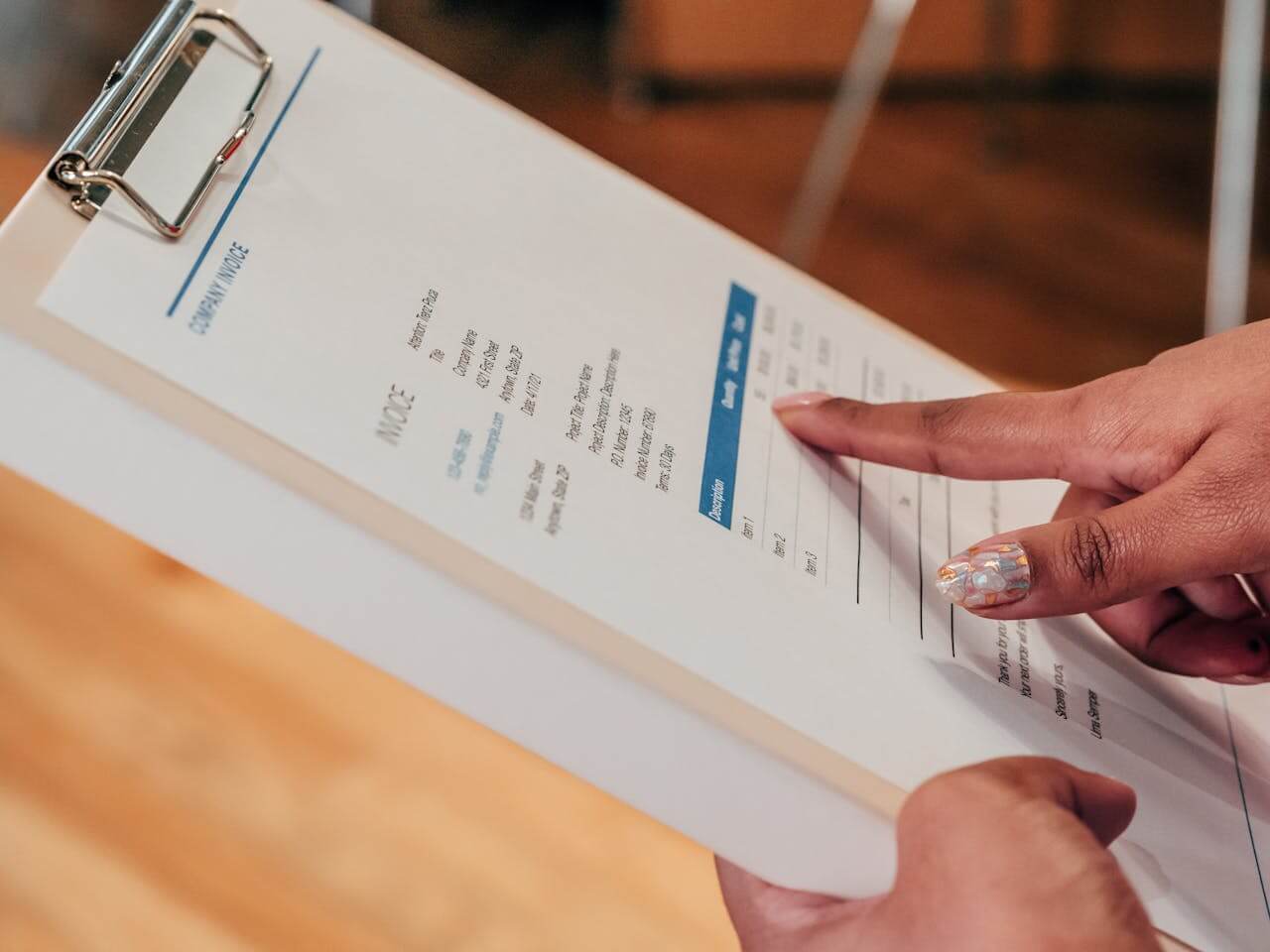
Rechnung is feminine in German — the correct article is die. The plural is die Rechnungen. In English, Rechnung means invoice, bill, or calculation.Die Rechnung is one of the most practical words in business German vocabulary — you'll need it at restaurants, in shops, and in the office. It's typically learned at A2 level. Depending on context, Rechnung can mean "invoice" (from a company), "bill" (at a restaurant), or "calculation" (in math). Below you'll find the full declension, example sentences, and a quiz.
Gender rule: Nouns ending in -ung are always feminine in German — no exceptions (die Rechnung, die Besprechung, die Bewerbung). This is one of the easiest gender rules to remember. See all gender patterns in the Article Rules and a full overview at the German Articles.
Rechnung — Declension Table
| Case | Singular | Plural |
|---|---|---|
| Nominative | die Rechnung | die Rechnungen |
| Genitive | der Rechnung | der Rechnungen |
| Dative | der Rechnung | den Rechnungen |
| Accusative | die Rechnung | die Rechnungen |
Example Sentences with Rechnung
Die Rechnung kommt per E-Mail.
(The invoice will come by email.) — Nominative
Können Sie mir bitte die Rechnung schicken?
(Can you please send me the invoice?) — Accusative
Auf der Rechnung fehlt die Mehrwertsteuer.
(The value-added tax is missing on the invoice.) — Dative
Die Höhe der Rechnung hat uns überrascht.
(The amount of the invoice surprised us.) — Genitive
Die Rechnungen müssen bis Ende des Monats bezahlt werden.
(The invoices must be paid by the end of the month.) — Nominative Plural
Bei den Rechnungen gab es mehrere Fehler.
(There were several errors in the invoices.) — Dative Plural
Related Words & Compounds
Word family (Wortfamilie): rechnen (to calculate — verb), der Rechner (calculator/computer)
Common compounds (Komposita): die Stromrechnung (electricity bill), die Telefonrechnung (phone bill), der Rechnungsbetrag (invoice amount)
Common Mistake with Rechnung
❌ Common mistake: Die Rechnunges sind schon bezahlt.
✅ Correct: Die Rechnungen sind schon bezahlt.
💡 Why: The plural of Rechnung is Rechnungen — not "Rechnunges." German never forms plurals with -es. All nouns ending in -ung form the plural with -en: die Rechnung → die Rechnungen, die Besprechung → die Besprechungen, die Bewerbung → die Bewerbungen.
Quick Quiz: Test Your Knowledge
Can you get all three right? Apply what you've learned above.
1. Der Betrag ___ Rechnung ist zu hoch.
- A) der Rechnung
- B) die Rechnung
- C) dem Rechnung
Check Answer
"Der Betrag der Rechnung" — the genitive shows possession (the amount of what?). Feminine genitive = der: der Rechnung.
2. Der Kunde hat ___ Rechnung sofort bezahlt.
- A) der Rechnung
- B) dem Rechnung
- C) die Rechnung
Check Answer
"Bezahlen" takes an accusative object (what did he pay?). Feminine accusative = die: die Rechnung.
3. Wir haben die ausstehend___ Rechnung beglichen.
- A) -e
- B) -en
- C) -er
Check Answer
After the definite article die in the accusative feminine, the adjective ending is -e: die ausstehende Rechnung. After a definite article in the accusative feminine, the ending is always -e.
Want to practice more nouns like this? The Article Trainer has 600+ nouns to drill — including everyday vocabulary. Pick the article, get instant feedback, and stop guessing.
More Work & Business Nouns
- das Projekt — the project
- die Präsentation — the presentation
- der Lieferant — the supplier
- die Investition — the investment
- der Gewinn — the profit
- das Budget — the budget
- der Kunde — the customer
- der Chef — the boss
For more work-related vocabulary, explore the Business German vocabulary list or browse the full grammar overview.
Is it der, die, or das? Practice makes perfect.
The Article Trainer gives you 600+ nouns to drill — including everyday vocabulary. Pick the article, get instant feedback, and stop guessing.
Practice German Articles →Frequently Asked Questions
Is Rechnung masculine, feminine, or neuter in German?
Rechnung is feminine — the correct article is die. All nouns ending in -ung are feminine in German — no exceptions. This rule covers hundreds of common nouns: die Kündigung, die Lösung, die Besprechung, die Rechnung.
What is the plural of Rechnung?
The plural is die Rechnungen. All nouns ending in -ung form the plural by adding -en. This is one of the most predictable plural patterns in German.
How do you say invoice in German?
The German word for invoice is die Rechnung. It comes from the verb "rechnen" (to calculate). Rechnung is also the word you use when asking for the bill at a restaurant: "Die Rechnung, bitte!" (The bill, please!). In formal accounting and business documents, you may also come across die Faktura, which refers to the invoice and the invoicing process. In everyday German, Rechnung is far more common.
What is the difference between Rechnung and Quittung?
Die Rechnung is an invoice or bill — a document that lists what you owe and asks for payment. Die Quittung is a receipt — a document that confirms you have already paid. You receive a Rechnung before paying and a Quittung after paying. At a restaurant, "Die Rechnung, bitte!" asks for the bill — not for a receipt.