
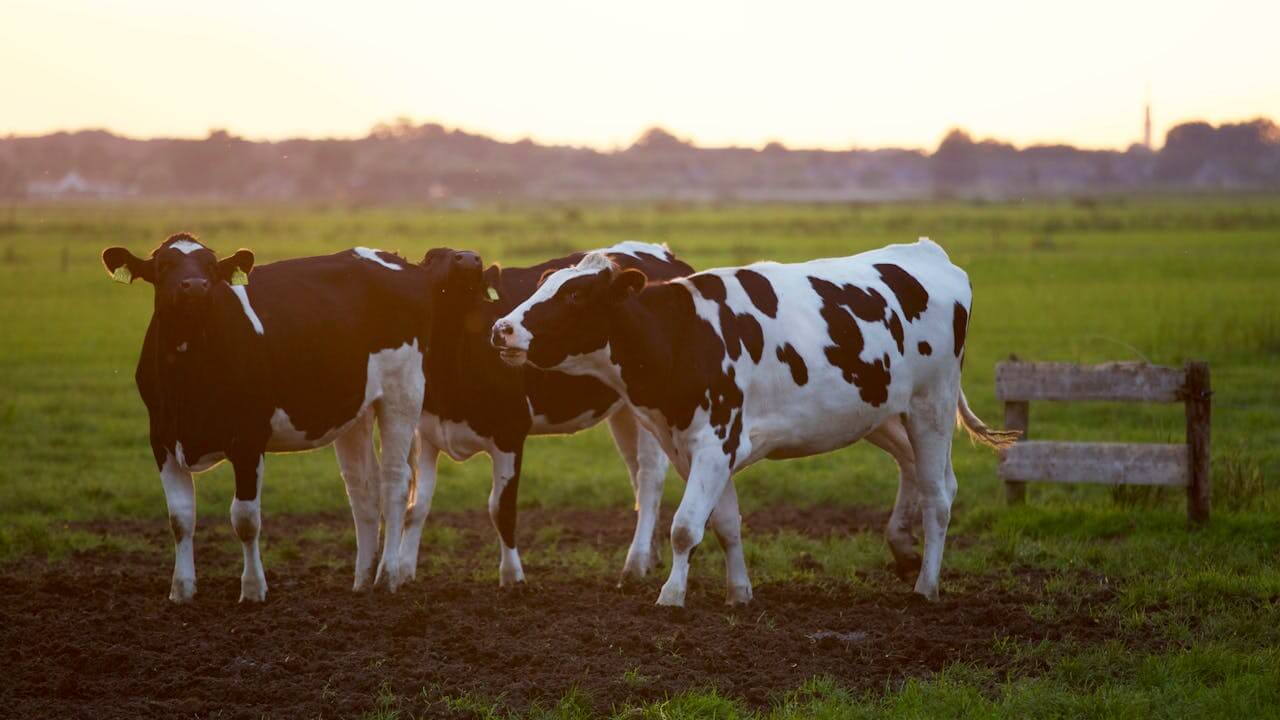
"Kuh" is feminine in German — the correct article is die. The plural is die Kühe — note the Umlaut! In English, Kuh means "cow". The male counterpart is der Stier (bull).
Gender rule: Die Kuh refers specifically to a female animal — and in German, female animals are usually feminine. This is the same pattern as die Maus and die Katze. The plural adds an Umlaut: Kuh → Kühe. See all gender patterns in the Article Rules and a full overview at the German articles.
Die Kuh is essential A1 vocabulary and one of the most recognisable farm animal nouns in German. It is a great example for practising feminine declension — the article stays die in nominative and accusative, and changes to der in both genitive and dative singular. Understanding how cases work with feminine nouns is an important step at A1–A2 level. Below you'll find the full declension table, example sentences, a common mistake to avoid, and a short quiz.
Kuh — Declension Table
| Case | Singular | Plural |
|---|---|---|
| Nominative | die Kuh | die Kühe |
| Genitive | der Kuh | der Kühe |
| Dative | der Kuh | den Kühen |
| Accusative | die Kuh | die Kühe |
Example Sentences with Kuh
Die Kuh steht ruhig auf der grünen Weide und grast.
(The cow stands quietly on the green pasture and grazes.) — Nominative
Der Bauer treibt die Kuh jeden Morgen in den Stall.
(The farmer drives the cow into the barn every morning.) — Accusative
Das Kind gibt der Kuh ein Büschel frisches Gras.
(The child gives the cow a bunch of fresh grass.) — Dative
Das Muhen der Kuh ist über die ganze Weide zu hören.
(The cow's mooing can be heard across the entire pasture.) — Genitive
Die Kühe laufen nach dem Melken langsam zurück auf die Weide.
(The cows walk slowly back onto the pasture after milking.) — Nominative Plural
Der Tierarzt untersucht regelmäßig die Hufe der Kühe.
(The vet regularly examines the cows' hooves.) — Genitive Plural
Related Words & Compounds
Word family (Wortfamilie): The word family of Kuh is very thin in modern German — no established adjectives or verbs share the same root. The noun stands largely on its own.
Common compounds (Komposita): der Kuhstall (cowshed), die Kuhweide (cow pasture), die Kuhmilch (cow's milk), das Kuhfell (cowhide), der Kuhhirt (cowherd)
Common Mistake with Kuh
❌ Common mistake: Auf dem Bauernhof leben viele Kuhs.
✅ Correct: Auf dem Bauernhof leben viele Kühe.
💡 Why: The plural of die Kuh is die Kühe — the vowel gets an Umlaut (u → ü) and -e is added. The -s plural is rare in German and mostly limited to loanwords. This Umlaut + e pattern also appears in der Wolf → die Wölfe — each noun's plural must be learnt individually.
Quick Quiz: Test Your Knowledge
Can you get all three right? Apply what you've learned above.
1. Das Muhen ___ Kuh ist weit zu hören.
- A) die Kuh
- B) der Kuh
- C) den Kuh
Check Answer
2. Der Bauer gibt ___ Kuh frisches Wasser.
- A) die Kuh
- B) der Kuh
- C) den Kuh
Check Answer
"Geben" (to give) takes the dative for the recipient. For feminine nouns, the dative article is also der: der Kuh. Note that for feminine nouns, the genitive and dative articles are identical — both use der. Option A) die is nominative/accusative — wrong case here.
3. Das ist eine sehr groß___ Kuh.
- A) -er
- B) -es
- C) -e
Check Answer
After an indefinite article in the nominative with a feminine noun, the adjective ending is -e: eine große Kuh. The indefinite article eine already carries the feminine gender signal, so the adjective takes the weak ending -e. Compare: masculine ein großer Wolf (-er), neuter ein großes Pferd (-es).
Want to drill more nouns like this? The Article Trainer gives you 600+ nouns to practice — pick the article, get instant feedback, and stop guessing.
More Animal Nouns
- der Hund — the dog
- die Katze — the cat
- das Pferd — the horse
- der Wolf — the wolf
- die Maus — the mouse
- das Kaninchen — the rabbit
- der Elefant — the elephant
- der Bär — the bear
For more animal words, explore the full animal vocabulary list.
Is it der, die, or das Kuh? Practice makes perfect.
The Article Trainer gives you 600+ nouns to drill — including animal vocabulary and much more. Pick the article, get instant feedback, and stop guessing.
Practice German Articles →Frequently Asked Questions
Is Kuh masculine, feminine, or neuter in German?
Kuh is feminine — the correct article is die. The noun refers specifically to a female bovine, and in German, female animals are typically feminine. The male counterpart is der Stier (bull) and the young is das Kalb (calf). See all gender patterns in the Article Rules.
What is the plural of Kuh?
The plural is die Kühe — the vowel u gets an Umlaut to become ü, and -e is added. Do not use Kuhs as a plural — that is not correct German. In the dative plural, a further -n is added: den Kühen.
Why does the genitive of Kuh not add -s?
In German, feminine nouns never add an ending in the genitive singular — only the article changes. So while masculine and neuter nouns add -s or -es in the genitive (e.g. des Hundes, des Wolfes), feminine nouns simply use der with no change to the noun itself: der Kuh. This is the standard rule for all feminine nouns in German. For a full overview, see the Genitive Case article.
What is the difference between Kuh, Stier, and Kalb?
Die Kuh is a female adult bovine. Der Stier is the male bull — note the different article. Das Kalb is a calf of either sex — it is neuter, following the grammatical rule that young animals are often neuter in German. These three words are all different stems, so they must be learnt separately along with their articles.