
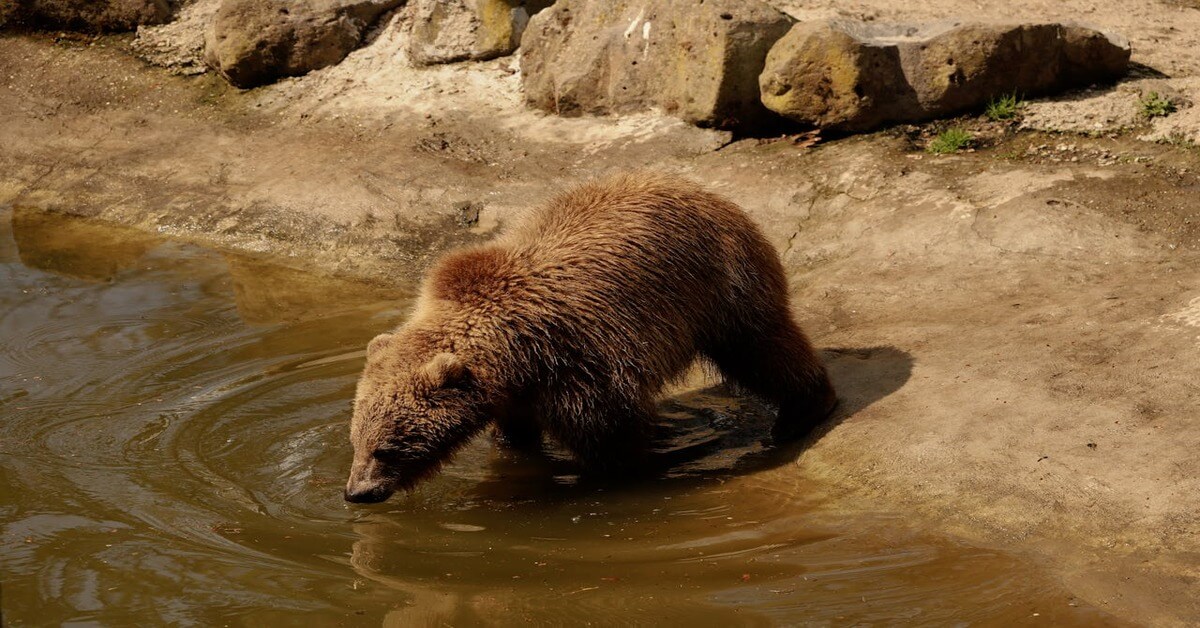
"Bär" is masculine in German — the correct article is der. The plural is die Bären (add -en). In English, Bär means "bear". The female bear is die Bärin.
Gender rule: Many large wild animal names are masculine in German — der Bär, der Löwe, der Affe. Important: Bär follows the N-Deklination (weak declension), which means it adds -en in all cases except the nominative singular. See all gender patterns in the Article Rules and a full overview at the German articles.
Der Bär is A1–A2 vocabulary and one of the most iconic animal nouns in German — from fairy tales to the Berlin city coat of arms. Like der Elefant and der Affe, it follows the N-Deklination, meaning the noun changes its ending in almost every case. Below you'll find the full declension table, example sentences, a common mistake to avoid, and a short quiz.
Bär — Declension Table
| Case | Singular | Plural |
|---|---|---|
| Nominative | der Bär | die Bären |
| Genitive | des Bären | der Bären |
| Dative | dem Bären | den Bären |
| Accusative | den Bären | die Bären |
Example Sentences with Bär
Der Bär schläft den ganzen Winter in seiner Höhle.
(The bear sleeps through the entire winter in its cave.) — Nominative
Der Förster beobachtet den Bären von einem sicheren Abstand.
(The forest ranger observes the bear from a safe distance.) — Accusative
Die Fotografin nähert sich dem Bären sehr vorsichtig.
(The photographer approaches the bear very carefully.) — Dative
Das Fell des Bären ist dicht und wasserfest.
(The bear's fur is thick and waterproof.) — Genitive
Die Bären suchen im Herbst intensiv nach Nahrung.
(The bears search intensively for food in autumn.) — Nominative Plural
Der Biologe folgt den Bären durch den dichten Wald.
(The biologist follows the bears through the dense forest.) — Dative Plural
Related Words & Compounds
Word family (Wortfamilie): die Bärin (female bear)
Compound adjectives: bärenstark (as strong as a bear), bärbeißig (grumpy — literally "bear-bitey")
Common compounds (Komposita): der Eisbär (polar bear), der Teddybär (teddy bear), die Bärenhöhle (bear cave), der Bärenhunger (ravenous hunger — idiom: Ich habe einen Bärenhunger), das Bärenfell (bear fur / bear skin)
Common Mistake with Bär
❌ Common mistake: Das Fell des Bärs ist sehr dicht.
✅ Correct: Das Fell des Bären ist sehr dicht.
💡 Why: Because Bär follows the N-Deklination, the genitive is des Bären — not des Bärs. The regular genitive ending -s (used for masculine nouns like des Hundes) does not apply here. Any time you use Bär outside the nominative singular, add -en: den Bären, dem Bären, des Bären.
Quick Quiz: Test Your Knowledge
Can you get all three right? Apply what you've learned above.
1. Wir sehen ___ Bär___ am anderen Ufer des Flusses.
- A) der Bär
- B) den Bär
- C) den Bären
Check Answer
"Sehen" (to see) takes the accusative. Masculine accusative = den. Because Bär follows the N-Deklination, the noun also adds -en: den Bären. Option B) uses the right article but forgets the obligatory -en ending on the noun.
2. Der Ranger gibt ___ Bär___ täglich frisches Fleisch.
- A) dem Bär
- B) dem Bären
- C) den Bären
Check Answer
"Geben" (to give) takes the dative for the recipient. Masculine dative = dem. With N-Deklination, the noun adds -en: dem Bären. Option A) has the correct article but is missing the required -en ending — the most common mistake with this noun.
3. Das ist ein sehr groß___ Bär.
- A) -e
- B) -es
- C) -er
Check Answer
After an indefinite article in the nominative with a masculine noun, the adjective ending is -er: ein großer Bär. Because ein doesn't carry the gender signal, the adjective must show it. Compare: feminine eine große Maus (-e), neuter ein großes Pferd (-es).
Want to drill more nouns like this? The Article Trainer gives you 600+ nouns to practice — pick the article, get instant feedback, and stop guessing.
More Animal Nouns
- der Hund — the dog
- die Katze — the cat
- das Pferd — the horse
- die Maus — the mouse
- der Elefant — the elephant
- der Löwe — the lion
- der Affe — the monkey
- der Wolf — the wolf
For more animal words, explore the full animal vocabulary list.
Is it der, die, or das Bär? Practice makes perfect.
The Article Trainer gives you 600+ nouns to drill — including animal vocabulary and much more. Pick the article, get instant feedback, and stop guessing.
Practice German Articles →Frequently Asked Questions
Is Bär masculine, feminine, or neuter in German?
Bär is masculine — the correct article is der. It follows the N-Deklination, which means the noun adds -en in all cases except the nominative singular. The female bear is die Bärin. See all gender patterns in the Article Rules.
What is the plural of Bär?
The plural is die Bären — add -en to the singular. This follows directly from the N-Deklination pattern. In the dative plural, no extra -n is needed since the noun already ends in -en: den Bären.
What is the genitive of Bär — des Bären or des Bärs?
The correct genitive is des Bären — not des Bärs. Because Bär follows the N-Deklination, it adds -en in the genitive, just as in the accusative and dative. The regular genitive ending -s only applies to masculine nouns outside the N-Deklination, like des Hundes or des Pferdes.
Why is Berlin's symbol a bear?
The bear has been the Wappentier (heraldic animal) of Berlin since 1280. While the city's name actually likely stems from a Slavic word for "swamp" (berl), the bear was chosen as a phonetic pun on the city's name—a so-called "canting arms" symbol. Today, der Berliner Bär appears on the city's coat of arms and is a central part of the city's identity. Beyond official flags, you will see the famous Buddy Bears—colorful, life-sized statues—all over the capital. Furthermore, the Golden Bear (Goldener Bär) is world-famous as the top prize awarded at the Berlin International Film Festival (Berlinale).