
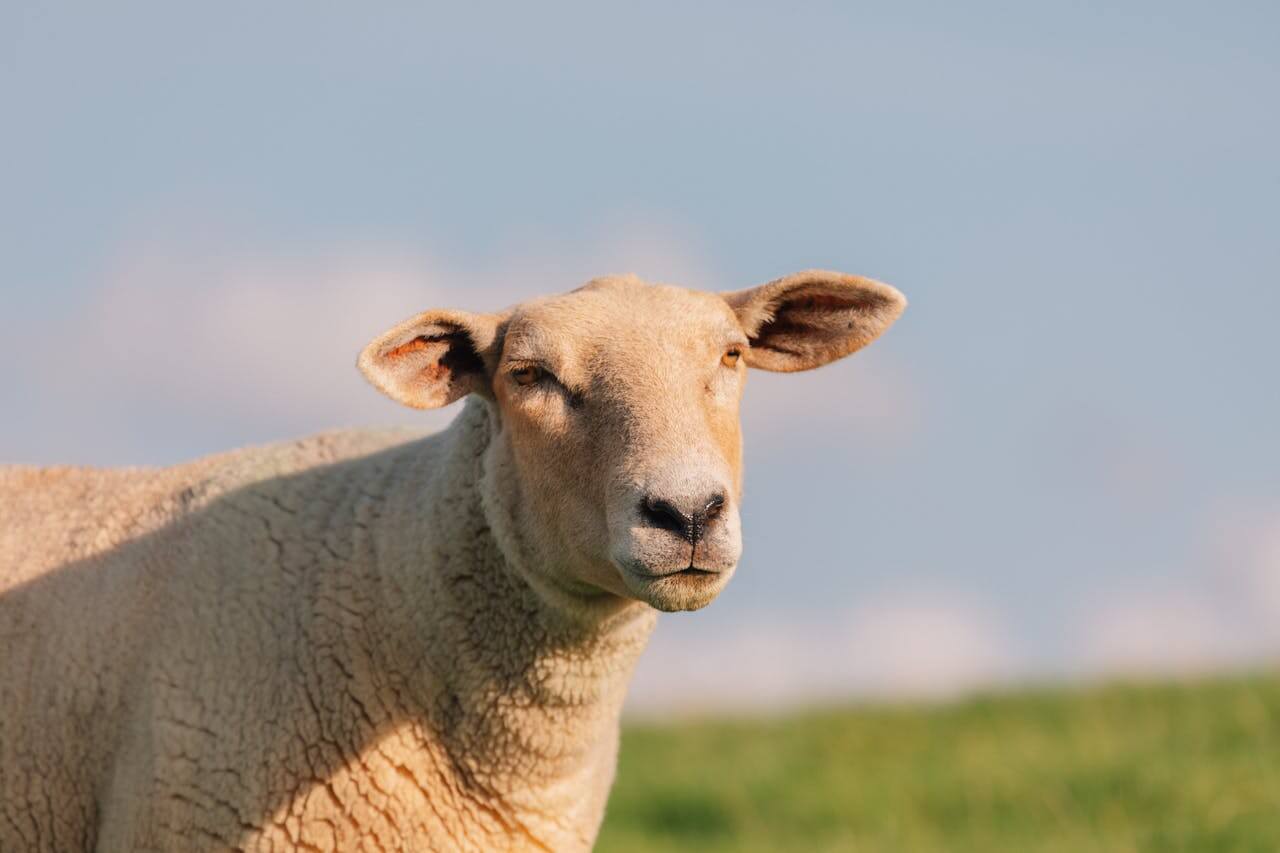
"Schaf" is neuter in German — the correct article is das. The plural is die Schafe — just add -e, no Umlaut. In English, Schaf means "sheep". The young sheep is das Lamm, and the male sheep (ram) is der Widder.
Gender rule: Das Schaf is neuter — there is no grammar rule that predicts this, so the article must be memorised together with the noun. This is the same pattern as das Pferd and das Kaninchen. See all gender patterns in the Article Rules and a full overview at the German articles.
Das Schaf is essential A1 vocabulary and one of the most common farm animal nouns in German. It is a useful noun for practising neuter declension — in neuter nouns, the nominative and accusative forms are always identical, which makes them slightly easier to learn. Understanding how cases work with neuter nouns like das Schaf is an important step at A1–A2 level. Below you'll find the full declension table, example sentences, a common mistake to avoid, and a short quiz.
Schaf — Declension Table
| Case | Singular | Plural |
|---|---|---|
| Nominative | das Schaf | die Schafe |
| Genitive | des Schafes | der Schafe |
| Dative | dem Schaf | den Schafen |
| Accusative | das Schaf | die Schafe |
Example Sentences with Schaf
Das Schaf steht allein auf der Weide und schaut in die Ferne.
(The sheep stands alone in the pasture and gazes into the distance.) — Nominative
Der Bauer treibt das Schaf sanft in Richtung Stall.
(The farmer gently drives the sheep towards the barn.) — Accusative
Das Kind reicht dem Schaf ein Büschel frisches Gras.
(The child holds out a bunch of fresh grass to the sheep.) — Dative
Die Wolle des Schafes wird einmal im Jahr geschoren.
(The sheep's wool is shorn once a year.) — Genitive
Die Schafe laufen dicht gedrängt über den schmalen Bergpfad.
(The sheep walk closely together along the narrow mountain path.) — Nominative Plural
Der Schäfer pfeift laut, um den Schafen die Richtung zu zeigen.
(The shepherd whistles loudly to show the sheep the direction.) — Dative Plural
Related Words & Compounds
Word family (Wortfamilie): das Schäfchen (little sheep — diminutive, same root), der Schäfer (shepherd — literally "one who tends sheep")
Common compounds (Komposita): der Schafstall (sheep pen), das Schaffell (sheepskin), die Schafwolle (sheep's wool / fleece), die Schafherde (flock of sheep), das Schaffleisch (mutton)
Common Mistake with Schaf
❌ Common mistake: Auf dem Bauernhof leben zwanzig Schafen.
✅ Correct: Auf dem Bauernhof leben zwanzig Schafe.
💡 Why: The plural of das Schaf is die Schafe — simply add -e, with no Umlaut and no -n ending. The ending -en belongs to the dative plural only: den Schafen. Using -en as a general plural marker is a common reflex — but for Schaf, the nominative and accusative plural is always Schafe. Compare the same plain -e plural in der Fuchs → die Füchse (with Umlaut) and das Pferd → die Pferde (without Umlaut).
Quick Quiz: Test Your Knowledge
Can you get all three right? Apply what you've learned above.
1. Das Kind gibt ___ Schaf ein Stück Brot.
- A) das Schaf
- B) dem Schaf
- C) den Schaf
Check Answer
"Geben" (to give) takes the dative for the recipient — who receives the bread? The sheep. For neuter nouns, the dative article is dem: dem Schaf. Option A) das is nominative/accusative — wrong case here. Option C) den is the dative article for masculine nouns, not neuter.
2. Der Bauer füttert das klein___ Schaf.
- A) -er
- B) -en
- C) -e
Check Answer
After a definite article in the accusative with a neuter noun, the adjective ending is -e: das kleine Schaf. The definite article already carries the full gender and case signal, so the adjective takes the weak ending -e. Compare: masculine accusative den kleinen Hund (-en), feminine accusative die kleine Kuh (-e).
3. Welches ist der korrekte Plural von "das Schaf"?
- A) die Schafen
- B) die Schäfe
- C) die Schafe
Check Answer
The plural of das Schaf is die Schafe — just -e, no Umlaut. Option A) Schafen is only correct in the dative plural: den Schafen. Option B) Schäfe with an Umlaut does not exist — unlike die Kuh → die Kühe, the vowel in Schaf does not change in the plural.
Want to drill more nouns like this? The Article Trainer gives you 600+ nouns to practice — pick the article, get instant feedback, and stop guessing.
More Animal Nouns
- das Pferd — the horse
- die Kuh — the cow
- der Fuchs — the fox
- der Wolf — the wolf
- der Hund — the dog
- die Katze — the cat
- das Kaninchen — the rabbit
- der Vogel — the bird
For more animal words, explore the full animal vocabulary list.
Is it der, die, or das Schaf? Practice makes perfect.
The Article Trainer gives you 600+ nouns to drill — including animal vocabulary and much more. Pick the article, get instant feedback, and stop guessing.
Practice German Articles →Frequently Asked Questions
Is Schaf masculine, feminine, or neuter in German?
Schaf is neuter — the correct article is das. There is no grammar rule that predicts this gender, so das Schaf must be memorised as a fixed combination. In the genitive singular, the noun adds -es: des Schafes. See all gender patterns in the Article Rules.
What is the plural of Schaf?
The plural is die Schafe — simply add -e, with no Umlaut. Do not use Schafen as a plural — that form only appears in the dative plural: den Schafen. In English, "sheep" is the same in singular and plural — but in German, the distinction is clear: das Schaf (one) vs. die Schafe (several).
What is the difference between Schaf, Lamm, and Widder?
Das Schaf is the general word for sheep and typically refers to an adult animal. Das Lamm is a lamb — a young sheep of either sex — and is also neuter. Der Widder is a male sheep (ram) and is masculine. These three words all have different stems and different articles, so they must be learnt separately.
Why is Schaf neuter in German?
There is no grammatical rule that explains why Schaf is neuter — it is simply the gender this noun has in German. Unlike das Kaninchen, which is neuter because of its -chen suffix, Schaf has no such signal. The best approach is to always learn a German noun together with its article from the start: not just Schaf, but das Schaf.