
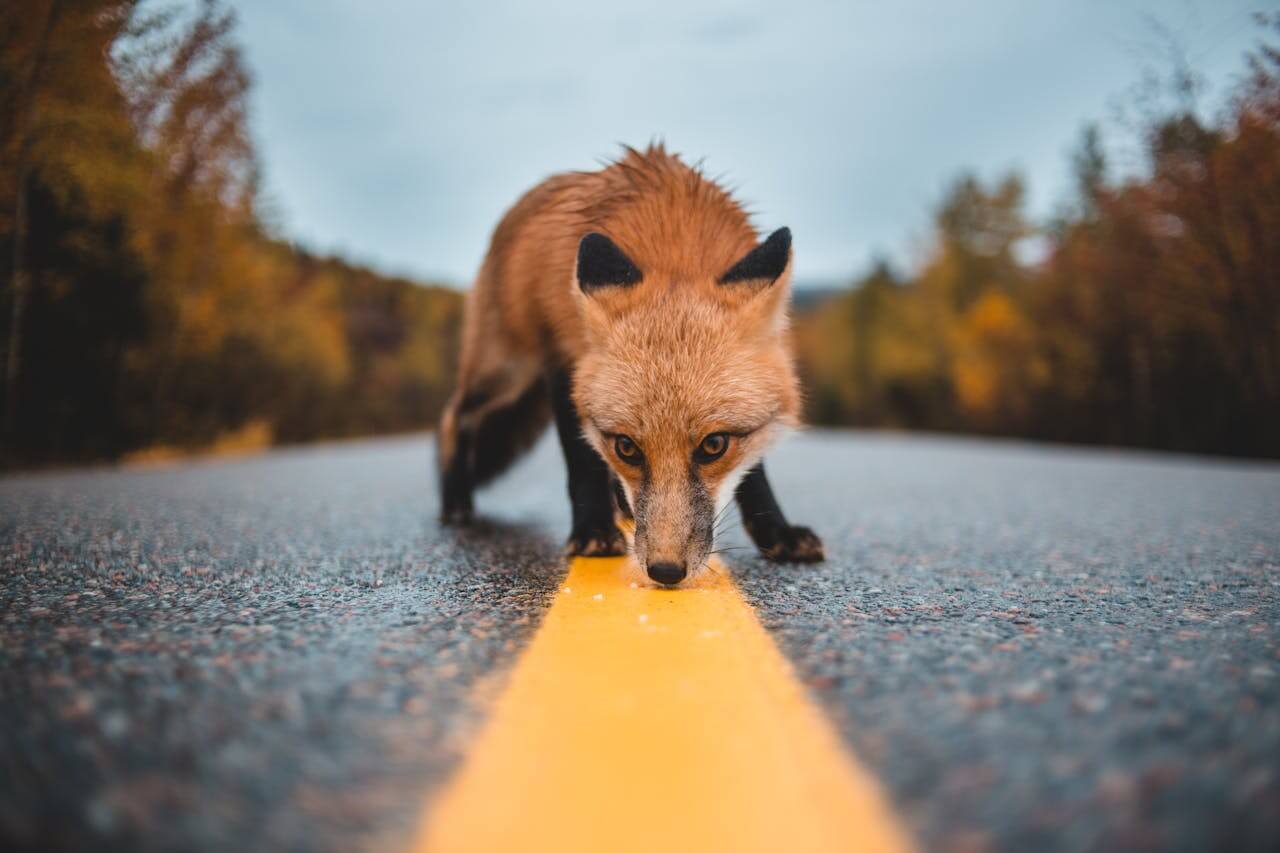
"Fuchs" is masculine in German — the correct article is der. The plural is die Füchse — note the Umlaut! In English, Fuchs means "fox". The female fox is die Füchsin.
Gender rule: The gender of animal nouns in German often has to be memorised individually. Der Fuchs is masculine — the same as der Wolf and der Tiger. The plural adds an Umlaut: Fuchs → Füchse. See all gender patterns in the Article Rules and a full overview at the German articles.
Der Fuchs is A1–A2 vocabulary and one of the most iconic wild animal nouns in German — well known from folk tales, idioms, and everyday life. It is a useful noun for practising Umlaut plurals and the genitive -es ending for masculine nouns. Understanding how cases work with masculine nouns like der Fuchs is an important step at A1–A2 level. Below you'll find the full declension table, example sentences, a common mistake to avoid, and a short quiz.
Fuchs — Declension Table
| Case | Singular | Plural |
|---|---|---|
| Nominative | der Fuchs | die Füchse |
| Genitive | des Fuchses | der Füchse |
| Dative | dem Fuchs | den Füchsen |
| Accusative | den Fuchs | die Füchse |
Example Sentences with Fuchs
Der Fuchs schleicht in der Dämmerung durch den Garten.
(The fox sneaks through the garden at dusk.) — Nominative
Der Jäger beobachtet den Fuchs hinter den Büschen.
(The hunter observes the fox behind the bushes.) — Accusative
Das Huhn näherte sich dem Fuchs, ohne es zu merken.
(The chicken approached the fox without noticing.) — Dative
Der Bau des Fuchses liegt am Rand des Waldes.
(The fox's den is located at the edge of the forest.) — Genitive
Die Füchse kommen nachts in die Stadt, um Futter zu suchen.
(The foxes come into the city at night to look for food.) — Nominative Plural
Die Forscher folgen den Füchsen mit GPS-Sendern durch das Revier.
(The researchers follow the foxes through the territory using GPS trackers.) — Dative Plural
Related Words & Compounds
Word family (Wortfamilie): die Füchsin (female fox), fuchsig (colloquial: angry; also: fox-coloured), das Füchslein (little fox — diminutive)
Common compounds (Komposita): der Fuchsbau (fox den / fox burrow), das Fuchsfell (fox fur), die Fuchsjagd (fox hunt), der Rotfuchs (red fox), der Silberfuchs (silver fox)
Common Mistake with Fuchs
❌ Common mistake: Im Wald leben viele Fuchsen.
✅ Correct: Im Wald leben viele Füchse.
💡 Why: The plural of der Fuchs is die Füchse — Umlaut + -e. The ending -en is the plural marker for N-Deklination nouns such as der Löwe → die Löwen or der Affe → die Affen — Fuchs does not follow that pattern. Each noun's plural must be learnt individually.
Quick Quiz: Test Your Knowledge
Can you get all three right? Apply what you've learned above.
1. Der Bau ___ Fuchs___ liegt versteckt unter einer alten Eiche.
- A) des Fuchs
- B) des Fuchses
- C) dem Fuchs
Check Answer
The genitive expresses possession — whose den? For masculine nouns, the genitive article is des. Because Fuchs ends in a sibilant sound (-hs), the noun adds the longer ending -es: des Fuchses. Option A) is missing the noun ending. Option C) dem is the dative article — wrong case here.
2. Die Kamera zeigt den Fuchs, der sich dem schlafend___ Hasen nähert.
- A) -er
- B) -e
- C) -en
Check Answer
After a definite article in the dative with a masculine noun, the adjective ending is always -en: dem schlafenden Hasen. Once the definite article carries the case and gender signal, the adjective takes the weak ending -en in the dative for all three genders.
3. Das ist ein sehr schlau___ Fuchs.
- A) -e
- B) -er
- C) -es
Check Answer
After an indefinite article in the nominative with a masculine noun, the adjective ending is -er: ein schlauer Fuchs. Because ein doesn't carry the masculine gender signal, the adjective must show it. Compare: feminine eine schlaue Maus (-e), neuter ein schlaues Kaninchen (-es).
Want to drill more nouns like this? The Article Trainer gives you 600+ nouns to practice — pick the article, get instant feedback, and stop guessing.
More Animal Nouns
- der Wolf — the wolf
- der Tiger — the tiger
- der Bär — the bear
- der Hund — the dog
- die Katze — the cat
- das Kaninchen — the rabbit
- der Vogel — the bird
- die Kuh — the cow
For more animal words, explore the full animal vocabulary list.
Is it der, die, or das Fuchs? Practice makes perfect.
The Article Trainer gives you 600+ nouns to drill — including animal vocabulary and much more. Pick the article, get instant feedback, and stop guessing.
Practice German Articles →Frequently Asked Questions
Is Fuchs masculine, feminine, or neuter in German?
Fuchs is masculine — the correct article is der. The female fox is die Füchsin. In the genitive singular, the noun adds -es: des Fuchses — this longer ending is standard for nouns ending in a sibilant sound. See all gender patterns in the Article Rules.
What is the plural of Fuchs?
The plural is die Füchse — the vowel u gets an Umlaut to become ü, and -e is added. Do not use Fuchsen or Fuchse — the Umlaut is essential. In the dative plural, a further -n is added: den Füchsen.
Is Fuchs used in any German idioms?
Yes — the fox is a symbol of cunning in German culture, just as in English. Schlau wie ein Fuchs ("as cunning as a fox") is a common simile. Ein alter Fuchs (literally "an old fox") refers to a crafty, experienced person. These are useful B1 expressions for learners moving beyond basics.
What is the difference between Fuchs and Rotfuchs in German?
Der Fuchs is the general word for fox. Der Rotfuchs (literally "red fox") refers specifically to Vulpes vulpes — the most common species of fox found in Europe. In everyday German, Fuchs is used in most contexts, while Rotfuchs appears more often in biological or wildlife contexts when a distinction between fox species is needed.