
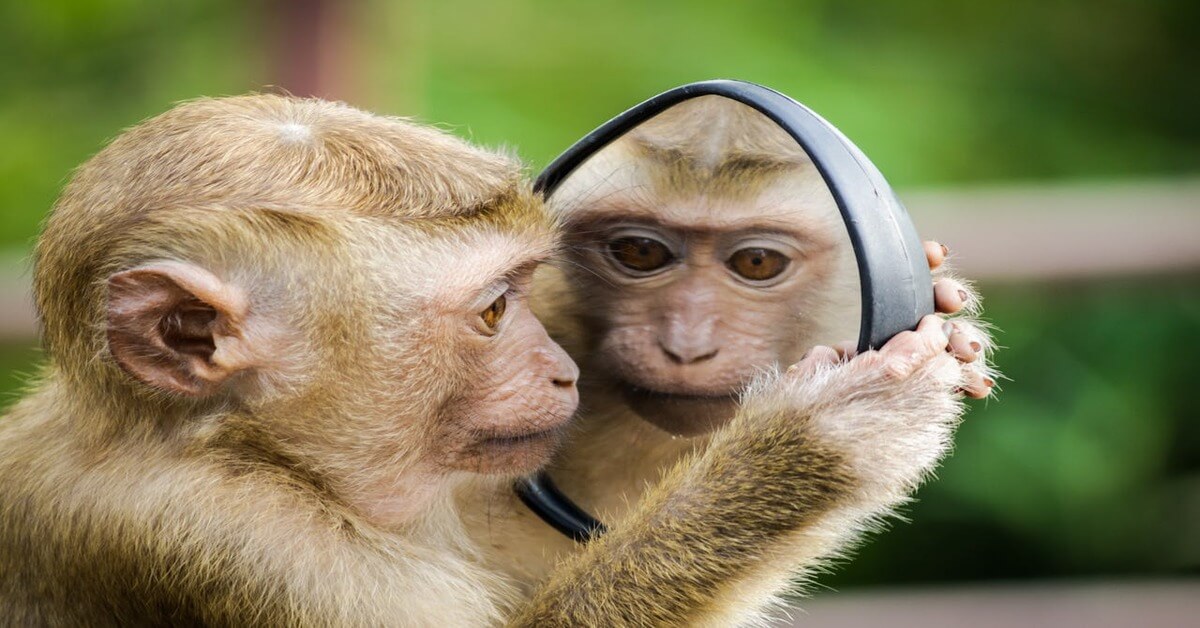
"Affe" is masculine in German — the correct article is der. The plural is die Affen (add -n). In English, Affe means "monkey" or "ape". The female monkey is die Äffin.
Gender rule: Many animal names ending in -e are masculine and follow the N-Deklination in German — der Affe, der Löwe, der Hase. This means the noun adds -n in all cases except the nominative singular. See all gender patterns in the Article Rules and a full overview at the German articles.
Der Affe is A1–A2 vocabulary and one of the most popular animal nouns among German learners. Like der Elefant and der Löwe, it follows the N-Deklination — a declension pattern that affects the noun ending in almost every case. Below you'll find the full declension table, example sentences, a common mistake to avoid, and a short quiz.
Affe — Declension Table
| Case | Singular | Plural |
|---|---|---|
| Nominative | der Affe | die Affen |
| Genitive | des Affen | der Affen |
| Dative | dem Affen | den Affen |
| Accusative | den Affen | die Affen |
Example Sentences with Affe
Der Affe sitzt auf einem hohen Ast und schaut neugierig herunter.
(The monkey is sitting on a high branch and looking down curiously.) — Nominative
Der Tierpfleger füttert dem Affen frisches Obst.
(The zookeeper feeds the monkey fresh fruit.) — Dative
Das Mädchen wirft dem Affen einen Ball zu.
(The girl throws the monkey a ball.) — Dative
Die Augen des Affen sind sehr ausdrucksstark.
(The monkey's eyes are very expressive.) — Genitive
Die Affen schreien laut und schwingen durch die Bäume.
(The monkeys shout loudly and swing through the trees.) — Nominative Plural
Der Forscher nähert sich den Affen sehr langsam.
(The researcher approaches the monkeys very slowly.) — Dative Plural
Related Words & Compounds
Word family (Wortfamilie): die Äffin (female monkey), das Äffchen (little monkey — term of endearment), äffen / nachäffen (to mimic / to ape someone), affenähnlich (ape-like — adjective)
Common compounds (Komposita): der Menschenaffe (great ape — literally "human ape"), das Affengehege (monkey enclosure), die Affenhorde (troop of monkeys), der Affenschwanz (monkey's tail), die Affenpocken (monkeypox)
Common Mistake with Affe
❌ Common mistake: Das Fell des Affens ist sehr dicht.
✅ Correct: Das Fell des Affen ist sehr dicht.
💡 Why: Because Affe follows the N-Deklination, the genitive is des Affen — not des Affens. The ending -ns does not belong to the N-Deklination. It only applies to a small group of mixed nouns like der Name → des Namens. For all N-Deklination nouns ending in -e — like Affe and Löwe — the genitive adds only -n: des Affen, des Löwen.
Quick Quiz: Test Your Knowledge
Can you get all three right? Apply what you've learned above.
1. Wir sehen ___ Aff___ jeden Tag im Zoo.
- A) der Affe
- B) den Affe
- C) den Affen
Check Answer
"Sehen" (to see) takes the accusative. Masculine accusative = den. Because Affe follows the N-Deklination, the noun adds -n: den Affen. Option B) uses the right article but forgets the obligatory -n ending on the noun — a very typical slip with this word.
2. Das Kind steht direkt neben ___ Aff___ und lacht.
- A) dem Affe
- B) dem Affen
- C) den Affen
Check Answer
"Neben" describes a location here (standing next to), so it requires the dative. Masculine dative = dem. With N-Deklination, the noun adds -n: dem Affen. Option A) has the correct article but is missing the required -n ending on the noun.
3. Das ist ein sehr laut___ Affe.
- A) -e
- B) -en
- C) -er
Check Answer
After an indefinite article in the nominative with a masculine noun, the adjective ending is -er: ein lauter Affe. Because ein doesn't carry the gender signal, the adjective must show it with -er. Compare: feminine eine laute Maus (-e), neuter ein lautes Pferd (-es).
Want to drill more nouns like this? The Article Trainer gives you 600+ nouns to practice — pick the article, get instant feedback, and stop guessing.
More Animal Nouns
- der Hund — the dog
- die Katze — the cat
- das Pferd — the horse
- die Maus — the mouse
- der Elefant — the elephant
- der Löwe — the lion
- die Giraffe — the giraffe
- das Krokodil — the crocodile
For more animal words, explore the full animal vocabulary list.
Is it der, die, or das Affe? Practice makes perfect.
The Article Trainer gives you 600+ nouns to drill — including animal vocabulary and much more. Pick the article, get instant feedback, and stop guessing.
Practice German Articles →Frequently Asked Questions
Is Affe masculine, feminine, or neuter in German?
Affe is masculine — the correct article is der. It follows the N-Deklination, which means the noun adds -n in all cases except the nominative singular. This is the same pattern as der Löwe and der Elefant. See all gender patterns in the Article Rules.
What is the plural of Affe?
The plural is die Affen — add -n to the singular. This follows directly from the N-Deklination pattern. In the dative plural, no extra -n is needed since the noun already ends in -n: den Affen.
What is the genitive of Affe — des Affen or des Affens?
The correct genitive is des Affen — not des Affens. Because Affe follows the N-Deklination, it adds only -n in the genitive, just like in all other non-nominative forms. The ending -ns belongs to a separate group of mixed nouns like der Name → des Namens, and does not apply here.
What is the difference between Affe and Menschenaffe?
Der Affe is the general word for monkey or ape of any kind. Der Menschenaffe (literally "human ape") refers specifically to the great apes — such as gorillas, chimpanzees, orangutans — which are most closely related to humans. In everyday German, Affe is used for both, but Menschenaffe is the more precise scientific term when the distinction matters.