
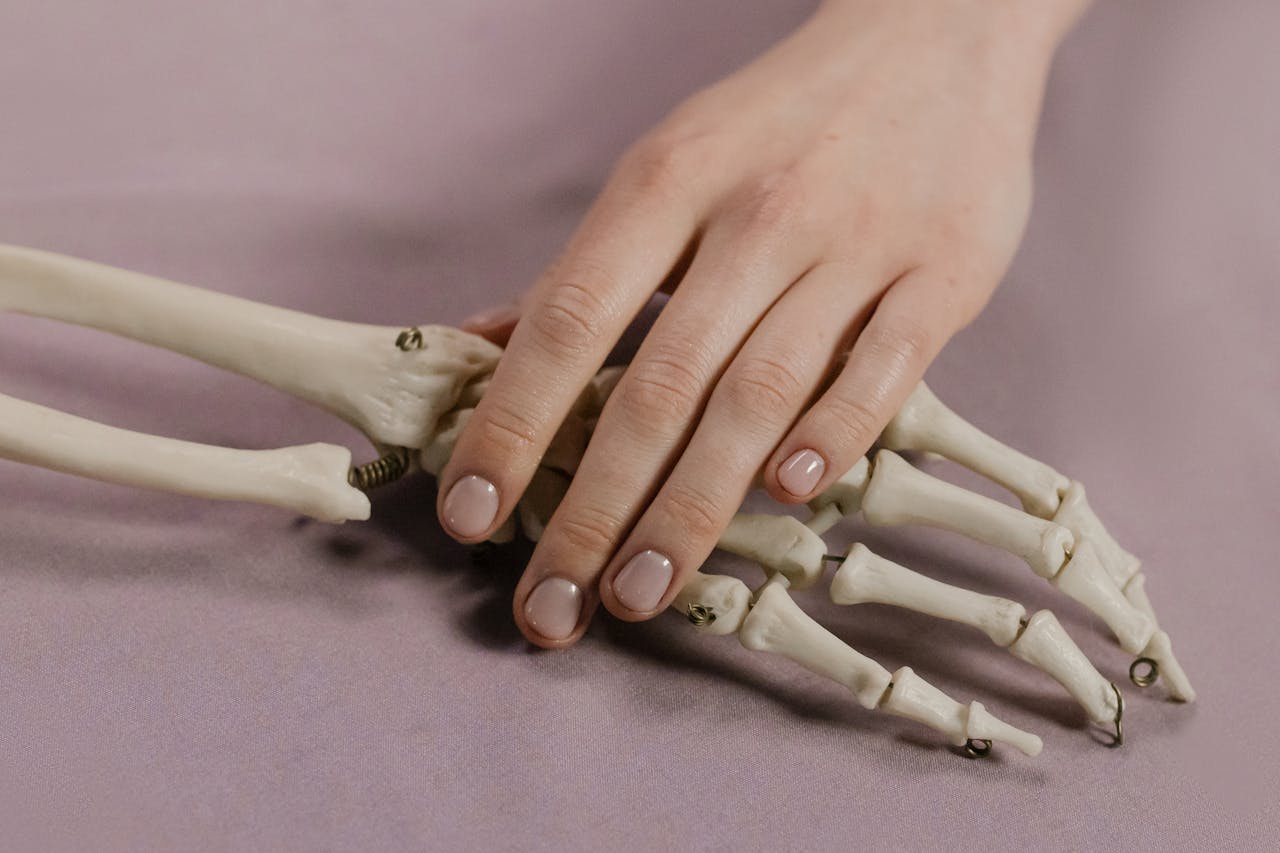
"Knochen" is masculine in German — the correct article is der. The plural is die Knochen — the form is unchanged. In English, Knochen means "bone".
Gender rule: der Knochen is masculine. Body part nouns in German have mixed genders — der Knochen, die Haut, das Knie — so there is no reliable ending-based rule here. The safest approach is always to learn every noun with its article from the start. See all gender patterns in the Article Rules and a full overview at the german articles.
Der Knochen is an A1–A2 vocabulary word that appears in everyday German — from medical contexts to cooking and idiomatic expressions. It is a useful example of a masculine noun with a zero plural: the form Knochen stays the same in singular and plural, with only the article changing. Like other masculine nouns ending in -en, the genitive adds only -s: des Knochens. Understanding how cases work with masculine nouns like der Knochen is an important step at A1–A2 level. For more body part nouns, also see das Knie and die Haut.
Knochen — Declension Table
| Case | Singular | Plural |
|---|---|---|
| Nominative | der Knochen | die Knochen |
| Genitive | des Knochens | der Knochen |
| Dative | dem Knochen | den Knochen |
| Accusative | den Knochen | die Knochen |
Example Sentences with Knochen
Der gebrochene Knochen muss mehrere Wochen in einem Gipsverband ruhiggestellt bleiben.
(The broken bone must be kept immobile in a cast for several weeks.) — Nominative
Der Hund trägt den Knochen stolz im Maul durch den Garten.
(The dog proudly carries the bone through the garden in its mouth.) — Accusative
An dem Knochen klebt noch etwas Fleisch, das sich leicht ablösen lässt.
(There is still some meat clinging to the bone that can be easily removed.) — Dative
Die Festigkeit des Knochens nimmt ohne ausreichend Kalzium mit dem Alter ab.
(The density of the bone decreases with age without sufficient calcium.) — Genitive
Nach dem langen Wandertag taten ihm alle Knochen weh.
(After the long hiking day, every bone in his body ached.) — Nominative Plural
An den Knochen des Huhns klebt nach dem Kochen kaum noch Fleisch.
(After cooking, hardly any meat clings to the bones of the chicken.) — Dative Plural
Related Words & Compounds
Word family (Wortfamilie):
- knöchern — bony / made of bone (adjective)
Common compounds (Komposita):
- der Knochenbruch — bone fracture
- das Knochenmark — bone marrow
- der Knochenbau — bone structure / build
Common Mistake with Knochen
❌ Common mistake: Die Knochens sind sehr hart.
✅ Correct: Die Knochen sind sehr hart.
💡 Why: The plural of der Knochen is die Knochen — the noun does not change at all. The -s plural is rare in German and mostly limited to certain loanwords like das Auto → die Autos. Masculine nouns ending in -en, such as der Knochen, der Garten, or der Wagen, typically have an unchanged plural. Only the article changes: der Knochen → die Knochen.
Quick Quiz: Test Your Knowledge
Can you get all three right? Apply what you've learned above.
1. Der Hund trägt ___ Knochen stolz durch den Garten.
- A) der
- B) dem
- C) den
Check Answer
The verb tragen (to carry) takes a direct object — what does the dog carry? The bone. Direct objects use the accusative case. For masculine nouns, the accusative article is den: den Knochen. Option A) der is nominative. Option B) dem is the dative article for masculine nouns.
2. Die Festigkeit ___ Knochens nimmt ohne Kalzium ab.
- A) dem
- B) der
- C) des
Check Answer
"Die Festigkeit ___ Knochens" — whose density? The bone's. This is a possession relationship expressed with the genitive case. For masculine nouns, the genitive article is des and the noun adds -s: des Knochens. Option A) dem is dative. Option B) der is the genitive article for feminine nouns.
3. Ein gesund___ Knochen heilt bei jungen Menschen schnell.
- A) -e
- B) -en
- C) -er
Check Answer
After an indefinite article in the nominative with a masculine noun, the adjective ending is -er: ein gesunder Knochen. Because ein does not carry a visible masculine signal in the nominative (it looks the same as neuter ein), the adjective must carry the gender signal — this is the strong ending -er. Option A) -e is used after a definite article in the nominative. Option B) -en is the weak ending used in most other case-gender combinations.
Want to drill more nouns like this? The Article Trainer gives you 600+ nouns to practice — pick the article, get instant feedback, and stop guessing.
More Body Part Nouns
- der Arm — the arm
- der Bauch — the belly / stomach
- das Bein — the leg
- der Finger — the finger
- das Gesicht — the face
- der Hals — the neck / throat
- die Hand — the hand
- das Herz — the heart
- die Haut — the skin
- das Knie — the knee
For the full list with articles and plurals, see the Body Parts Vocabulary page. You can also browse more topic-based word lists in the German Vocabulary Overview and test yourself with the Vocabulary Quizzes.
Is it der, die, or das Knochen? Practice makes perfect.
The Article Trainer gives you 600+ nouns to drill — from everyday vocabulary to family, food, and much more. Pick the article, get instant feedback, and stop guessing.
Practice German Articles →Frequently Asked Questions
Is Knochen masculine, feminine, or neuter in German?
Knochen is masculine — the correct article is der. Body part nouns in German have mixed genders, so there is no reliable rule to predict them. The best habit is always to learn every noun with its article from the start. For a full overview of gender patterns, see the Article Rules.
What is the plural of Knochen in German?
The plural is die Knochen — the noun itself does not change. This is the zero plural, typical for masculine nouns ending in -en. Only the article changes: der Knochen (singular) → die Knochen (plural). In the dative plural, no extra -n is added because the plural already ends in -en: den Knochen.
What is the difference between Knochen and Gräte in German?
Der Knochen is the general word for bone and refers to the hard bones found in mammals and larger animals. Die Gräte (also die Fischgräte) refers specifically to a fish bone — the thin, sharp bones found in fish. In everyday German, Knochen is never used for fish bones: you would say Ich habe eine Gräte verschluckt (I swallowed a fish bone), not einen Knochen.
What is the genitive of der Knochen?
The genitive singular is des Knochens — add -s. This is the standard genitive pattern for masculine nouns ending in -en. The genitive plural is der Knochen — unchanged. See the Cases Overview for more detail.