
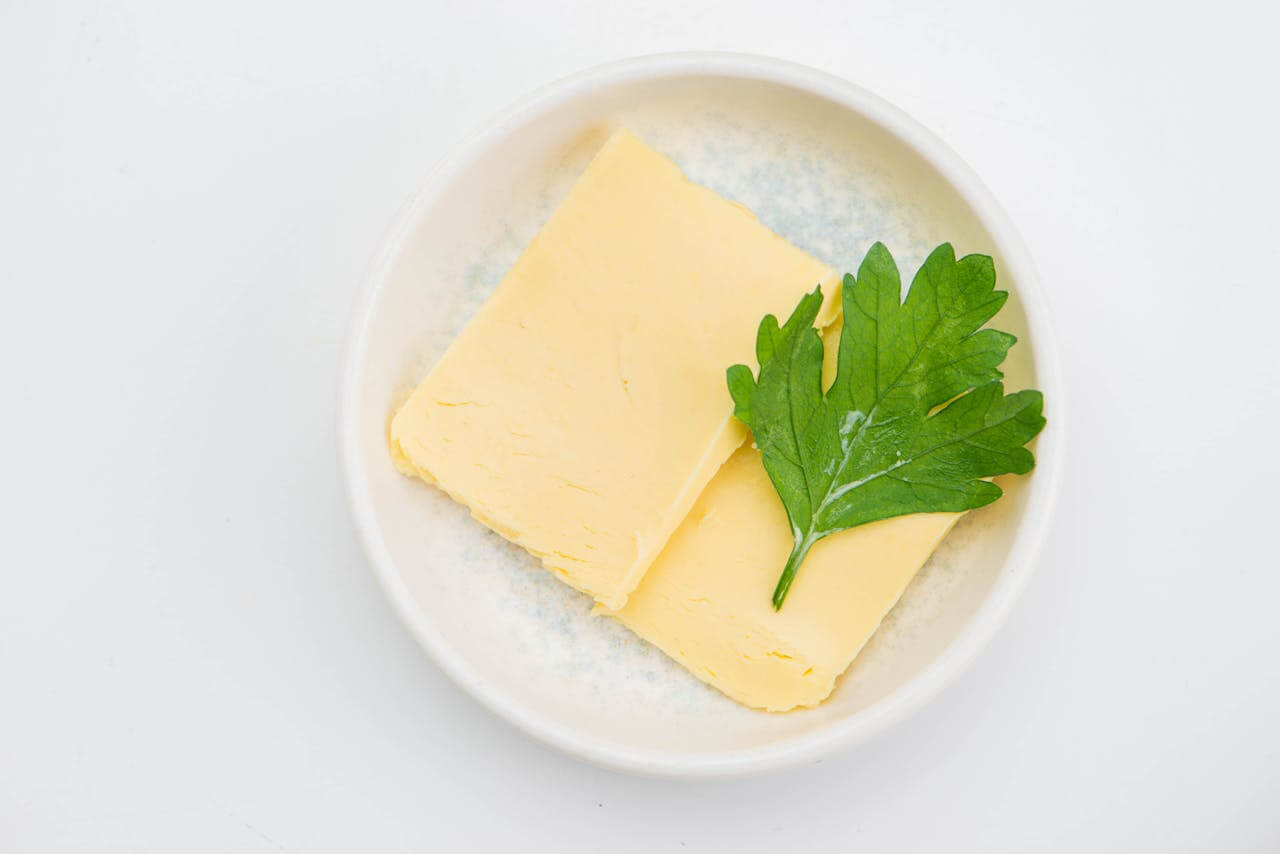
Butter is feminine in German — the correct article is die. As an uncountable noun, it has no plural. In English, Butter translates to butter.Die Butter is an essential staple of the German food and drinks vocabulary. It is one of the first words learners encounter at the A1 level, especially when discussing breakfast or traditional German meals. Below you'll find the full declension, example sentences, and a quiz.
Gender rule: Many German nouns ending in -er are masculine, making Butter an important exception to memorize. See all gender patterns in the Article Rules and a full overview at the German Articles.
Butter — Declension Table
| Case | Singular | Plural |
|---|---|---|
| Nominative | die Butter | — |
| Genitive | der Butter | — |
| Dative | der Butter | — |
| Accusative | die Butter | — |
Example Sentences with Butter
Die weiche Butter lässt sich gut verstreichen.
(The soft butter spreads easily.) — Nominative
Er schmiert die Butter dick auf sein Brot.
(He spreads the butter thickly on his bread.) — Accusative
Mit der geschmolzenen Butter schmeckt der Kuchen besser.
(The cake tastes better with the melted butter.) — Dative
Der Preis der Butter ist in diesem Jahr stark gestiegen.
(The price of butter has risen sharply this year.) — Genitive
Hast du die Butter wieder in den Kühlschrank gestellt?
(Did you put the butter back in the fridge?) — Accusative
Related Words & Compounds
Word family (Wortfamilie): buttern (to churn butter / to butter something — verb)
Common compounds (Komposita): die Erdnussbutter (peanut butter), die Kräuterbutter (herb butter), das Butterbrot (buttered bread/sandwich), das Butterfass (butter churn), die Buttercreme (buttercream)
Common Mistake with Butter
❌ Common mistake: Der Butter ist noch zu hart.
✅ Correct: Die Butter ist noch zu hart.
💡 Why: Many learners mistakenly assume Butter is masculine because it ends in -er, a common ending for masculine nouns (like der Computer, der Sommer). However, Butter is feminine (die). You must memorize this exception.
Quick Quiz: Test Your Knowledge
Can you get all three right? Apply what you've learned above.
1. Der Geschmack ___ ist in diesem Gebäck sehr intensiv.
- A) das Butter
- B) der Butter
- C) dem Butter
Check Answer
"Der Geschmack der Butter" — the genitive case shows possession or attribution (the taste of what?). Feminine genitive = der: der Butter.
2. ___ liegt schon auf dem Küchentisch.
- A) Die Butter
- B) Der Butter
- C) Dem Butter
Check Answer
Here, the butter is the subject of the sentence doing the action (lying on the table), so it requires the nominative case. Feminine nominative = die.
3. Bitte leg die kalt___ Butter zurück in den Kühlschrank.
- A) -e
- B) -en
- C) -er
Check Answer
After the definite article die in the accusative feminine, the adjective ending is -e: die kalte Butter.
Want to practice more nouns like this? The Article Trainer has 600+ nouns to drill — including everyday vocabulary. Pick the article, get instant feedback, and stop guessing.
More Food Nouns & Vocabulary
- das Brot — the bread
- der Apfel — the apple
- die Banane — the banana
- die Orange — the orange
- der Käse — the cheese
- die Milch — the milk
For more themed vocabulary lists, explore the Vocabulary overview list, practice with the food and drinks vocabulary, or browse the full grammar overview to master your German cases and vocabulary.
Is it der, die, or das? Practice makes perfect.
The Article Trainer gives you 600+ nouns to drill — including everyday vocabulary. Pick the article, get instant feedback, and stop guessing.
Practice German Articles →Frequently Asked Questions
Is Butter masculine, feminine, or neuter in German?
Butter is feminine — the correct article is die. This is a very common trap for learners, as many German nouns ending in -er are masculine. However, die Butter is a strict exception that needs to be memorized. Its compounds also adopt this gender if Butter is the final word (e.g., die Erdnussbutter, die Kräuterbutter).
What is the plural of Butter in German?
Butter is an uncountable noun in everyday German, which means there is no plural form. If you need to specify a quantity, you would use a unit of measurement instead, such as zwei Stücke Butter (two pieces of butter) or zwei Päckchen Butter (two packets of butter).
How do you say peanut butter in German?
Peanut butter is called die Erdnussbutter. It takes its feminine gender directly from the base word, die Butter.