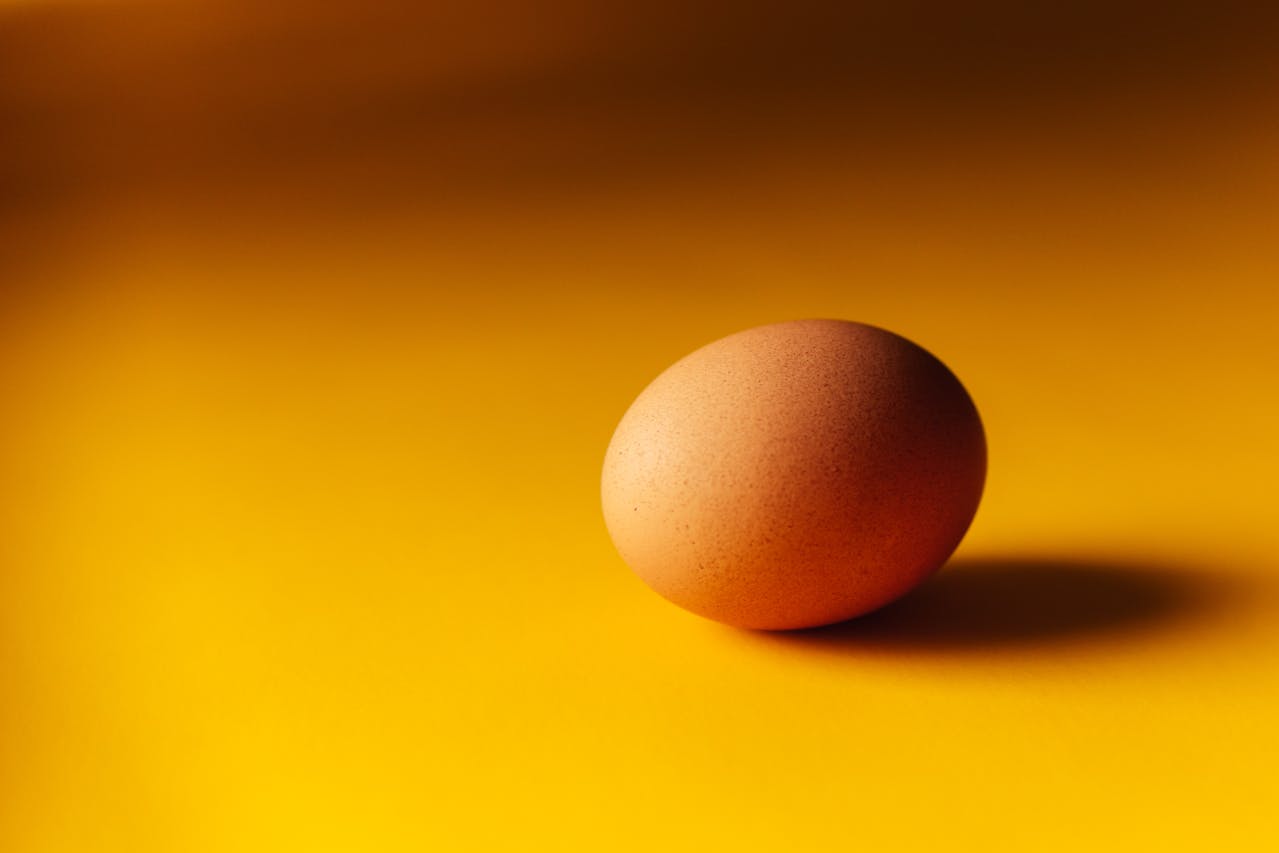
Ei is neuter in German — the correct article is das. The plural is die Eier. In English, Ei translates to egg.Das Ei is an essential noun in the German food and drinks vocabulary. It is taught very early at the A1 level, as it is crucial for talking about breakfast, cooking, and baking. Below you'll find the full declension, example sentences, and a quiz to test your skills.
Gender rule: As a short, monosyllabic Germanic root word, there is no strict ending-based rule to predict its gender — the article must be memorized. See all gender patterns in the Article Rules and a full overview at the German Articles.
Ei — Declension Table
| Case | Singular | Plural |
|---|---|---|
| Nominative | das Ei | die Eier |
| Genitive | des Eies / des Eis | der Eier |
| Dative | dem Ei | den Eiern |
| Accusative | das Ei | die Eier |
Example Sentences with Ei
Das Ei fällt auf den Boden und zerbricht.
(The egg falls on the floor and breaks.) — Nominative
Zum Frühstück kocht er das Ei für genau fünf Minuten.
(For breakfast, he boils the egg for exactly five minutes.) — Accusative
Der Teig wird mit dem Ei viel geschmeidiger.
(The dough becomes much smoother with the egg.) — Dative
Die Schale des Eies ist sehr zerbrechlich.
(The shell of the egg is very fragile.) — Genitive
Die Eier im Supermarkt sind heute im Angebot.
(The eggs in the supermarket are on sale today.) — Nominative Plural
In den Eiern steckt viel wichtiges Protein.
(There is a lot of important protein in the eggs.) — Dative Plural
Related Words & Compounds
Word family (Wortfamilie): das Eierchen (little egg — diminutive)
Common compounds (Komposita): das Spiegelei (fried egg), das Rührei (scrambled egg), das Osterei (Easter egg), die Eierschale (eggshell), das Eiweiß (egg white / protein)
Common Mistake with Ei
❌ Common mistake: Die Eiern sind im Kühlschrank.
✅ Correct: Die Eier sind im Kühlschrank.
💡 Why: The standard plural of das Ei is die Eier. You only add an extra "-n" in the dative plural case (den Eiern). Using "die Eiern" when it acts as the subject (nominative case) is a common grammar mistake.
Quick Quiz: Test Your Knowledge
Can you get all three right? Apply what you've learned above.
1. ___ schmeckt mir am Sonntagmorgen besonders gut.
- A) Das Ei
- B) Des Eies
- C) Dem Ei
Check Answer
The egg is the subject performing the action (tasting good), so it requires the nominative case. Neuter nominative = das: Das Ei.
2. Der Koch schlägt ___ am Rand der Schüssel auf.
- A) das Ei
- B) des Eies
- C) dem Ei
Check Answer
"Aufschlagen" (to crack open) takes a direct object in the accusative case. Neuter accusative = das: das Ei.
3. Sie bestellt im Restaurant ein gekocht___ Ei.
- A) -e
- B) -es
- C) -en
Check Answer
After the indefinite article ein in the accusative neuter, the adjective ending is -es: ein gekochtes Ei.
More Food Nouns & Vocabulary
- das Brot — the bread
- der Käse — the cheese
- die Butter — the butter
- die Milch — the milk
- der Apfel — the apple
- die Banane — the banana
- die Orange — the orange
For more themed vocabulary lists, explore the Vocabulary overview list, practice with the food and drinks vocabulary, or browse the full grammar overview to master your German cases and vocabulary.
Is it der, die, or das? Practice makes perfect.
The Article Trainer gives you 600+ nouns to drill — including everyday vocabulary. Pick the article, get instant feedback, and stop guessing.
Practice German Articles →Frequently Asked Questions
Is Ei masculine, feminine, or neuter in German?
Ei is neuter — the correct article is das. As a short base word, there is no distinct ending to hint at its gender, so you have to memorize it. All compound words that end with "-ei" (referring to the food) are also neuter, such as das Spiegelei or das Osterei.
What is the plural of Ei in German?
The plural of das Ei is die Eier. You add an -er to the base word. Be careful not to add an extra "-n" unless you are using the dative plural case (den Eiern).
How do you say fried egg or scrambled egg in German?
German uses specific compound nouns for these dishes. A fried egg is das Spiegelei (literally "mirror egg"), and scrambled eggs are referred to as das Rührei (literally "stir egg"). Since both end in "Ei", they are neuter.