
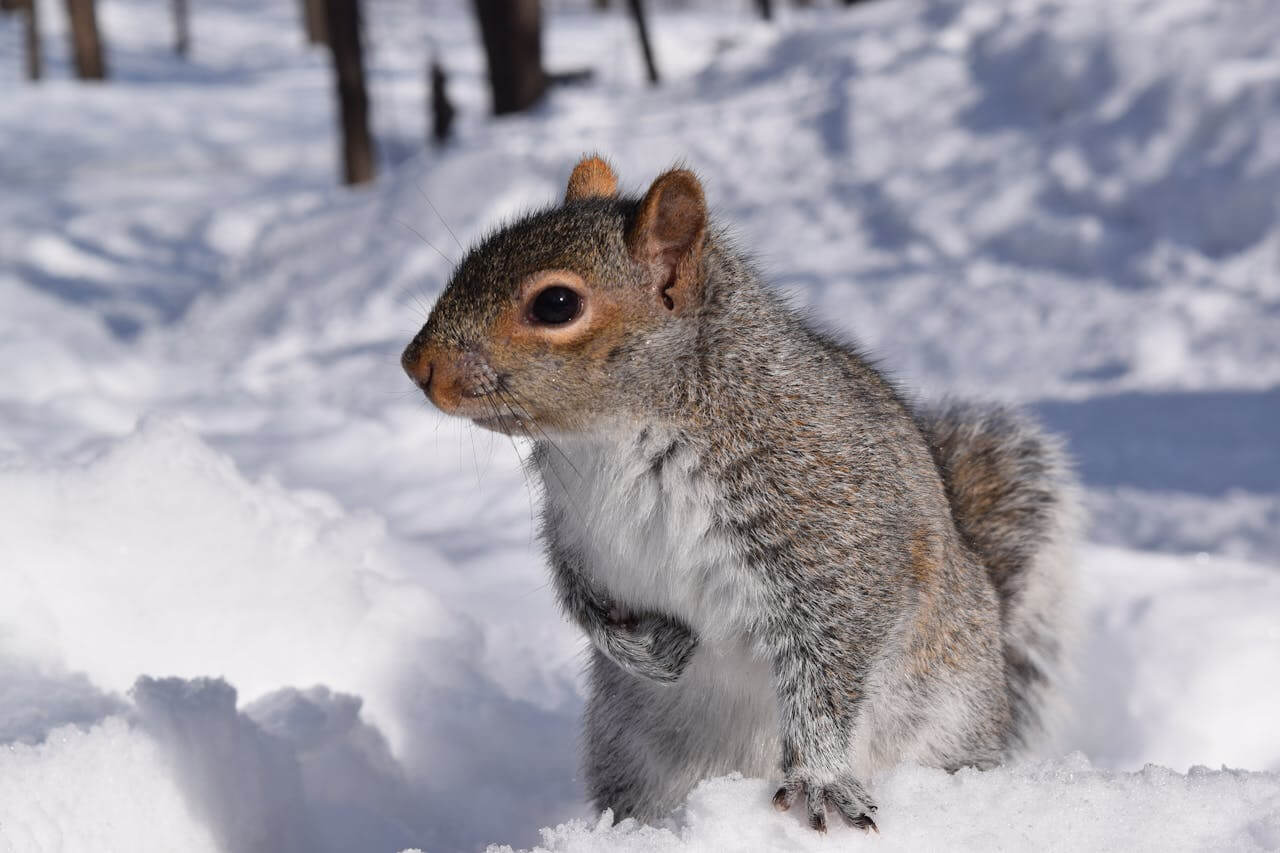
"Eichhörnchen" is neuter in German — the correct article is das. The plural is die Eichhörnchen — the form does not change. In English, Eichhörnchen means "squirrel".
Gender rule: All nouns ending in -chen are neuter in German — without exception. The suffix -chen is a diminutive that always determines the gender, regardless of the base word. This is the same rule that makes das Kaninchen and das Mädchen neuter. See all patterns in the Article Rules and a full overview at the German articles.
Das Eichhörnchen is A1–A2 vocabulary and a favourite animal noun among German learners — partly because it's fun to pronounce, and partly because it illustrates two important grammar rules at once: the -chen suffix always gives neuter gender, and the plural is identical to the singular. Understanding how cases work with neuter nouns like this one is an important step at A1–A2 level. Below you'll find the full declension table, example sentences, a common mistake to avoid, and a short quiz.
Eichhörnchen — Declension Table
| Case | Singular | Plural |
|---|---|---|
| Nominative | das Eichhörnchen | die Eichhörnchen |
| Genitive | des Eichhörnchens | der Eichhörnchen |
| Dative | dem Eichhörnchen | den Eichhörnchen |
| Accusative | das Eichhörnchen | die Eichhörnchen |
Example Sentences with Eichhörnchen
Das Eichhörnchen springt flink von Ast zu Ast.
(The squirrel jumps nimbly from branch to branch.) — Nominative
Der Junge beobachtet das Eichhörnchen sehr aufmerksam.
(The boy watches the squirrel very attentively.) — Accusative
Das Kind wirft dem Eichhörnchen eine Nuss zu.
(The child throws the squirrel a nut.) — Dative
Der buschige Schwanz des Eichhörnchens ist sein bekanntestes Merkmal.
(The squirrel's bushy tail is its most recognisable feature.) — Genitive
Im Herbst verstecken die Eichhörnchen ihre Vorräte im Boden.
(In autumn the squirrels hide their supplies in the ground.) — Nominative Plural
Der Forscher legt den Eichhörnchen Futter in die Nähe der Kamera.
(The researcher places food near the camera for the squirrels.) — Dative Plural
Related Words & Compounds
Word family (Wortfamilie): das Eichhorn (archaic / poetic form of squirrel — the base word before the -chen diminutive suffix was added)
Common compounds (Komposita): The word Eichhörnchen is itself already a diminutive compound (Eich + Horn + -chen), which makes further established compound nouns rare. No widely-used compounds with Eichhörnchen as a component appear as standalone entries in standard German dictionaries.
Common Mistake with Eichhörnchen
❌ Common mistake: Im Park laufen viele Eichhörnchens herum.
✅ Correct: Im Park laufen viele Eichhörnchen herum.
💡 Why: The plural of das Eichhörnchen is die Eichhörnchen — the noun does not change at all. Adding -s is a very common reflex, especially for learners whose native language uses -s for plurals. This zero-plural pattern applies to all nouns ending in -chen — once you know the rule, it covers every -chen noun: das Kaninchen → die Kaninchen, das Mädchen → die Mädchen, das Eichhörnchen → die Eichhörnchen.
Quick Quiz: Test Your Knowledge
Can you get all three right? Apply what you've learned above.
1. Das Kind wirft ___ Eichhörnchen eine Nuss zu.
- A) den Eichhörnchen
- B) das Eichhörnchen
- C) dem Eichhörnchen
Check Answer
"Zuwerfen" (to throw to) takes the dative for the recipient. For neuter nouns, the dative article is dem: dem Eichhörnchen. Option B) das is nominative/accusative — wrong case here. Option A) den is masculine accusative — wrong gender and case.
2. Wie lautet der Plural von Eichhörnchen?
- A) die Eichhörnchens
- B) die Eichhörnchene
- C) die Eichhörnchen
Check Answer
All nouns ending in -chen have a zero plural — the noun form does not change at all. Only the article changes: das → die. Neither -s nor any other ending is added. The same rule applies to das Kaninchen → die Kaninchen. See all plural patterns for an overview.
3. Der Schwanz des klein___ Eichhörnchens ist sehr buschig.
- A) -e
- B) -er
- C) -en
Check Answer
After a definite article in the genitive, all adjectives take the weak ending -en — regardless of gender: des kleinen Eichhörnchens. Once the definite article already shows the case, the adjective simply adds -en. This applies to all three genders in the genitive: des kleinen Hundes, der kleinen Katze, des kleinen Eichhörnchens.
Want to drill more nouns like this? The Article Trainer gives you 600+ nouns to practice — pick the article, get instant feedback, and stop guessing.
More Animal Nouns
- der Hund — the dog
- die Katze — the cat
- das Pferd — the horse
- die Maus — the mouse
- das Kaninchen — the rabbit
- der Elefant — the elephant
- der Bär — the bear
- der Affe — the monkey
For more animal words, explore the full animal vocabulary list.
Is it der, die, or das Eichhörnchen? Practice makes perfect.
The Article Trainer gives you 600+ nouns to drill — including animal vocabulary and much more. Pick the article, get instant feedback, and stop guessing.
Practice German Articles →Frequently Asked Questions
Is Eichhörnchen masculine, feminine, or neuter in German?
Eichhörnchen is neuter — the correct article is das. The gender is determined by the -chen suffix: all nouns ending in -chen are neuter in German without exception. This is the same rule that makes das Kaninchen neuter. See all gender patterns in the Article Rules.
What is the plural of Eichhörnchen?
The plural is die Eichhörnchen — the noun does not change at all. This zero-plural is standard for all nouns ending in -chen. Never add -s: drei Eichhörnchen (not drei Eichhörnchens). In the dative plural, no extra -n is added either: den Eichhörnchen.
What does Eichhörnchen literally mean?
The word breaks down into Eich- (an old Germanic element — possibly connected to die Eiche, oak tree, though this is debated among etymologists), -horn (possibly referring to the squirrel's pointed ears), and -chen (the diminutive suffix). The archaic base form das Eichhorn still exists in poetic and literary German.
Why is Eichhörnchen neuter even though it refers to a living animal?
In German, grammatical gender and biological sex are completely separate concepts. The -chen suffix always makes a noun neuter — it overrides the natural gender of the base word entirely. The same applies to das Mädchen (girl), das Kätzchen (kitten), and das Kaninchen (rabbit). If a noun ends in -chen, it is always das — one of the most reliable gender rules in the entire language.