
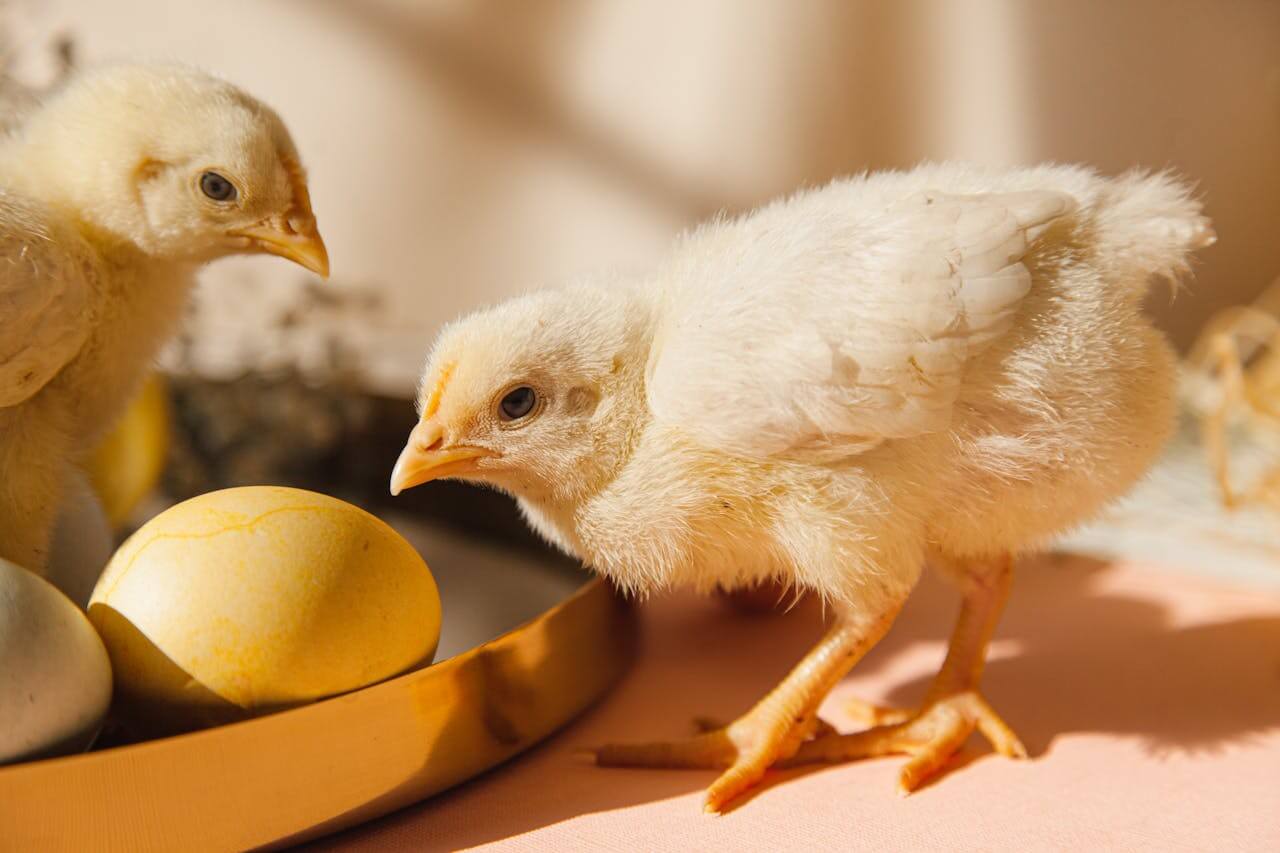
"Huhn" is neuter in German — the correct article is das. The plural is die Hühner — note the Umlaut! In English, Huhn means "chicken" or "hen". The male chicken is der Hahn (rooster), and the young chicken is das Küken (chick).
Gender rule: There is no grammar rule that predicts the gender of Huhn — it must be memorised together with its article. This is the same pattern as das Pferd and das Schaf. See all gender patterns in the Article Rules and a full overview at the German articles.
Das Huhn is essential A1 vocabulary and one of the most common farm animal nouns in German. It is a particularly useful noun for practising Umlaut plurals with -er — a pattern also found in das Kind → die Kinder and das Haus → die Häuser. Understanding how cases work with neuter nouns like das Huhn is an important step at A1–A2 level. Below you'll find the full declension table, example sentences, a common mistake to avoid, and a short quiz.
Huhn — Declension Table
| Case | Singular | Plural |
|---|---|---|
| Nominative | das Huhn | die Hühner |
| Genitive | des Huhns | der Hühner |
| Dative | dem Huhn | den Hühnern |
| Accusative | das Huhn | die Hühner |
Example Sentences with Huhn
Das Huhn pickt ruhig nach Körnern auf dem Hof.
(The chicken pecks quietly for grains in the yard.) — Nominative
Der Bauer trägt das Huhn vorsichtig zurück in den Stall.
(The farmer carefully carries the chicken back into the barn.) — Accusative
Das Kind gibt dem Huhn ein paar Körner aus der Hand.
(The child feeds the chicken a few grains from its hand.) — Dative
Das Gefieder des Huhns glänzt in der Morgensonne.
(The chicken's plumage gleams in the morning sun.) — Genitive
Die Hühner laufen frei über den Hof und suchen nach Futter.
(The chickens roam freely across the yard looking for food.) — Nominative Plural
Der Tierarzt untersucht regelmäßig das Gefieder der Hühner auf Parasiten.
(The vet regularly examines the chickens' feathers for parasites.) — Genitive Plural
Related Words & Compounds
Word family (Wortfamilie): das Hühnchen (little chicken — diminutive of Huhn, same root)
Related vocabulary: der Hahn (rooster), die Henne (hen / female chicken), das Hähnchen (broiler chicken — diminutive of Hahn, different stem)
Common compounds (Komposita): der Hühnerstall (chicken coop), die Hühnersuppe (chicken soup), das Hühnerei (chicken egg), die Hühnerbrust (chicken breast), die Hühnerhaltung (chicken keeping / poultry farming)
Common Mistake with Huhn
❌ Common mistake: Auf dem Bauernhof laufen viele Huhner herum.
✅ Correct: Auf dem Bauernhof laufen viele Hühner herum.
💡 Why: The plural of das Huhn is die Hühner — the vowel u gets an Umlaut to become ü, and -er is added. Writing Huhner without the Umlaut is a very common error, especially for beginners. The Umlaut is essential and cannot be dropped. Compare the same Umlaut pattern in die Maus → die Mäuse and die Kuh → die Kühe — each plural must be learnt with its noun.
Quick Quiz: Test Your Knowledge
Can you get all three right? Apply what you've learned above.
1. Das Gefieder ___ Huhns glänzt in der Sonne.
- A) das Huhns
- B) des Huhns
- C) dem Huhn
Check Answer
The genitive expresses possession — whose plumage? The chicken's. For neuter nouns, the genitive article is des and the noun adds -s: des Huhns. Option A) das is the nominative/accusative article — wrong case. Option C) dem is the dative article for neuter nouns — also wrong case here.
2. Das Kind gibt dem klein___ Huhn etwas Wasser.
- A) -er
- B) -e
- C) -en
Check Answer
After a definite article in the dative with a neuter noun, the adjective ending is -en: dem kleinen Huhn. Once the definite article carries the case and gender signal, the adjective always takes the weak ending -en in the dative — for all three genders: dem kleinen Huhn, dem kleinen Hund, der kleinen Biene.
3. Welches ist der korrekte Plural von "das Huhn"?
- A) die Huhner
- B) die Hühne
- C) die Hühner
Check Answer
The plural of das Huhn is die Hühner — Umlaut + -er. Option A) Huhner is missing the Umlaut — the most common mistake with this noun. Option B) Hühne uses the wrong ending — -e instead of -er. Only Hühner is correct.
Want to drill more nouns like this? The Article Trainer gives you 600+ nouns to practice — pick the article, get instant feedback, and stop guessing.
More Animal Nouns
- das Pferd — the horse
- das Schaf — the sheep
- die Kuh — the cow
- der Fuchs — the fox
- die Biene — the bee
- der Vogel — the bird
- das Kaninchen — the rabbit
- der Hund — the dog
For more animal words, explore the full animal vocabulary list.
Is it der, die, or das Huhn? Practice makes perfect.
The Article Trainer gives you 600+ nouns to drill — including animal vocabulary and much more. Pick the article, get instant feedback, and stop guessing.
Practice German Articles →Frequently Asked Questions
Is Huhn masculine, feminine, or neuter in German?
Huhn is neuter — the correct article is das. There is no grammar rule that predicts this gender, so das Huhn must be memorised as a fixed combination. In the genitive singular, the noun adds -s: des Huhns. See all gender patterns in the Article Rules.
What is the plural of Huhn?
The plural is die Hühner — the vowel u gets an Umlaut to become ü, and -er is added. Writing Huhner without the Umlaut is the most common mistake with this noun. In the dative plural, a further -n is added: den Hühnern.
What is the difference between Huhn, Henne, and Hahn?
Das Huhn is the general word for chicken — it can refer to the species as a whole or, in everyday use, to a female chicken. Die Henne is the more precise term for a female chicken (hen), and der Hahn is the male chicken (rooster). The young chicken is das Küken. Note that all four words are different stems with different articles and must be learnt separately.
Why is Huhn neuter in German?
There is no grammatical rule that explains why Huhn is neuter — it is simply the gender this noun has in German. The best approach is to always learn a German noun together with its article from the start: not just Huhn, but das Huhn. The same applies to other farm animal nouns: das Schaf, das Pferd — all neuter, all must be memorised individually.