
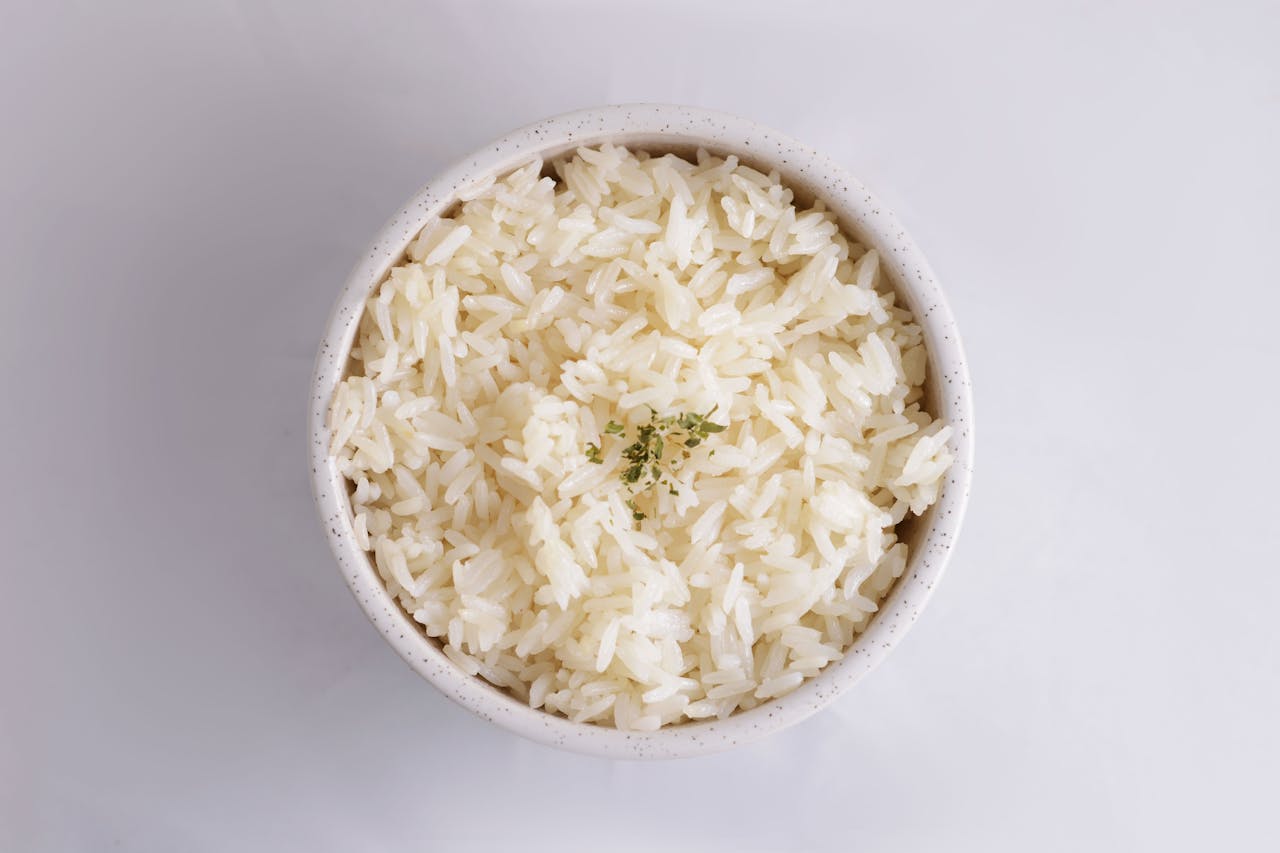
Reis is masculine in German — the correct article is der. In English, Reis translates to rice.Der Reis is an absolute staple in the German food and drinks vocabulary. It is a fundamental A1-level noun used when talking about meals, cooking, and groceries. Below you'll find the full declension, example sentences, and a quiz.
Gender rule: There is no specific ending-based rule for this root word — the masculine article must be memorized. See all gender patterns in the Article Rules and a full overview at the German Articles.
Reis — Declension Table
| Case | Singular | Plural |
|---|---|---|
| Nominative | der Reis | die Reise |
| Genitive | des Reises | der Reise |
| Dative | dem Reis | den Reisen |
| Accusative | den Reis | die Reise |
Example Sentences with Reis
Der gekochte Reis steht schon auf dem Tisch.
(The cooked rice is already on the table.) — Nominative
Sie mischt das Gemüse vorsichtig unter den Reis.
(She carefully mixes the vegetables into the rice.) — Accusative
Zu dem Reis servieren wir traditionell gebratenen Fisch.
(We traditionally serve fried fish with the rice.) — Dative
Der feine Duft des Reises erfüllt die ganze Küche.
(The fine scent of the rice fills the entire kitchen.) — Genitive
Related Words & Compounds
Word family (Wortfamilie): As a loanword ultimately derived from Greek/Latin (oryza), Reis does not have a traditional Germanic word family. Note: The verb reisen (to travel) comes from a completely different Germanic root and is unrelated to the food.
Common compounds (Komposita): der Milchreis (rice pudding), das Reiskorn (grain of rice), der Reiskocher (rice cooker), das Reisgericht (rice dish), das Reispapier (rice paper)
Common Mistake with Reis
❌ Common mistake: Das Reis ist sehr lecker.
✅ Correct: Der Reis ist sehr lecker.
💡 Why: Many learners guess that food staples are neuter (like das Brot, das Fleisch, das Gemüse). However, the food "rice" is strictly masculine (der Reis). Confusingly, the word "das Reis" does exist in German, but it means a small twig or brushwood, not the food!
Quick Quiz: Test Your Knowledge
Can you get all three right? Apply what you've learned above.
1. Der Anbau ___ erfordert ein feuchtes und warmes Klima.
- A) des Reises
- B) dem Reis
- C) den Reis
Check Answer
"Der Anbau des Reises" — the genitive case shows possession or relation (the cultivation of what?). Masculine genitive = des + noun adds -es: des Reises.
2. Heute kochen wir ___ mit Hähnchen und Curry.
- A) der Reis
- B) den Reis
- C) dem Reis
Check Answer
"Kochen" takes a direct object in the accusative case. Masculine accusative = den: den Reis.
3. Er macht für seine Gäste einen gebraten___ Reis.
- A) -en
- B) -er
- C) -em
Check Answer
After the indefinite article einen in the accusative masculine, the adjective ending is -en: einen gebratenen Reis.
More Food Nouns & Vocabulary
- das Brot — the bread
- der Käse — the cheese
- die Butter — the butter
- die Milch — the milk
- das Ei — the egg
- der Apfel — the apple
- die Banane — the banana
- die Orange — the orange
For more themed vocabulary lists, explore the Vocabulary overview list, practice with the food and drinks vocabulary, or browse the full grammar overview to master your German cases and vocabulary.
Is it der, die, or das? Practice makes perfect.
The Article Trainer gives you 600+ nouns to drill — including everyday vocabulary. Pick the article, get instant feedback, and stop guessing.
Practice German Articles →Frequently Asked Questions
Is Reis masculine, feminine, or neuter in German?
Reis (the food) is masculine — the correct article is der. This gender also applies to its compound nouns where Reis is the final word, such as der Milchreis. Beware of the homonym das Reis, which is a neuter noun that translates to a twig or piece of brushwood, entirely unrelated to the food.
What is the plural of Reis in German?
In everyday language, Reis is an uncountable noun and is used in the singular form. The plural die Reise does exist, but it is reserved for agricultural or technical contexts when referring to different varieties or species of rice.
How do you say rice cooker in German?
A rice cooker is translated as der Reiskocher. It is a compound noun combining Reis and Kocher. Because der Kocher is masculine, the entire word is masculine.