
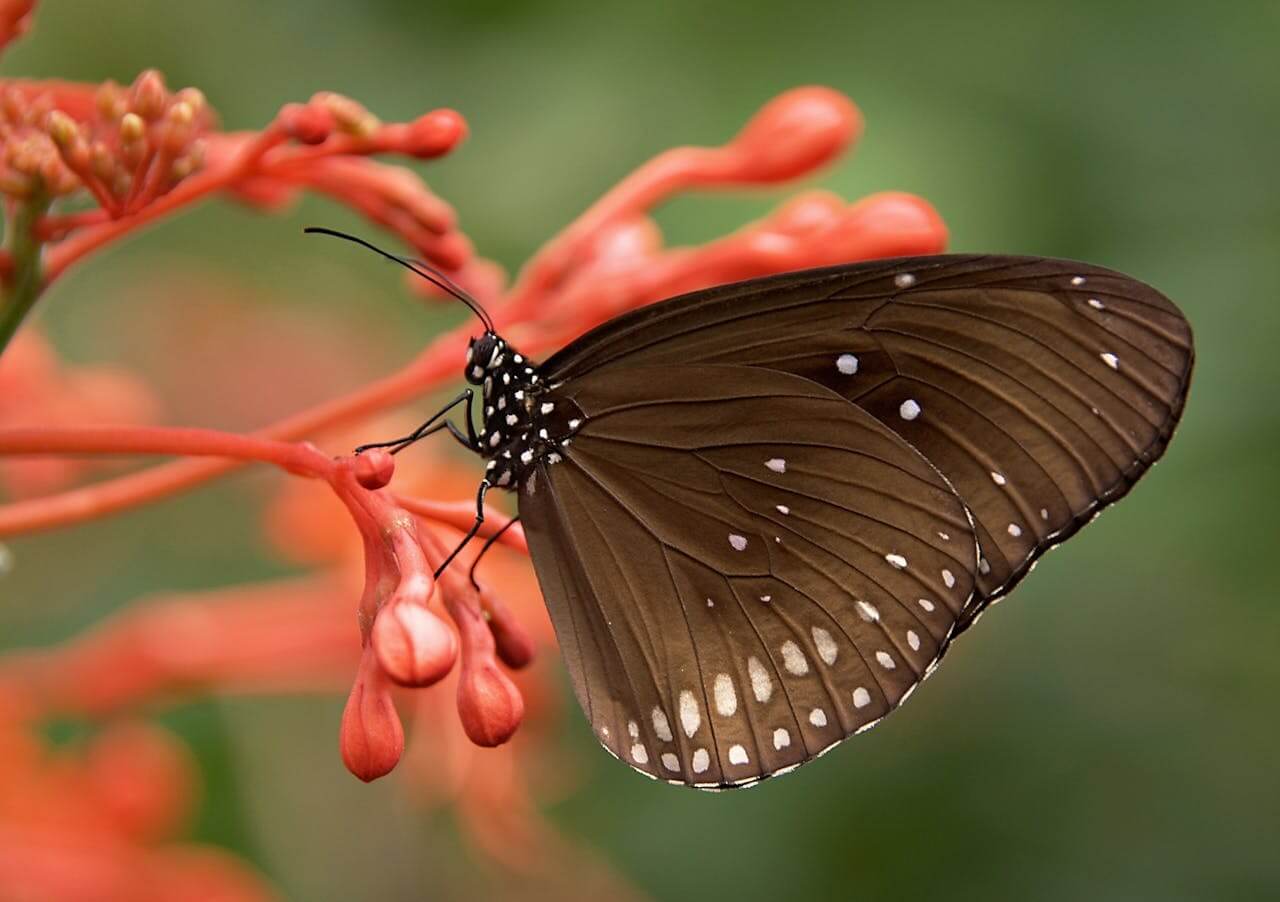
"Schmetterling" is masculine in German — the correct article is der. The plural is die Schmetterlinge (add -e). In English, Schmetterling means "butterfly".
Gender rule: Nouns ending in -ling are almost always masculine in German — der Schmetterling follows this pattern, just like der Frühling (spring) and der Lehrling (apprentice). See all gender patterns in the Article Rules and a full overview at the German articles.
Der Schmetterling is A1–A2 vocabulary and a great noun for practising the -ling rule: nouns with this suffix are almost always masculine. It also illustrates a straightforward plural pattern — simply add -e — and a useful genitive to practise. Understanding how cases work with masculine nouns like der Schmetterling is an important step at A1–A2 level. Below you'll find the full declension table, example sentences, a common mistake to avoid, and a short quiz.
Schmetterling — Declension Table
| Case | Singular | Plural |
|---|---|---|
| Nominative | der Schmetterling | die Schmetterlinge |
| Genitive | des Schmetterlings | der Schmetterlinge |
| Dative | dem Schmetterling | den Schmetterlingen |
| Accusative | den Schmetterling | die Schmetterlinge |
Example Sentences with Schmetterling
Der Schmetterling landet sanft auf einer Blüte.
(The butterfly lands gently on a blossom.) — Nominative
Das Mädchen beobachtet den Schmetterling sehr aufmerksam.
(The girl watches the butterfly very attentively.) — Accusative
Der Biologe nähert sich dem Schmetterling mit einem Netz.
(The biologist approaches the butterfly with a net.) — Dative
Die Farben des Schmetterlings sind wunderschön.
(The butterfly's colours are beautiful.) — Genitive
Im Sommer fliegen viele Schmetterlinge über die Wiese.
(In summer many butterflies fly across the meadow.) — Nominative Plural
Die Fotografin folgt den Schmetterlingen durch den Garten.
(The photographer follows the butterflies through the garden.) — Dative Plural
Related Words & Compounds
Word family (Wortfamilie): schmettern (to smash; to belt out — verb, same root)
Common compounds (Komposita): der Schmetterlingsstil (butterfly stroke — swimming), die Schmetterlingsblüte (papilionaceous flower — botany), die Schmetterlingssammlung (butterfly collection)
Common Mistake with Schmetterling
❌ Common mistake: Im Park sitzen viele bunte Schmetterlingen.
✅ Correct: Im Park sitzen viele bunte Schmetterlinge.
💡 Why: The plural of der Schmetterling is die Schmetterlinge — simply add -e. The form Schmetterlingen only exists in the dative plural: den Schmetterlingen. Using it as a general plural is wrong. This is the same pattern as der Hund → die Hunde (nominative/accusative plural), den Hunden (dative plural only).
Quick Quiz: Test Your Knowledge
Can you get all three right? Apply what you've learned above.
1. Die Farben ___ Schmetterling___ sind wunderschön.
- A) der Schmetterling
- B) dem Schmetterling
- C) des Schmetterlings
Check Answer
2. Sie reicht dem Kind ein Glas und zeigt ___ Schmetterling hinter der Scheibe.
- A) der Schmetterling
- B) dem Schmetterling
- C) den Schmetterling
Check Answer
"Zeigen" (to show/point to) takes a direct object in the accusative. For masculine nouns, the accusative article is den: den Schmetterling. Option B) dem is dative — that would be the indirect object. Option A) der is nominative — the subject.
3. Das ist ein sehr schön___ Schmetterling.
- A) -e
- B) -es
- C) -er
Check Answer
After an indefinite article in the nominative with a masculine noun, the adjective ending is -er: ein schöner Schmetterling. Because ein doesn't carry the gender signal, the adjective must show it. Compare: feminine eine schöne Maus (-e), neuter ein schönes Pferd (-es).
Want to drill more nouns like this? The Article Trainer gives you 600+ nouns to practice — pick the article, get instant feedback, and stop guessing.
More Animal Nouns
- der Hund — the dog
- die Katze — the cat
- der Vogel — the bird
- die Maus — the mouse
- das Kaninchen — the rabbit
- der Elefant — the elephant
- der Bär — the bear
- der Löwe — the lion
For more animal words, explore the full animal vocabulary list.
Is it der, die, or das Schmetterling? Practice makes perfect.
The Article Trainer gives you 600+ nouns to drill — including animal vocabulary and much more. Pick the article, get instant feedback, and stop guessing.
Practice German Articles →Frequently Asked Questions
Is Schmetterling masculine, feminine, or neuter in German?
Schmetterling is masculine — the correct article is der. The gender follows a reliable rule: nouns ending in -ling are almost always masculine in German, for example der Frühling (spring) and der Lehrling (apprentice). In the genitive singular, the noun adds -s: des Schmetterlings. See all gender patterns in the Article Rules.
What is the plural of Schmetterling?
The plural is die Schmetterlinge — add -e to the singular. Do not use Schmetterlingen as a general plural — that form only exists in the dative plural: den Schmetterlingen. In nominative and accusative plural, it is always die Schmetterlinge.
What does the word Schmetterling come from?
The word is related to the verb schmettern, which today means "to smash" or "to belt out" (a song). The -ling suffix is added to verbs and adjectives to form nouns — and as a rule, these nouns are almost always masculine. Other familiar examples are der Lehrling (apprentice, from lehren — to teach) and der Frühling (spring).
How do you say "the butterfly's wings" in German?
You would say die Flügel des Schmetterlings — using the genitive to express possession. The genitive of der Schmetterling is des Schmetterlings — add -s to the noun and change the article from der to des. This is the standard pattern for all masculine nouns in the genitive singular.