
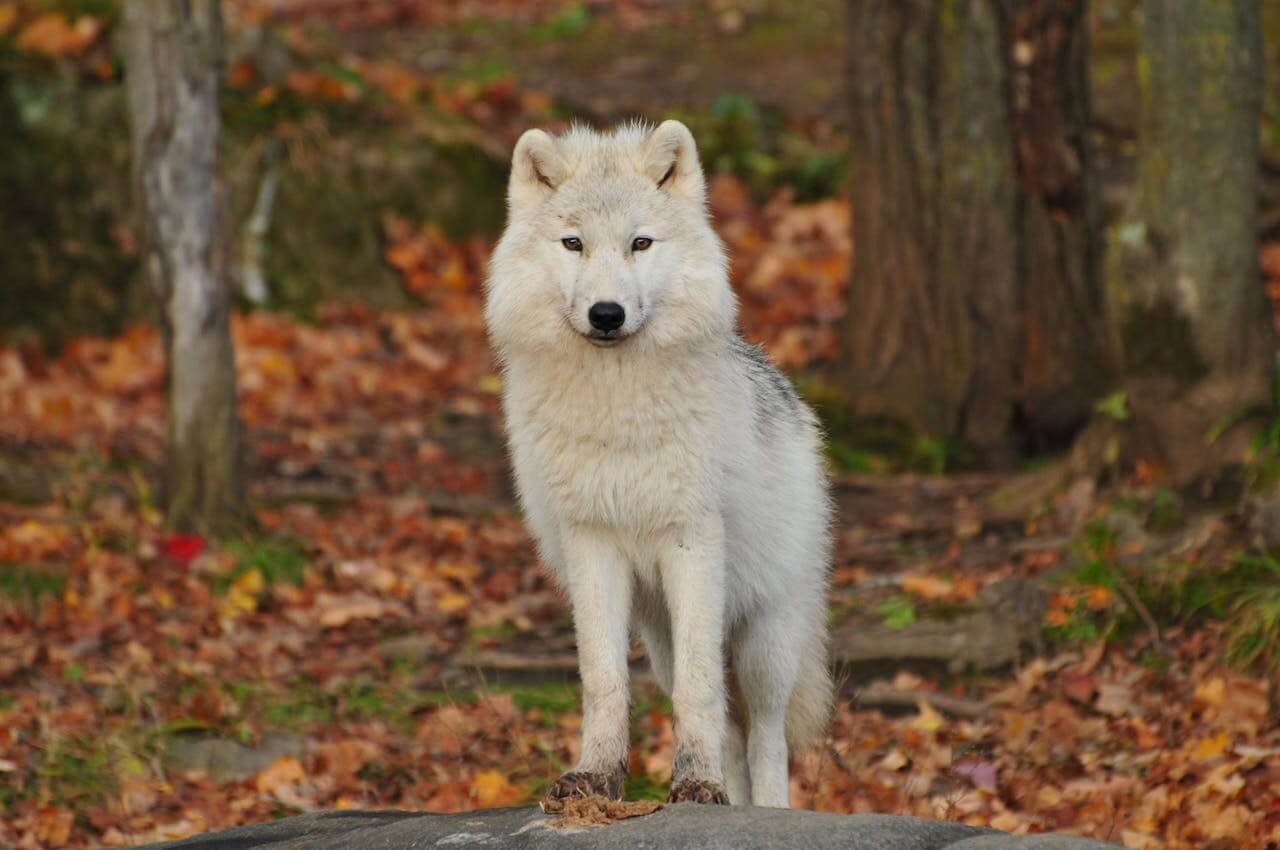
"Wolf" is masculine in German — the correct article is der. The plural is die Wölfe — note the Umlaut! In English, Wolf means "wolf". The female wolf is die Wölfin.
Gender rule: The gender of animal nouns in German often has to be memorised individually. Der Wolf is masculine — the same as der Hund and der Bär. The plural adds an Umlaut: Wolf → Wölfe. See all gender patterns in the Article Rules and a full overview at the German articles.
Der Wolf is A1–A2 vocabulary and one of the most culturally significant animal nouns in German — from fairy tales like Rotkäppchen to everyday idioms. It is also a useful noun for practising Umlaut plurals and the genitive -es ending. Understanding how cases work with masculine nouns like der Wolf is an important step at A1–A2 level. Below you'll find the full declension table, example sentences, a common mistake to avoid, and a short quiz.
Wolf — Declension Table
| Case | Singular | Plural |
|---|---|---|
| Nominative | der Wolf | die Wölfe |
| Genitive | des Wolfes | der Wölfe |
| Dative | dem Wolf | den Wölfen |
| Accusative | den Wolf | die Wölfe |
Example Sentences with Wolf
Der Wolf heult in der Nacht laut und ausdauernd.
(The wolf howls loudly and persistently in the night.) — Nominative
Der Förster beobachtet den Wolf durch sein Fernglas.
(The forest ranger observes the wolf through his binoculars.) — Accusative
Die Wissenschaftlerin nähert sich dem Wolf mit großer Vorsicht.
(The scientist approaches the wolf with great caution.) — Dative
Das Fell des Wolfes ist dicht und grau.
(The wolf's fur is thick and grey.) — Genitive
Die Wölfe jagen in der Nacht gemeinsam als Rudel.
(The wolves hunt together at night as a pack.) — Nominative Plural
Der Biologe folgt den Wölfen durch den verschneiten Wald.
(The biologist follows the wolves through the snowy forest.) — Dative Plural
Related Words & Compounds
Word family (Wortfamilie): die Wölfin (female wolf), wölfisch (wolfish — adjective, same root)
Common compounds (Komposita): der Wolfshund (wolfhound), das Wolfsrudel (wolf pack), die Wolfsspinne (wolf spider), die Wolfsmilch (spurge — a plant, literally "wolf's milk")
Common Mistake with Wolf
❌ Common mistake: Im Wald leben viele Wolfs.
✅ Correct: Im Wald leben viele Wölfe.
💡 Why: The plural of der Wolf is die Wölfe — the vowel gets an Umlaut (o → ö) and -e is added. Adding -s is a common reflex for English speakers, but the -s plural is rare in German and mostly limited to loanwords. Compare the same Umlaut + e pattern in die Maus → die Mäuse and der Vogel → die Vögel — each noun's plural must be learnt individually.
Quick Quiz: Test Your Knowledge
Can you get all three right? Apply what you've learned above.
1. Das Heulen ___ Wolf___ ist in der ganzen Umgebung zu hören.
- A) der Wolf
- B) des Wolfs
- C) des Wolfes
Check Answer
The genitive expresses possession — whose howling? For masculine nouns, the genitive article is des. Wolf ends in a single consonant, so the noun adds -es: des Wolfes. Option B) des Wolfs is technically possible in informal usage but des Wolfes is the standard written form.
2. Das Kind zeigt aufgeregt auf ___ Wolf hinter dem Zaun.
- A) der Wolf
- B) dem Wolf
- C) den Wolf
Check Answer
"Zeigen auf" (to point at) takes the accusative. For masculine nouns, the accusative article is den: den Wolf. Option A) der is nominative — the subject. Option B) dem is dative — used after prepositions like mit or von, not after auf in this context.
3. Das ist ein sehr groß___ Wolf.
- A) -e
- B) -es
- C) -er
Check Answer
After an indefinite article in the nominative with a masculine noun, the adjective ending is -er: ein großer Wolf. Because ein doesn't carry the gender signal, the adjective must show it. Compare: feminine eine große Maus (-e), neuter ein großes Pferd (-es).
Want to drill more nouns like this? The Article Trainer gives you 600+ nouns to practice — pick the article, get instant feedback, and stop guessing.
More Animal Nouns
- der Hund — the dog
- die Katze — the cat
- der Vogel — the bird
- der Schmetterling — the butterfly
- die Maus — the mouse
- der Bär — the bear
- der Löwe — the lion
- der Elefant — the elephant
For more animal words, explore the full animal vocabulary list.
Is it der, die, or das Wolf? Practice makes perfect.
The Article Trainer gives you 600+ nouns to drill — including animal vocabulary and much more. Pick the article, get instant feedback, and stop guessing.
Practice German Articles →Frequently Asked Questions
Is Wolf masculine, feminine, or neuter in German?
Wolf is masculine — the correct article is der. The female wolf is die Wölfin. In the genitive singular, the noun adds -es: des Wolfes. See all gender patterns in the Article Rules.
What is the plural of Wolf?
The plural is die Wölfe — the vowel o gets an Umlaut to become ö, and -e is added. Do not use Wolfs as a plural — that is not correct German. In the dative plural, a further -n is added: den Wölfen.
What is the difference between Wolf and Hund in German?
Der Wolf is a wild animal — it lives in the forest and hunts in packs. Der Hund is the domesticated dog. Biologically, dogs are descended from wolves, and both words share the same grammatical gender: masculine. The key difference for German learners is the plural: die Wölfe (Umlaut + e) versus die Hunde (e only, no Umlaut).
Is Wolf used in any German idioms?
Yes — Wolf appears in several common German expressions. Mit den Wölfen heulen (literally "to howl with the wolves") means to go along with the crowd. Ein Wolf im Schafspelz ("a wolf in sheep's clothing") has exactly the same meaning as the English idiom. These expressions are B1–B2 level vocabulary and useful for learners moving beyond basics.