
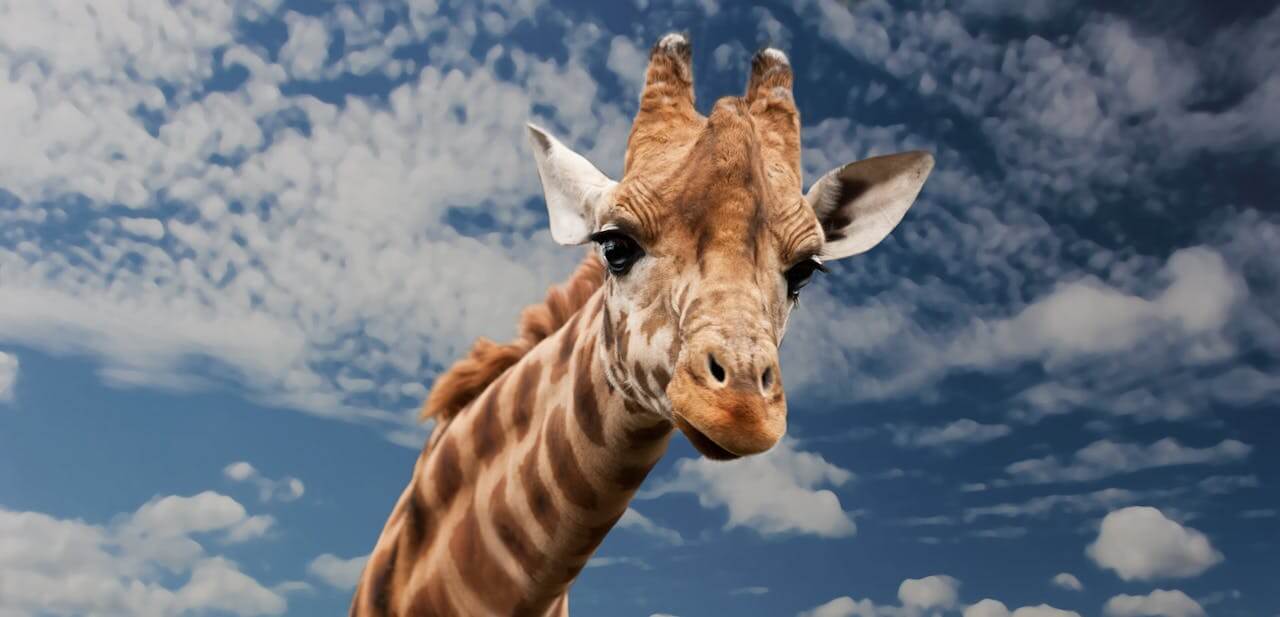
"Giraffe" is feminine in German — the correct article is die. The plural is die Giraffen — add -n. In English, Giraffe means "giraffe".
Gender rule: Giraffe is a loanword in German. Nouns ending in -e are very often feminine — this is one of the most reliable gender signals in German, and die Giraffe follows it exactly. The same pattern applies to die Katze and die Biene. See all gender patterns in the Article Rules and a full overview at the German articles.
Die Giraffe is A1–A2 vocabulary and one of the most instantly recognisable animal nouns in German. It is a great example for the -e feminine rule and the -n plural pattern. Understanding how cases work with feminine nouns like die Giraffe is an important step at A1–A2 level. Below you'll find the full declension table, example sentences, a common mistake to avoid, and a short quiz.
Giraffe — Declension Table
| Case | Singular | Plural |
|---|---|---|
| Nominative | die Giraffe | die Giraffen |
| Genitive | der Giraffe | der Giraffen |
| Dative | der Giraffe | den Giraffen |
| Accusative | die Giraffe | die Giraffen |
Example Sentences with Giraffe
Die Giraffe reckt ihren langen Hals nach den Blättern im Baum.
(The giraffe stretches its long neck towards the leaves in the tree.) — Nominative
Der Pfleger füttert die Giraffe täglich mit frischen Akazienblättern.
(The keeper feeds the giraffe fresh acacia leaves every day.) — Accusative
Das Mädchen reicht der Giraffe ein Büschel Blätter über den Zaun.
(The girl holds out a bunch of leaves to the giraffe over the fence.) — Dative
Der lange Hals der Giraffe ist ihr auffälligstes Merkmal.
(The giraffe's long neck is its most distinctive feature.) — Genitive
Die Giraffen laufen in der Abenddämmerung langsam zur Wasserstelle.
(The giraffes walk slowly to the watering hole at dusk.) — Nominative Plural
Die Forscher folgen den Giraffen mit GPS-Sendern durch die Savanne.
(The researchers follow the giraffes through the savanna with GPS trackers.) — Dative Plural
Related Words & Compounds
Word family (Wortfamilie): Giraffe is a loanword in German with no established word family of its own. The noun stands on its own.
Common compounds (Komposita): der Giraffenhals (giraffe's neck — also used figuratively for a very long neck), das Giraffenbaby (baby giraffe), der Giraffenbulle (male giraffe / bull giraffe)
Common Mistake with Giraffe
❌ Common mistake: Im Zoo gibt es drei Giraffes.
✅ Correct: Im Zoo gibt es drei Giraffen.
💡 Why: The plural of die Giraffe is die Giraffen — add -n, not -s. The -s plural is rare in German and mostly limited to loanwords like das Auto → die Autos. Although Giraffe is a loanword, it has fully adopted a standard German plural pattern: nouns ending in -e typically add -n in the plural. Compare die Biene → die Bienen and die Katze → die Katzen.
Quick Quiz: Test Your Knowledge
Can you get all three right? Apply what you've learned above.
1. Das Kind reicht ___ Giraffe ein paar Blätter.
- A) die Giraffe
- B) der Giraffe
- C) dem Giraffe
Check Answer
"Reichen" (to hold out / to pass) takes the dative for the recipient — who receives the leaves? The giraffe. For feminine nouns, the dative article is der: der Giraffe. Option A) die is the nominative/accusative article — wrong case. Option C) dem is the dative article for masculine and neuter nouns only.
2. Der lang___ Hals der Giraffe ist beeindruckend.
- A) -er
- B) -em
- C) -e
Check Answer
After a definite article in the nominative with a masculine noun, the adjective ending is -e: der lange Hals. Once the definite article carries the gender and case signal, the adjective takes the weak ending -e in the nominative for all three genders: der lange Hals, die lange Giraffe, das lange Pferd.
3. Welches ist der korrekte Plural von "die Giraffe"?
- A) die Giraffes
- B) die Giraffen
- C) die Giraffes
Check Answer
The plural of die Giraffe is die Giraffen — add -n. This is the standard plural pattern for feminine nouns ending in -e in German. The -s plural does not apply here. The same pattern applies to die Biene → die Bienen and die Katze → die Katzen.
Want to drill more nouns like this? The Article Trainer gives you 600+ nouns to practice — pick the article, get instant feedback, and stop guessing.
More Animal Nouns
- der Löwe — the lion
- der Elefant — the elephant
- der Tiger — the tiger
- der Wolf — the wolf
- der Affe — the monkey
- das Huhn — the chicken
- die Kuh — the cow
- der Bär — the bear
For more animal words, explore the full animal vocabulary list.
Is it der, die, or das Giraffe? Practice makes perfect.
The Article Trainer gives you 600+ nouns to drill — including animal vocabulary and much more. Pick the article, get instant feedback, and stop guessing.
Practice German Articles →Frequently Asked Questions
Is Giraffe masculine, feminine, or neuter in German?
Giraffe is feminine — the correct article is die. Nouns ending in -e are very often feminine in German, and die Giraffe follows this pattern. In the genitive and dative singular, the article changes to der — but the noun itself stays unchanged. See all gender patterns in the Article Rules.
What is the plural of Giraffe?
The plural is die Giraffen — simply add -n. Do not use Giraffes — the -s plural does not apply here. Because the plural already ends in -n, the dative plural does not add another -n: den Giraffen.
What is the difference between Giraffe and Giraffenbulle in German?
Die Giraffe is the general term for a giraffe and can refer to the species as a whole or to a female individual. Der Giraffenbulle is the specific term for a male giraffe (bull). In everyday German, die Giraffe is used in most contexts, while der Giraffenbulle appears more often in wildlife or zoological contexts when the sex of the animal is relevant.
Why is Giraffe feminine in German?
One reliable gender signal in German is the -e ending — the majority of nouns ending in -e are feminine, and die Giraffe is a clear example of this pattern. This rule is not absolute, but it is one of the most useful gender hints for learners. Other feminine animal nouns with the same ending include die Biene (bee) and die Katze (cat).