
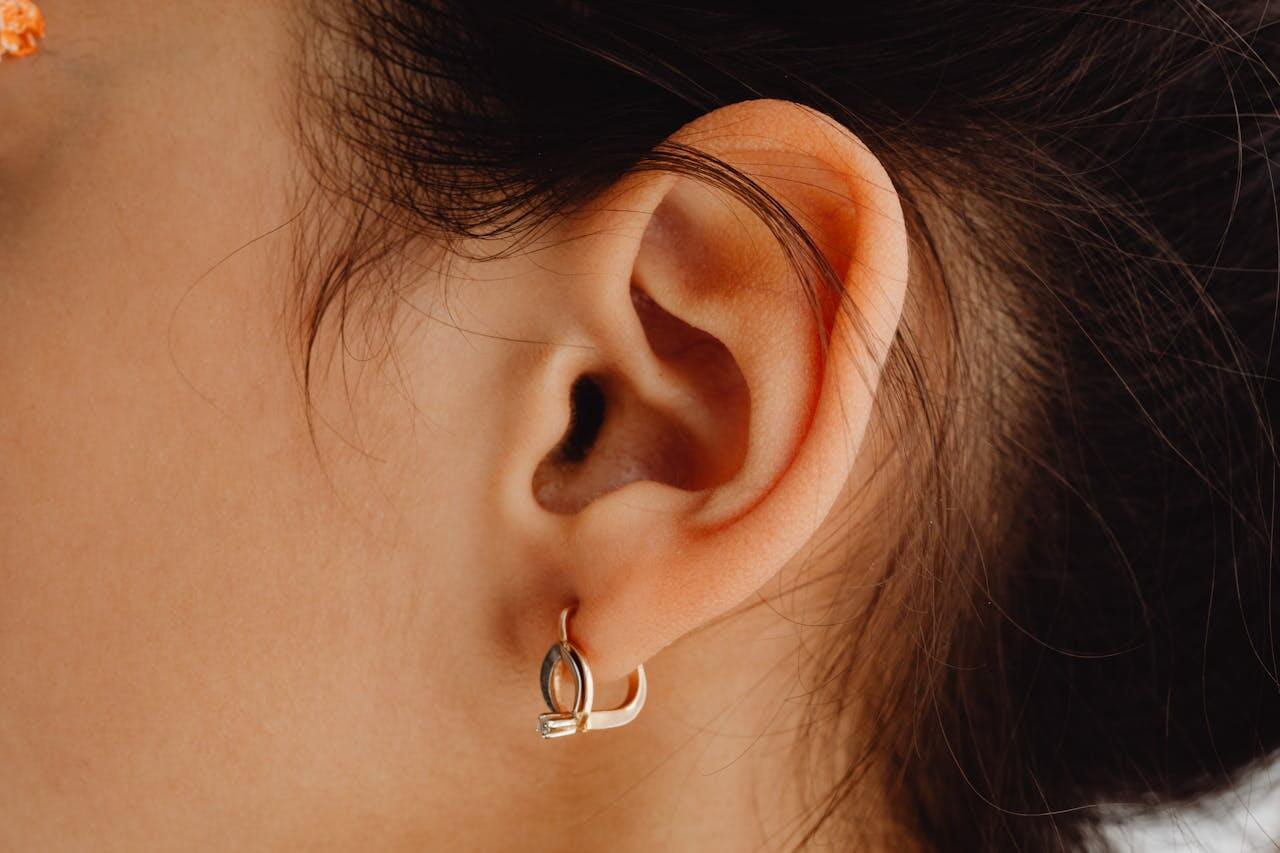
"Ohr" is neuter in German — the correct article is das. The plural is die Ohren. In English, Ohr means "ear".
Gender rule: das Ohr is neuter. Body part nouns in German have mixed genders — der Finger, die Nase, das Ohr — so there is no reliable ending-based rule here. The safest approach is always to learn every noun with its article from the start. See all gender patterns in the Article Rules and a full overview at the german articles.
Das Ohr is an A1 vocabulary word that every German learner needs from the very beginning. It is a useful example for the neuter declension pattern — and its plural die Ohren is one of those forms worth learning explicitly, since the tempting but wrong form die Ohre is a very common learner error. For neuter nouns, the nominative and accusative are always identical, which keeps the declension straightforward in most cases. Understanding how cases work with neuter nouns like das Ohr is an important step at A1 level. For more body part nouns, also see die Nase and der Kopf.
Ohr — Declension Table
| Case | Singular | Plural |
|---|---|---|
| Nominative | das Ohr | die Ohren |
| Genitive | des Ohres | der Ohren |
| Dative | dem Ohr | den Ohren |
| Accusative | das Ohr | die Ohren |
Example Sentences with Ohr
Sein Ohr schmerzt seit dem Morgen — er vermutet eine Entzündung.
(His ear has been hurting since morning — he suspects an inflammation.) — Nominative
Sie hält das Ohr an die Wand, um das Gespräch im Nebenzimmer zu hören.
(She puts her ear against the wall to hear the conversation in the next room.) — Accusative
Er flüstert ihr etwas ins Ohr, damit die anderen es nicht hören.
(He whispers something in her ear so the others cannot hear it.) — Accusative
Die Form des Ohres ist bei jedem Menschen einzigartig.
(The shape of the ear is unique to each person.) — Genitive
Seine Ohren sind nach dem Konzert noch immer leicht taub.
(His ears are still slightly numb after the concert.) — Nominative Plural
Den Ohren der Musiker schadet dauerhafter Lärm erheblich.
(Permanent noise causes considerable damage to the ears of musicians.) — Dative Plural
Related Words & Compounds
Word family (Wortfamilie):
- das Öhrchen — little ear (diminutive)
Common compounds (Komposita):
- der Ohrring — earring
- das Ohrläppchen — earlobe
- der Ohrwurm — earworm (a tune stuck in your head; also the insect)
- das Ohrloch — ear piercing hole
Common Mistake with Ohr
❌ Common mistake: Meine Ohre tun weh.
✅ Correct: Meine Ohren tun weh.
💡 Why: The plural of das Ohr is die Ohren — not Ohre. The plural adds -en, not just -e. Confusing these two endings is one of the most common errors with this noun. Only the dative plural drops the extra -n pattern since Ohren already ends in -en: den Ohren.
Quick Quiz: Test Your Knowledge
Can you get all three right? Apply what you've learned above.
1. Die Form ___ Ohres ist bei jedem Menschen einzigartig.
- A) dem
- B) der
- C) des
Check Answer
"Die Form ___ Ohres" — whose shape? The ear's. This is a possession relationship expressed with the genitive case. For neuter nouns, the genitive article is des and the noun adds -es: des Ohres. Option A) dem is dative. Option B) der is the genitive article for feminine nouns.
2. Er hält ___ Ohr an die Wand, um besser zu hören.
- A) dem
- B) des
- C) das
Check Answer
The verb halten (to hold) takes a direct object — what does he hold? His ear. Direct objects use the accusative case. For neuter nouns, the accusative article is das — identical to the nominative. Option A) dem is dative. Option B) des is genitive.
3. Sie hat ein klein___ Ohr.
- A) -er
- B) -en
- C) -es
Check Answer
After an indefinite article in the accusative with a neuter noun, the adjective ending is -es: ein kleines Ohr. Because ein looks the same for neuter nominative and accusative, the adjective must carry the gender-case signal — this is the strong ending -es. Option A) -er is the strong ending for masculine nominative. Option B) -en is the weak ending used in most other case-gender combinations.
Want to drill more nouns like this? The Article Trainer gives you 600+ nouns to practice — pick the article, get instant feedback, and stop guessing.
More Body Part Nouns
- der Arm — the arm
- der Bauch — the belly / stomach
- das Bein — the leg
- der Finger — the finger
- das Gesicht — the face
- der Hals — the neck / throat
- die Hand — the hand
- das Herz — the heart
- die Haut — the skin
- das Knie — the knee
- der Knochen — the bone
- der Kopf — the head
- der Muskel — the muscle
- die Nase — the nose
For the full list with articles and plurals, see the Body Parts Vocabulary page. You can also browse more topic-based word lists in the German Vocabulary Overview and test yourself with the Vocabulary Quizzes.
Is it der, die, or das Ohr? Practice makes perfect.
The Article Trainer gives you 600+ nouns to drill — from everyday vocabulary to family, food, and much more. Pick the article, get instant feedback, and stop guessing.
Practice German Articles →Frequently Asked Questions
Is Ohr masculine, feminine, or neuter in German?
Ohr is neuter — the correct article is das. Body part nouns in German have mixed genders, so there is no reliable rule to predict them. The best habit is always to learn every noun with its article from the start. For a full overview of gender patterns, see the Article Rules.
What is the plural of Ohr in German?
The plural is die Ohren — add -en. Do not use Ohre — this is a very common learner error. The full ending is -en, not just -e. In the dative plural, no extra -n is added because the plural already ends in -en: den Ohren.
What is an Ohrwurm in German?
Der Ohrwurm has two meanings in German. In everyday speech it most commonly refers to a catchy tune that gets stuck in your head — what English calls an "earworm". The literal meaning is the earwig insect (Forficula auricularia), but this meaning is far less common in everyday conversation. If someone says "Ich habe einen Ohrwurm", they almost certainly mean a song is stuck in their head, not that they have encountered an insect.
What is the genitive of das Ohr?
The genitive singular is des Ohres — the shorter form des Ohrs is equally correct standard German. For neuter nouns, as for masculine nouns, the genitive singular adds -es or -s. See the Cases Overview for more detail.