
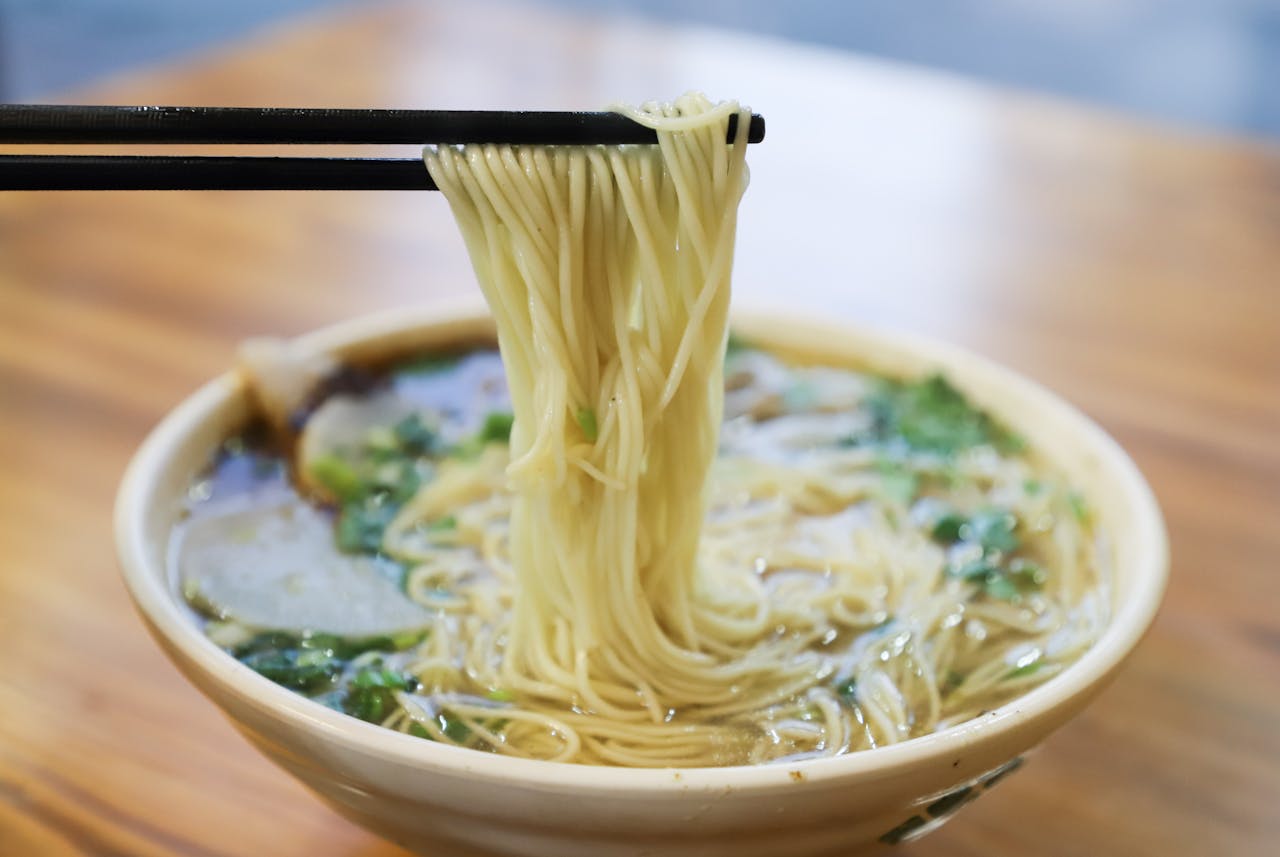
Nudel is feminine in German — the correct article is die. The plural is die Nudeln. In English, Nudel translates to noodle or pasta.Die Nudel is a very common word in the German food and drinks vocabulary. While you can talk about a single noodle (die Nudel), in everyday German, the plural form (die Nudeln) is almost always used to refer to a dish of pasta. Below you'll find the full declension, example sentences, and a quiz.
Gender rule: Nouns ending in -el can be masculine, feminine, or neuter, but some everyday household or food items are feminine (die Nudel, die Gabel, die Schüssel). See all gender patterns in the Article Rules and a full overview at the German Articles.
Nudel — Declension Table
| Case | Singular | Plural |
|---|---|---|
| Nominative | die Nudel | die Nudeln |
| Genitive | der Nudel | der Nudeln |
| Dative | der Nudel | den Nudeln |
| Accusative | die Nudel | die Nudeln |
Example Sentences with Nudel
Die Nudeln kochen im heißen Wasser.
(The noodles are boiling in the hot water.) — Nominative Plural
Wir essen heute Abend Nudeln mit Tomatensoße.
(We are eating pasta with tomato sauce tonight.) — Accusative Plural
Zu den Nudeln serviert er einen frischen Salat.
(He serves a fresh salad with the pasta.) — Dative Plural
Der Geschmack der Nudeln ist wirklich hervorragend.
(The taste of the pasta is truly excellent.) — Genitive Plural
Da liegt noch eine Nudel auf dem Teller.
(There is still one noodle lying on the plate.) — Nominative Singular
Das Kind probiert die erste Nudel aus dem Topf.
(The child tastes the first noodle from the pot.) — Accusative Singular
Related Words & Compounds
Word family (Wortfamilie): das Nüdelchen (little noodle — diminutive)
Common compounds (Komposita): die Nudelsuppe (noodle soup), das Nudelholz (rolling pin), das Nudelgericht (pasta dish), die Bandnudel (ribbon noodle), die Glasnudel (glass noodle)
Common Mistake with Nudel
❌ Common mistake: Die Nudelen sind schon weich.
✅ Correct: Die Nudeln sind schon weich.
💡 Why: Because the singular already ends in -el (die Nudel), you only need to add an -n to form the plural. Adding an extra "e" (Nudelen) is a frequent spelling and pronunciation mistake among learners.
Quick Quiz: Test Your Knowledge
Can you get all three right? Apply what you've learned above.
1. Die Soße ___ schmeckt sehr stark nach Knoblauch.
- A) der Nudeln
- B) den Nudeln
- C) die Nudeln
Check Answer
"Die Soße der Nudeln" — the genitive case shows relation or possession (the sauce of what?). Plural genitive = der: der Nudeln.
2. Ich koche heute ___ mit Pesto für meine Freunde.
- A) die Nudeln
- B) der Nudeln
- C) den Nudeln
Check Answer
"Kochen" takes a direct object in the accusative case. Plural accusative = die: die Nudeln.
3. Beim Kochen probiert sie eine roh___ Nudel.
- A) -en
- B) -e
- C) -es
Check Answer
After the indefinite article eine in the accusative feminine, the adjective ending is -e: eine rohe Nudel.
More Food Nouns & Vocabulary
- das Brot — the bread
- der Reis — the rice
- der Käse — the cheese
- die Butter — the butter
- die Milch — the milk
- das Ei — the egg
- der Apfel — the apple
- die Banane — the banana
- die Orange — the orange
For more themed vocabulary lists, explore the Vocabulary overview list, practice with the food and drinks vocabulary, or browse the full grammar overview to master your German cases and vocabulary.
Is it der, die, or das? Practice makes perfect.
The Article Trainer gives you 600+ nouns to drill — including everyday vocabulary. Pick the article, get instant feedback, and stop guessing.
Practice German Articles →Frequently Asked Questions
Is Nudel masculine, feminine, or neuter in German?
Nudel is feminine — the correct article is die. There is no absolute ending rule for "-el" (it can be any of the three genders), but many everyday household items ending in "-el" are feminine. All compound words that end with "-nudel" also take the feminine article (e.g., die Bandnudel, die Glasnudel).
What is the plural of Nudel in German?
The plural is die Nudeln. You form it by simply adding an "-n" to the singular noun. In German, unlike English where "pasta" is often treated as uncountable, the plural "die Nudeln" is the standard way to refer to a pasta dish.
How do you say pasta in German?
Germans most commonly use the plural die Nudeln to refer to pasta in general. You can also use the loanword die Pasta, which is primarily used when specifically referring to Italian-style dishes.