
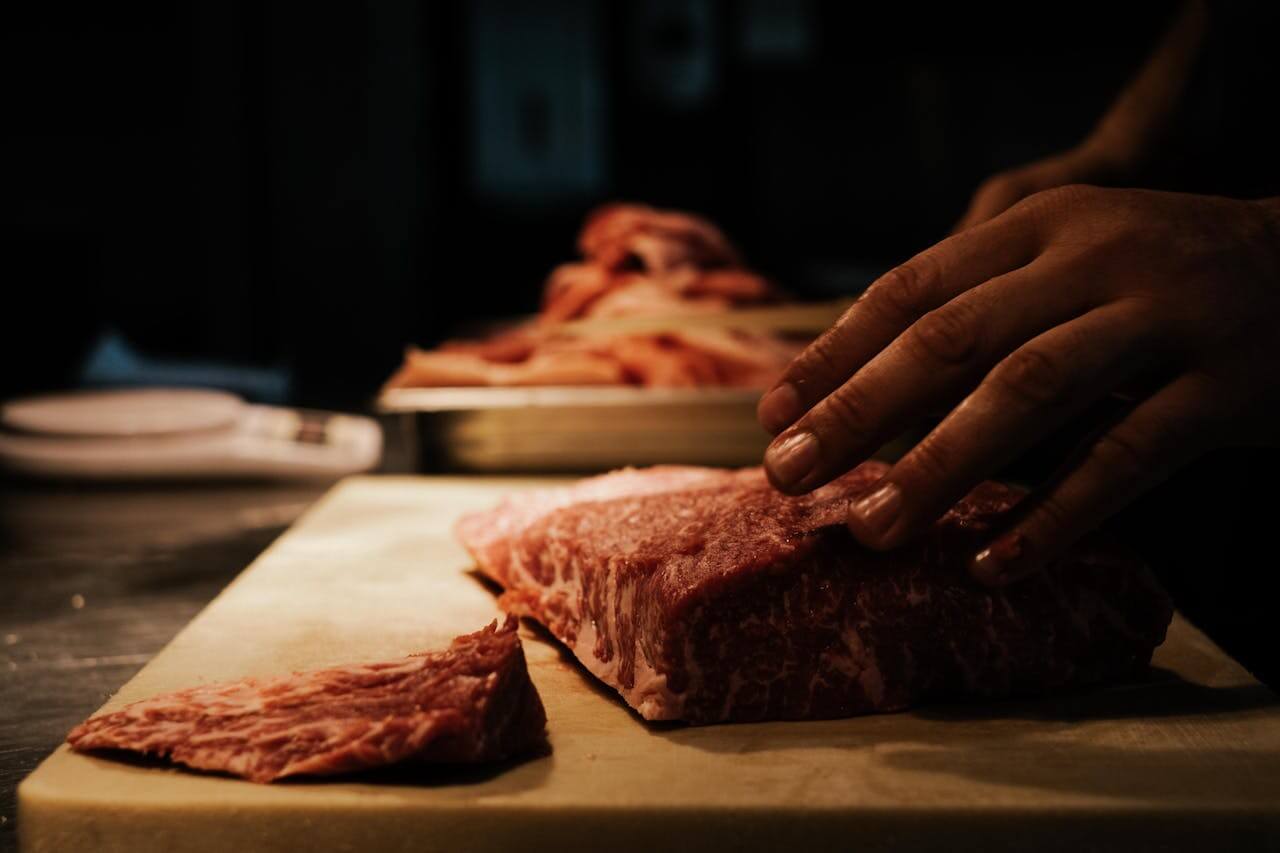
Fleisch is neuter in German — the correct article is das. In English, Fleisch translates to meat.Das Fleisch is a central vocabulary word when exploring the German food and drinks vocabulary. Whether you are ordering in a restaurant, shopping at a butcher, or reading a menu, knowing how to decline this noun is essential for A1 learners. Below you'll find the full declension, example sentences, and a quiz.
Gender rule: As an old Germanic base word, there is no specific ending-based rule to predict its gender — the neuter article must be memorized. See all gender patterns in the Article Rules and a full overview at the German Articles.
Fleisch — Declension Table
| Case | Singular | Plural |
|---|---|---|
| Nominative | das Fleisch | die Fleische |
| Genitive | des Fleisches / Fleischs | der Fleische |
| Dative | dem Fleisch | den Fleischen |
| Accusative | das Fleisch | die Fleische |
Example Sentences with Fleisch
Das Fleisch brät in der heißen Pfanne.
(The meat is frying in the hot pan.) — Nominative
Der Metzger schneidet das Fleisch in kleine Stücke.
(The butcher cuts the meat into small pieces.) — Accusative
Zu dem Fleisch servieren wir einen frischen Salat.
(We are serving a fresh salad with the meat.) — Dative
Die Qualität des Fleisches ist hier besonders hoch.
(The quality of the meat is particularly high here.) — Genitive
Related Words & Compounds
Word family (Wortfamilie): fleischig (meaty / fleshy — adjective)
Common compounds (Komposita): das Schweinefleisch (pork), das Rindfleisch (beef), das Hähnchenfleisch (chicken meat), das Fleischgericht (meat dish), der Fleischwolf (meat grinder), die Fleischsorte (type of meat), die Fleischbrühe (meat broth)
Common Mistake with Fleisch
❌ Common mistake: Das Fleich ist noch roh.
✅ Correct: Das Fleisch ist noch roh.
💡 Why: A very frequent spelling error! Many learners forget the "s" in the German "sch" sound because the English word just uses "sh" or because they confuse it with the softer German "ch" sound (like in "ich"). Always remember to write it with -sch.
Quick Quiz: Test Your Knowledge
Can you get all three right? Apply what you've learned above.
1. Als Beilage servieren wir etwas Gemüse zu ___.
- A) das Fleisch
- B) dem Fleisch
- C) des Fleisches
Check Answer
The preposition zu always requires the dative case. Neuter dative = dem: zu dem Fleisch.
2. Er kauft heute Abend ___ für den Grill.
- A) das Fleisch
- B) dem Fleisch
- C) des Fleischs
Check Answer
"Kaufen" (to buy) takes a direct object in the accusative case. Neuter accusative = das: das Fleisch.
3. Der Metzger verkauft ein sehr hochwertig___ Fleisch.
- A) -es
- B) -e
- C) -en
Check Answer
After the indefinite article ein in the accusative neuter, the adjective ending is -es: ein hochwertiges Fleisch.
More Food Nouns & Vocabulary
- die Kartoffel — the potato
- die Nudel — the noodle / pasta
- der Reis — the rice
- das Brot — the bread
- der Käse — the cheese
- die Butter — the butter
- die Milch — the milk
- das Ei — the egg
- der Apfel — the apple
- die Banane — the banana
- die Orange — the orange
For more themed vocabulary lists, explore the Vocabulary overview list, practice with the food and drinks vocabulary, or browse the full grammar overview to master your German cases and vocabulary.
Is it der, die, or das? Practice makes perfect.
The Article Trainer gives you 600+ nouns to drill — including everyday vocabulary. Pick the article, get instant feedback, and stop guessing.
Practice German Articles →Frequently Asked Questions
Is Fleisch masculine, feminine, or neuter in German?
Fleisch is neuter — the correct article is das. Any compound word ending in "-fleisch" also inherits this neuter gender, making it easy to remember words like das Hähnchenfleisch (chicken meat) or das Schweinefleisch (pork).
What is the plural of Fleisch in German?
In everyday conversational German, Fleisch is an uncountable noun and is always used in the singular. While the plural die Fleische exists, it is strictly used in technical or agricultural contexts. To talk about multiple types of meat in normal conversation, you would use the compound noun die Fleischsorten (types of meat).
How do you say pork and beef in German?
Pork is translated as das Schweinefleisch (literally "pig meat"), and beef is translated as das Rindfleisch (literally "cattle meat"). Both are compound nouns that are neuter.