
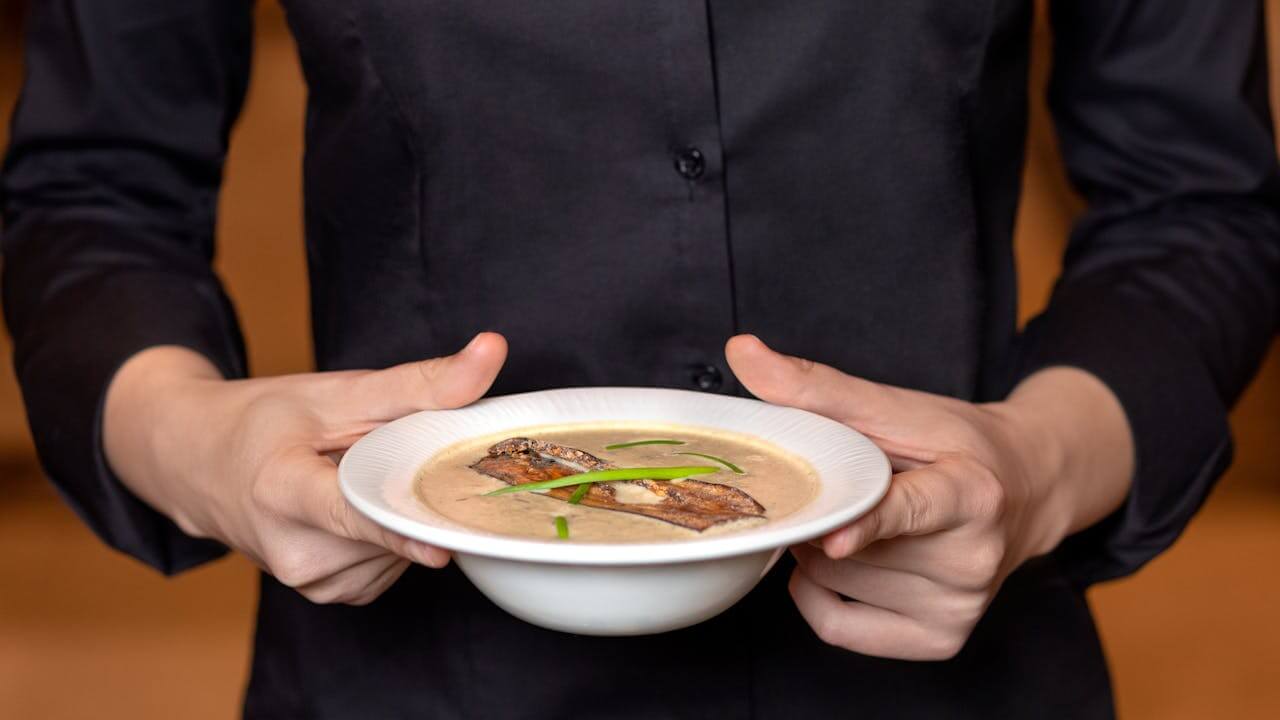
Suppe is feminine in German — the correct article is die. The plural is die Suppen. In English, Suppe translates to soup.Die Suppe is a core vocabulary word when diving into the German food and drinks vocabulary. Knowing how to use this word is very helpful for reading menus, ordering starters, and cooking. Below you'll find the full declension, example sentences, and a quiz to test your grammar skills.
Gender rule: The vast majority of German nouns ending in -e are feminine. Suppe perfectly follows this pattern. See all gender patterns in the Article Rules and a full overview at the German Articles.
Suppe — Declension Table
| Case | Singular | Plural |
|---|---|---|
| Nominative | die Suppe | die Suppen |
| Genitive | der Suppe | der Suppen |
| Dative | der Suppe | den Suppen |
| Accusative | die Suppe | die Suppen |
Example Sentences with Suppe
Die heiße Suppe steht auf dem Esstisch.
(The hot soup is on the dining table.) — Nominative
Er löffelt die Suppe aus dem Teller.
(He spoons the soup from the plate.) — Accusative
Nach der Suppe gibt es ein leckeres Dessert.
(After the soup, there is a delicious dessert.) — Dative
Der Geschmack der Suppe ist sehr würzig.
(The taste of the soup is very spicy.) — Genitive
Die Suppen in diesem Restaurant sind ausgezeichnet.
(The soups in this restaurant are excellent.) — Nominative Plural
In den Suppen ist oft zu viel Salz.
(There is often too much salt in the soups.) — Dative Plural
Related Words & Compounds
Word family (Wortfamilie): das Süppchen (little soup — diminutive)
Common compounds (Komposita): die Tomatensuppe (tomato soup), die Gemüsesuppe (vegetable soup), der Suppenlöffel (soup spoon), der Suppenteller (soup plate), das Suppengrün (soup greens)
Common Mistake with Suppe
❌ Common mistake: Die Soupe ist leider zu kalt.
✅ Correct: Die Suppe ist leider zu kalt.
💡 Why: Due to the English word "soup" or the French word "soupe", beginners often misspell this word in German. Remember that the German word is written with a double "p" and ends in an "e": Suppe.
Quick Quiz: Test Your Knowledge
Can you get all three right? Apply what you've learned above.
1. Die Temperatur ___ war für mich perfekt.
- A) das Suppe
- B) der Suppe
- C) dem Suppe
Check Answer
"Die Temperatur der Suppe" — the genitive case shows relation or possession (the temperature of what?). Feminine genitive = der: der Suppe.
2. Er bestellt als Vorspeise ___.
- A) der Suppe
- B) die Suppe
- C) den Suppe
Check Answer
"Bestellen" (to order) takes a direct object in the accusative case. Feminine accusative = die: die Suppe.
3. Es fehlt noch etwas Salz in der heiß___ Suppe.
- A) -en
- B) -e
- C) -er
Check Answer
After the definite article der in the dative feminine (in der...), the adjective ending is -en: in der heißen Suppe.
More Food Nouns & Vocabulary
- das Fleisch — the meat
- der Fisch — the fish
- die Kartoffel — the potato
- die Nudel — the noodle / pasta
- der Reis — the rice
- das Brot — the bread
- der Käse — the cheese
- die Butter — the butter
- die Milch — the milk
- das Ei — the egg
- der Apfel — the apple
- die Banane — the banana
- die Orange — the orange
For more themed vocabulary lists, explore the Vocabulary overview list, practice with the food and drinks vocabulary, or browse the full grammar overview to master your German cases and vocabulary.
Is it der, die, or das? Practice makes perfect.
The Article Trainer gives you 600+ nouns to drill — including everyday vocabulary. Pick the article, get instant feedback, and stop guessing.
Practice German Articles →Frequently Asked Questions
Is Suppe masculine, feminine, or neuter in German?
Suppe is feminine — the correct article is die. The large majority of German nouns that end in the letter "-e" are feminine, making this word follow a very reliable gender rule. All specific types of soup also inherit this feminine gender (e.g., die Tomatensuppe).
What is the plural of Suppe in German?
The plural of Suppe is die Suppen. Because it ends in an "-e", you simply add an "-n" to form the plural.
How do you say tomato soup in German?
Tomato soup is translated as die Tomatensuppe. Like most compound nouns in German, it takes the gender of the last word (die Suppe).