
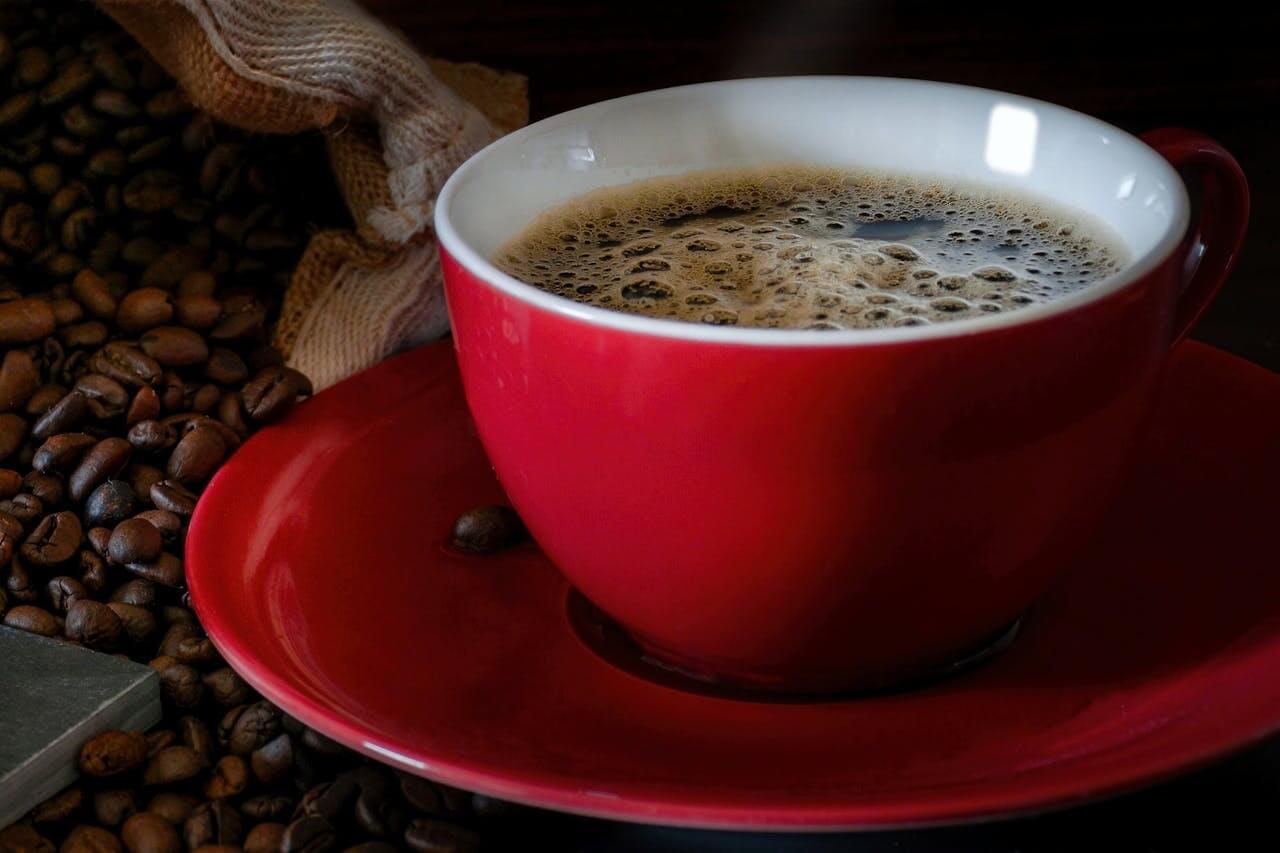
Kaffee is masculine in German — the correct article is der. The plural is die Kaffees. In English, Kaffee translates to coffee.Der Kaffee is an absolute staple in the German food and drinks vocabulary. Whether you are ordering at a café, hosting guests, or just starting your morning, you will need this word constantly. Below you'll find the full declension, example sentences, and a quiz.
Gender rule: As a foreign loanword that entered German centuries ago, there is no strict suffix rule to determine its gender. The masculine article must be memorized. See all gender patterns in the Article Rules and a full overview at the German Articles.
Kaffee — Declension Table
| Case | Singular | Plural |
|---|---|---|
| Nominative | der Kaffee | die Kaffees |
| Genitive | des Kaffees | der Kaffees |
| Dative | dem Kaffee | den Kaffees |
| Accusative | den Kaffee | die Kaffees |
Example Sentences with Kaffee
Der heiße Kaffee steht auf dem Küchentisch.
(The hot coffee is on the kitchen table.) — Nominative
Ich trinke den Kaffee am liebsten ohne Zucker.
(I prefer to drink the coffee without sugar.) — Accusative
Mit dem Kaffee startet der Tag einfach besser.
(With the coffee, the day simply starts better.) — Dative
Der Duft des Kaffees weckt mich jeden Morgen.
(The smell of the coffee wakes me up every morning.) — Genitive
Die zwei Kaffees kosten zusammen sechs Euro.
(The two coffees cost six euros together.) — Nominative Plural
Wir bestellen noch ein Stück Kuchen zu den Kaffees.
(We order a piece of cake to go with the coffees.) — Dative Plural
Related Words & Compounds
Word family (Wortfamilie): das Käffchen (little coffee — diminutive)
Common compounds (Komposita): die Kaffeetasse (coffee cup), die Kaffeemaschine (coffee machine), die Kaffeebohne (coffee bean), die Kaffeepause (coffee break), der Kaffeefilter (coffee filter)
Common Mistake with Kaffee
❌ Common mistake: Die Kaffeen sind schon fertig.
✅ Correct: Die Kaffees sind schon fertig.
💡 Why: Many learners try to apply the common German plural ending "-n" or "-en". However, because Kaffee is a loanword (originating from Arabic/Turkish), it follows the rule for many foreign words and takes an -s in the plural.
Quick Quiz: Test Your Knowledge
Can you get all three right? Apply what you've learned above.
1. Ich brauche etwas kalte Milch zu ___.
- A) den Kaffee
- B) dem Kaffee
- C) des Kaffees
Check Answer
The preposition zu always requires the dative case. Masculine dative = dem: zu dem Kaffee.
2. Er kocht ___ frisch in der Maschine.
- A) der Kaffee
- B) den Kaffee
- C) dem Kaffee
Check Answer
"Kochen" takes a direct object in the accusative case. Masculine accusative = den: den Kaffee.
3. Ich brauche jetzt unbedingt einen stark___ Kaffee!
- A) -e
- B) -en
- C) -er
Check Answer
After the indefinite article einen in the accusative masculine, the adjective ending is -en: einen starken Kaffee.
More Food Nouns & Vocabulary
- die Suppe — the soup
- der Fisch — the fish
- das Fleisch — the meat
- die Kartoffel — the potato
- die Nudel — the noodle / pasta
- der Reis — the rice
- das Brot — the bread
- der Käse — the cheese
- die Butter — the butter
- die Milch — the milk
- das Ei — the egg
- der Apfel — the apple
- die Banane — the banana
- die Orange — the orange
For more themed vocabulary lists, explore the Vocabulary overview list, practice with the food and drinks vocabulary, or browse the full grammar overview to master your German cases and vocabulary.
Is it der, die, or das? Practice makes perfect.
The Article Trainer gives you 600+ nouns to drill — including everyday vocabulary. Pick the article, get instant feedback, and stop guessing.
Practice German Articles →Frequently Asked Questions
Is Kaffee masculine, feminine, or neuter in German?
Kaffee is masculine — the correct article is der. Because it is a loanword, there isn't a reliable suffix rule to determine its gender, meaning you just have to memorize it. All compound nouns ending with "-kaffee" (e.g., der Eiskaffee, der Filterkaffee) are also masculine.
What is the plural of Kaffee in German?
The plural is die Kaffees. As a foreign loanword, it takes an "-s" to form the plural. While coffee is often uncountable when referring to the liquid, you use the plural to talk about individual cups or portions, like zwei Kaffees (two coffees).
How do you say coffee cup in German?
A coffee cup translates to die Kaffeetasse. It is a compound noun combining Kaffee and Tasse, and it takes the feminine article from the base word die Tasse.