
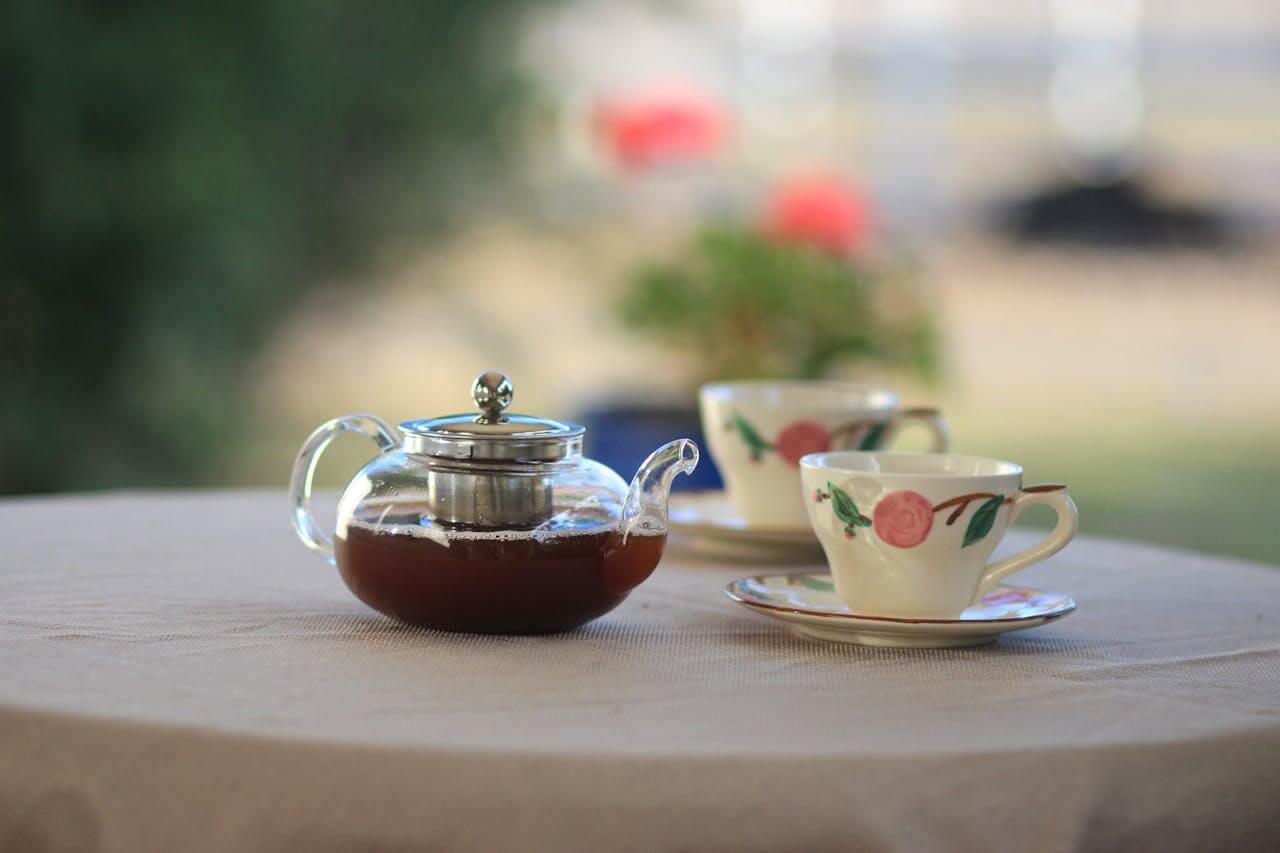
Tee is masculine in German — the correct article is der. The plural is die Tees. In English, Tee translates to tea.Der Tee is a fundamental part of the German food and drinks vocabulary. Whether you are drinking it for breakfast or ordering at a café, you will use this noun very often. Below you'll find the full declension, example sentences, and a grammar quiz.
Gender rule: There is no specific ending-based rule for this loanword — the masculine article must be memorized. See all gender patterns in the Article Rules and a full overview at the German Articles.
Tee — Declension Table
| Case | Singular | Plural |
|---|---|---|
| Nominative | der Tee | die Tees |
| Genitive | des Tees | der Tees |
| Dative | dem Tee | den Tees |
| Accusative | den Tee | die Tees |
Example Sentences with Tee
Der warme Tee hilft sehr gut bei einer Erkältung.
(The warm tea helps very well with a cold.) — Nominative
Ich trinke den Tee am liebsten mit etwas Honig.
(I prefer to drink the tea with a little honey.) — Accusative
Zu dem Tee gibt es heute frische Kekse.
(There are fresh cookies with the tea today.) — Dative
Das feine Aroma des Tees ist beeindruckend.
(The fine aroma of the tea is impressive.) — Genitive
Die zwei Tees stehen schon auf der Theke.
(The two teas are already on the counter.) — Nominative Plural
In diesen Tees findet man viele verschiedene Kräuter.
(You can find many different herbs in these teas.) — Dative Plural
Related Words & Compounds
Word family (Wortfamilie): das Teechen (little tea — diminutive)
Common compounds (Komposita): die Teetasse (teacup), die Teekanne (teapot), der Teebeutel (tea bag), das Teeblatt (tea leaf), die Teepause (tea break), der Früchtetee (fruit tea)
Common Mistake with Tee
❌ Common mistake: Der Tea ist leider schon kalt.
✅ Correct: Der Tee ist leider schon kalt.
💡 Why: A very common spelling error! Because the English word "tea" is so familiar, learners often accidentally use the English spelling in German sentences. Remember that the German noun is spelled with a double "e" and no "a".
Quick Quiz: Test Your Knowledge
Can you get all three right? Apply what you've learned above.
1. Der Duft ___ zieht durch das ganze Zimmer.
- A) dem Tee
- B) den Tee
- C) des Tees
Check Answer
"Der Duft des Tees" — the genitive case shows possession or relation (the scent of what?). Masculine genitive = des + noun adds -s: des Tees.
2. Er gießt heißes Wasser über ___.
- A) den Tee
- B) der Tee
- C) dem Tee
Check Answer
The preposition über here indicates an action/direction, requiring the accusative case. Masculine accusative = den: über den Tee.
3. Ein grün___ Tee schmeckt besonders am Nachmittag gut.
- A) -en
- B) -er
- C) -e
Check Answer
After the indefinite article ein in the nominative masculine, the adjective ending must show the gender signal (der): ein grüner Tee.
More Food Nouns & Vocabulary
- der Kaffee — the coffee
- die Suppe — the soup
- der Fisch — the fish
- das Fleisch — the meat
- die Kartoffel — the potato
- die Nudel — the noodle / pasta
- der Reis — the rice
- das Brot — the bread
- der Käse — the cheese
- die Butter — the butter
- die Milch — the milk
- das Ei — the egg
- der Apfel — the apple
- die Banane — the banana
- die Orange — the orange
For more themed vocabulary lists, explore the Vocabulary overview list, practice with the food and drinks vocabulary, or browse the full grammar overview to master your German cases and vocabulary.
Is it der, die, or das? Practice makes perfect.
The Article Trainer gives you 600+ nouns to drill — including everyday vocabulary. Pick the article, get instant feedback, and stop guessing.
Practice German Articles →Frequently Asked Questions
Is Tee masculine, feminine, or neuter in German?
Tee is masculine — the correct article is der. Because it is an old loanword, you cannot rely on ending rules to determine its gender. Any compound noun that ends with "-tee" (like der Pfefferminztee or der Schwarztee) also takes the masculine article.
What is the plural of Tee in German?
The plural is die Tees. German loanwords often form their plural by adding an "-s". You typically use the plural when ordering portions at a café (e.g., Wir bekommen drei Tees) or discussing different tea varieties.
How do you say teapot in German?
The German word for teapot is die Teekanne. It is a compound noun and takes its feminine gender from the base word, die Kanne.